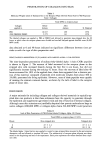
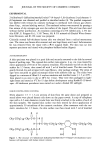
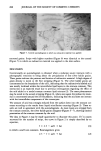
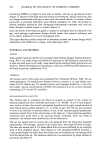
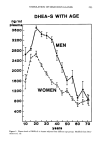
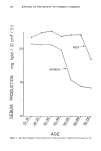
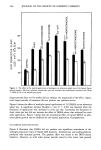
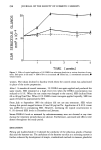
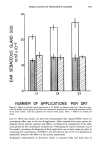
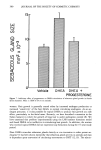
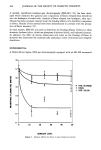
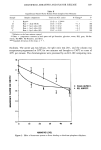
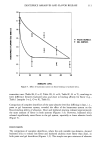
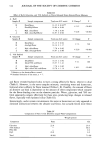
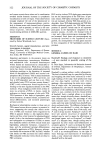
296 JOURNAL OF THE SOCIETY OF COSMETIC CHEMISTS _• w w w • w w 40 30- I0- o I- z o i.iJ z z o '-r- (/3 o n,- r-• o • •- • z z z u3 • :1: o aJ o • (n (n • z o bJ • Z 0 Z I bJ Z 0 bJ I-- (/3 0 13[: r• Z Figure 3. The effect of the topical application of androgens on sebaceous gland size of the female Syrian golden hamster. Solid bar indicates treated side open bar indicates the contralateral untreated side. Mean + SEM of five to six animals per group. longer periods (four to five weeks) did not enhance the magnitude of the effect. Again, even longer periods of treatment did not produce any systemic action. Figure 6 shows the effect of multipie topical applications of 1% DHEA on ear sebaceous gland size. A significant increase (Student's t test P 0.05) was observed when the frequency of application was increased to twice per day. Increasing the frequency to three times per day did not increase the effect of DHEA above that achieved by twice daily application. Figure 7 shows that the stimulating effect of topical DHEA on seba- ceous gland growth can be inhibited by the topical application of progesterone. LHS HAMSTER HIRSUTISM STUDIES Figure 8 illustrates that DHEA did not produce any significant stimulation of the androgen-responsive hairs of female LHS hamsters. Androsterone and androstanedione produced only minimal growth. The greatest effect was found in the DHT-treated hamsters. However, as with other potent steroids tested in this series, hair growth

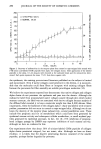
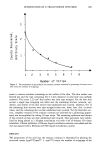
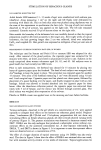
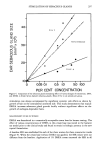
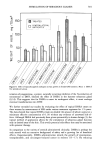
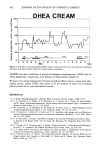
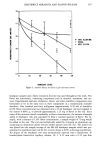
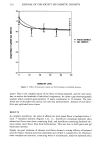
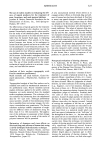
STIMULATION OF SEBACEOUS GLANDS 297 40- 30- 0 / TESTOSTERO NE •"" I I J I I I 0.0,5 0.1 0.,5 1.0 ,5.0 I0.0 PEIq CENT CONCENTRATION Figure 4. Comparison of the sebaceous gland stimulating effects of various dosages of testosterone, DHT, and DHEA in female Syrian hamster sebaceous glands. Mean of five to six animals per group. stimulation was always accompanied by significant systemic side effects as shown by growth of hair on the contralateral untreated side. This study demonstrates that topical DHEA increases sebaceous gland growth locally without significant effects on the growth of androgen-dependent hairs. MEASUREMENT OF SER IN WOMEN DHEA was formulated in a cosmetically acceptable cream base for human testing. The effect of various concentrations of DHEA in this cream base was tested in the hamster ear model prior to the clinical study and found to retain its biologic potency in the new topical formulation. A baseline SER was established for each of the three women for three consecutive weeks (Figure 9). When the cream base without DHEA was applied, the SER values were not different from the baseline. Application of 1% DHEA cream increased the SER in all
Purchased for the exclusive use of nofirst nolast (unknown)
From: SCC Media Library & Resource Center (library.scconline.org)