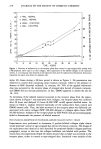
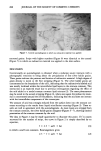
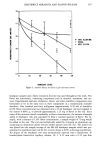
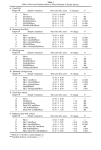
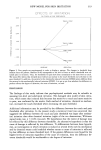
J. Soc. Cosmet. Chem., 39, 305-314 (September/October 1988) Effect of abrasives on flavor release from dentifrices R. S. ROBINSON, E. A. TAVSS, and J. SANTALUCIA, Colgate-Palmolive Company, Research and Development Division, 909 River Road, Piscataway, NJ 08854. Received May 18, 1988. Synopsis Many components in dentifrices potentially interact with dentifrice flavor oil they interfere with its avail- ability and affect the taste perception of the dentifrice. Availability of the volatile flavor oil may be deter- mined by headspace-gas chromatographic analysis. Results of this instrumental procedure have previously been reported to correlate with human taste perception. The present study used headspace-gas chromatog- raphy to determine the interaction of three commonly used dentifrice abrasives with a mint-based flavor oil. The abrasives investigated in the current study were hydrated precipitated silica, dicalcium phosphate dihydrate (dical), and hydrated alumina. The results show that all three abrasives bind flavor, thereby reducing the amount of flavor released into the headspace. The order of binding to flavor is hydrated silica dical hydrated alumina i.e., dentifrices containing hydrated silica release less flavor than those con- taining dical, and dentifrices containing hydrated alumina release more flavor than dical formulations (in both paste and gel humectant systems). This study has also shown that the amount of water and humectant, and the composition of humectant, influence the flavor-binding ability of abrasives. In general, a higher water/humectant level inhibits the flavor binding of an abrasive (particularly hydrated silica), resulting in a greater release of flavor. INTRODUCTION Flavor is the most important factor affecting human perception of dentifrice taste. Flavor oil has been demonstrated to bind to dentifrice components to various extents (1), thereby affecting taste. In the present study, the degree of binding of flavor to different common dentifrice abrasives was of interest. Quantitative measurements were needed. With this knowl- edge, the dentifrice base and/or flavor oil could be modified to achieve a desired degree of flavor binding, thereby optimizing the dentifrice taste. Interaction of flavor oils with abrasives, especially silica, has been studied by other researchers (2-4). In those studies, simple solutions of volatile components were investigated. However, due to the complex composition of dentifrices, i.e., volatile flavor oil within a matrix of non-vola- tile organic and inorganic materials, headspace-gas chromatography (HS-GC) was chosen as the appropriate method of analysis. Headspace analysis has been used pre- viously to study volatile materials such as trace organic substances in water (5) ethanol and other compounds of toxicological interest in biological samples (6-9) bacterial metabolites (10) and flavors in foods and beverages (11-14). 305

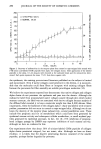
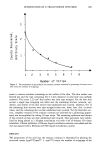
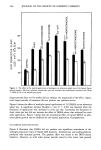
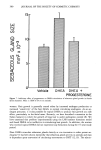
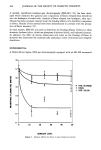
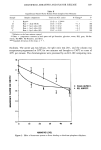
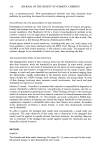
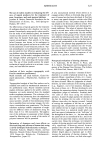
306 JOURNAL OF THE SOCIETY OF COSMETIC CHEMISTS A method, equilibrium headspace-gas chromatography (EHS-GC) (15), has been devel- oped which measures the quantity and composition of flavor released from dentifrices into the headspace of sealed vials. Analysis of flavor released into headspace, after equi- librium has been attained, should reveal the binding affinity of a dentifrice component to flavor. Results of this method have been demonstrated to correlate with the percep- tion of flavor intensity (15). In these studies, EHS-GC was used to determine the binding affinity of flavor to three abrasives: hydrated silica, dicalcium phosphate dihydrate (dical), and hydrated alumina. In addition, the effect of various humectants and water on the binding of flavor to abrasives was determined by systematically analyzing a series of mixtures and complete dentifrices. EXPERIMENTAL A Perkin-Elmer Sigma 2000 gas chromatograph equipped with an HS-100 automated 18 !1 o i 20 30 50 ß HYD. ALUHINA ß DICAL ß HYD. SILICA ABRASIVE LEVEL Figure l. Abrasive affinity for flavor in paste humectant system.
Purchased for the exclusive use of nofirst nolast (unknown)
From: SCC Media Library & Resource Center (library.scconline.org)