PENETRATION OF COLLAGEN INTO SKIN 281 ACKNOWLEDGMENTS This research was made possible by the cooperative education efforts of the University of Cincinnati and Shulton, Inc. REFERENCES (1) R. Mayne and R. Burgeson, Eds., Structure and Function of Collagen Types (Academic Press, Orlando, Fla., 1987). (2) R. Riso, Protein hydrolysates in cosmetics, Cosmet. Perfum., 89(4), 45 (1974). (3) A. Huc, Etude de la penetration in vivo dans la peau de rat du collageno acido-soluble en solution acide ou en melange dans une creme cosmetique, lnt. J. Cosmet. Sci., 3, 159 (1981). (4) M. Nagelschmidt and H. Struck, Kollagen als cosmeticurn?, Arch. Derre. Forsch., 250, 237 (1974) (5) H. Tronnier, Zur dermatologischen wirksamkeit einer kollagensalbe klinisch-experimenteille kurz- mitteilung, Art. Kosmetilogie, 6, 93 (1976). (6) M. Chvapil and Z. Eckmeyer, Role of proteins in cosmetics, lnt. J. Cosmet. Sci., 7, 41 (1985). (7) V. L. Johnson, Proteins in cosmetics and toiletries, Drug Cosmet. Ind., 126(6), 36-39, 136-137 (1980). (8) P. Bornstein and K. A. Piez, Characterization of acid citrate soluble collagen, J. Clin. Invest., 43, 1813 (1964). (9) J. R. Schiltz, R. Mayne, and H. Holtzer, The synthesis of collagen and glycosaminoglycans by dedif- ferentiated chondroblasts in culture, Differentiation, 1, 97, (1973). (10) W. T. Butler, K. A. Piez, and P. Bornstein, Isolation and characterization of the cyanogen bromide peptides from the alpha 1 chain of rat skin collagen, Biochemistry, 6, 3771 (1967). (11) R. L. Bronaugh, R. F. Steward, and E. R. Congdon, Methods for in vitro percutaneous absorption studies. II. Animal models for human skin, Toxicol. Appl. Pharmacol., 62, 481 (1982). (12) R. B. Stoughton, "Animal Models for In Vitro Percutaneous Absorption," in: Animal Models in Derma- tology, H. I. Maibach, Ed. (Churchill-Livingstone, Edinburgh, 1975), p. 121. (13) J. R. Bond and B. W. Barry, Limitations of hairless mouse skin as a model for in vitro permeation studies through human skin: Hydration damage,J. Invest. Dermatol., 90, 486 (1988). (14) D. Prockop, K. Kivirikko, L. Tuderman, and N. Gozman, The biosynthesis of collagen and its disorders, N. Engl. J. Med., 31, 13-23, 77-85 (1979).

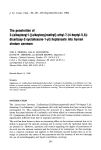
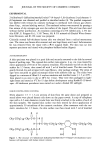
j. Soc. Cosmet. them., 39, 283-290 (September/October 1988) The penetration of 2-( a lkoyl o xy) 1-[ ( a lkoyl oxy) rn ethyl]-ethyl- 7-(4-h e pty1-5,6)- dicarboxy-2-cyclohexene-1-yl) heptanoate into human stratum corneum STIG E. FRIBERG, LISA B. GOLDSMITH, DAVID W. OSBORNE, and ROGER BROWN, Department of Chemistry, Clarkson University, Potsdam, NY 13676 (S.E.F., L.B.G.), The Upjohn Company, Kalamazoo, MI 49001 (D.W.O.), and Department of Life Sciences, University of Missouri-Rolla, Rolla, MO 65401 (R.B.). Received March 14, 1988. Synopsis Application of 2•(a•k•y••xy)1•[(a•k•y••xy)methy•]•ethy••7•(4.he•ty•.5•6).dicarb•xy.2.cyc••hexene.•.y•)hep- tanoate to human stratum corneum led to penetration of the acid into layers of the stratum corneum as detected by autoradiography and liquid scintillation counting. The acid penetrated into the upper part of the stratum corneum. INTRODUCTION The interactions between 2-(alkoyloxy) 1-[(alkoyloxy)methyl]-ethyl-7-(4-heptyl-5,6)- dicarboxy-2-cyclohexene-l-yl) heptanoate (the acid) and human skin have recently been investigated (1). This compound has the structure of a triglyceride (Figure 1), but shows the phase behavior of a carboxylic acid when added to a water-surfactant system (2). Comparison shows that the interaction of the acid with human stratum corneum is significantly different from that of isopropyl myristate (1). The acid has been shown to have an interesting effect on the stratum corneum due to its ability to penetrate the stratum corneum and to interact with the epidermal lipids that are present (3). However, questions still remain regarding the degree of penetration of the acid into the stratum corneum and the location of its interaction. In this investiga- tion a cosmetic emulsion was applied to full-thickness excised human skin in an at- tempt to determine the extent of the penetration and the location of the acid through the use of autoradiography and liquid scintillation counting. 283
Purchased for the exclusive use of nofirst nolast (unknown)
From: SCC Media Library & Resource Center (library.scconline.org)