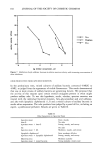
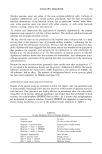
j. Soc. Cosmet. Chem., 41, 197-207 (May/June 1990) Efficacy of novel hybrid powders to quench body malodors FUJIHIRO KANDA, TOSHIHIKO NAKANE, MASAHIRO MATSUOKA, and KEN-ICHI TOMITA, Shiseido Research Center, 1050 Nippa-cho, Kohoku-ku, Yokohama, Japan 223. Received May 16, 1990. Synopsis A hybrid powder consisting of a spherical resin core, with its surface uniformly covered with either zinc oxide or aluminum chlorohydrate, was developed to quench offensive body odors. This hybridization technique enables us to overcome some of the aesthetic shortcomings that deodorizing actives possess, without sacrificing any deodorizing efficacy. Improvement in powder texture of zinc oxide and aluminum chlorohydrate when hybridized with spherical polyethylene powder is demonstrated by applying them directly to skin and also by measuring their coefficients of kinetic friction. The effect of hybridization on deodorizing efficacy was also investigated by headspace gas chromatography. INTRODUCTION Certain powders, both organic and inorganic, possess unique functional characteristics of interest in cosmetic products. Unfortunately, the use of some of these compounds may be restricted due to their physical properties, depending on the system into which we wish to formulate them. For instance, titanium dioxide, a typical white pigment, is excellent in terms of its skin-covering properties, although its rough texture and rather high specific gravity limits its formulation into makeup cosmetics. On the other hand, spherical nylon powder, one of the most popular organic powders, possesses a smooth texture but is lacking in other respects. The concept of hybridization by coating one or more outer layer powders on the surface of a core powder to form a hybrid powder provides a possible means to overcome the shortcomings that each individual powder possesses and to still maintain or even enhance its original attractive properties. We first applied this technique to produce a hybrid or composite powder consisting of spherical nylon powder as the core powder whose surface is uniformly covered with fine-particle titanium dioxide. This was accomplished by mixing and compressing spherical nylon powder and titanium dioxide inside a mixer charged with ball-shaped mixing mediums. The resulting powder, which we named "hybrid fine powder," was excellent in terms of both texture and covering properties (1,2). We have recently analyzed foot odor (3-5) and axillary odor (3,4) (possibly the two most offensive body malodors) and reported that short-chain fatty acids comprise a considerable portion of the two malodors. GC/MS analyses revealed that isovaleric acid 197

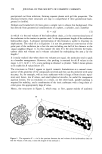
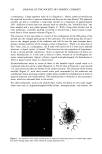
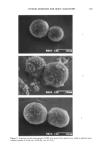
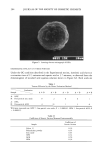
198 JOURNAL OF THE SOCIETY OF COSMETIC CHEMISTS is the key odor component responsible for the foot-like smell. Key odor compounds for axillary odor remain yet to be investigated, although short-chain fatty acids of compara- tively long carbon chain (C6-C10) seemed to comprise a fair portion of its "bouquet." After having clarified the chemical constituents responsible for the malodors, we aimed for a novel concept in eliminating offensive body odors, namely to "quench" body odor, rather than to "prevent" its generation with conventional antiperspirants and de- odorants. The latter conventional deodorizers have little effect in eliminating body odor once formed. The method of choice with which to efficiently "quench" short-chain fatty acids was to convert them into their corresponding metallic salts, and this was best accomplished by zinc oxide (3,4,6). Despite its outstanding ability to quench the odor of pungent short-chain fatty acids, zinc oxide possesses two shortcomings when formu- lated it into various forms of deodorant products: the clogging of aerosols and a rough texture. This is due to the undesirable aggregation of zinc oxide. Here again the con- cept of a hybrid powder was useful. By forming a hybrid powder of zinc oxide and spherical nylon powder, these shortcomings were overcome without sacrificing any of zinc oxide's deodorizing power (3,4,6). In the current study we prepared a hybrid powder of zinc oxide and spherical polyeth- ylene powder, and likewise of aluminum chlorohydrate and polyethylene powder. The texture of each individual powder and its corresponding hybrid powder was compared. The efficacy of hybrid powders in quenching isovaleric acid and caproic acid was also investigated by headspace gas chromatography. EXPERIMENTAL FORMATION OF HYBRID POWDERS In our previous studies (1-4,6), spherical Nylon 12 powder was employed as the core powder because of its excellent texture and our long experience in using it as a cosmetic raw material. In this study we have chosen another excellent organic powder, spherical polyethylene powder, which is not only cheaper but also disperses much better than nylon in LPG propellants. This is especially advantageous, since the use of chlorofluoro- carbons in aerosol products has been banned. Attempts were made to produce two different hybrid powders--both with spherical polyethylene as the core powder, the surface of which is coated with either zinc oxide (HPZ) or aluminum chlorohydrate (HPA). Spherical polyethylene powder (FLOWBEADS CL-2080, Sumitomo Seika Chemicals Co., Ltd.), of molecular weight 19,000- 20,000 and average particle size 15 p•m, was employed as the core powder. A micrograph (scanning electron microscope S-510, Hi- tachi Ltd.) of this powder is shown in Figure 1. The smoothness of the surface is readily observed. Fine-particle zinc oxide (99.7% as ZnO, average particle size 0.2 p•m) for preparing HPZ was obtained from Sakai Chemical Industry Co., Ltd. Figure 2 clearly indicates that despite its claimed average particle size, zinc oxide aggregates to form a massive lump. Fine-particle aluminum chlorohydrate of maximum particle size 5 p•m was obtained by
Purchased for the exclusive use of nofirst nolast (unknown)
From: SCC Media Library & Resource Center (library.scconline.org)