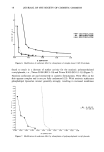
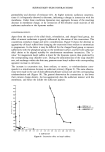
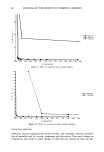
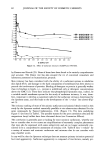
106 JOURNAL OF THE SOCIETY OF COSMETIC CHEMISTS (9-10), and by the development of erythema and fissures (11). Numerous studies have been focused on the irritant effects of surfactants to elucidate the mechanisms of sur- factant-induced skin damage (12-14) and to compare the irritancy potential of different surfactants (15,16). Although visual grading continues to have an important role for evaluation, many recently developed noninvasive techniques provide more sensitive objective data useful in the investigation of irritant effects caused by surfactants (17-19). In this study, a battery of noninvasive techniques was used to assess the hydration conditions of the stratum corneum (transepidermal water loss measurement, high- frequency electrical conductance measurement, and attenuated total reflectance infrared spectroscopy) and the surface conditions of the skin (reflective color measurement, image analysis of skin negative replicas) following repeated exposure to some surfactants. Daily measurements using these methods provided data on the progressive changes of the stratum corneum and on the consistency and sensitivity of different evaluation methods. A repeat study using the same subject panel after a three-month interval provided data on seasonal influences of the irritancy potential of surfactants. This repeat study also confirmed the reproducibility of the evaluation methods. METHODS SUBJECTS The subjects were a group of 18 healthy Caucasian female volunteers, ages 30 to 45 years and free from skin diseases. A signed consent form was obtained from each subject before initiating the experiment. Six subjects were randomly assigned to each of three sub- groups. Each subgroup was treated with one of the surfactants. Information recorded from each subject included a brief history of the subject's skin conditions. Individuals with any of the following were excluded from this study: a) skin disease, b) severe skin dryness, c) ease of sweating, and d) ease of sunburn. Subjects were instructed to avoid hot tubs, swimming, and exposure to natural or artificial sunlight, and to refrain from applying any cleansing products, creams, lotions, or gels to their forearms during the study period. The subjects were otherwise permitted to follow their usual bathing procedures. All subjects in each subgroup completed two test cycles. Each test cycle was comprised of one week (five working days) of repeated exposures to the surfactant and daily evaluations. Each test cycle also included a pretest evaluation and a final follow-up evaluation, which occurred on day 8 (Monday of the following week). The time interval between test cycles was about three months for all subgroups. The first test cycle was performed during October and November 1989, and the second test cycle during January and February 1990. TEST MATERIALS The three surfactants chosen for this study were two anionic surfactants, sodium lauryl sulfate (SLS) and sodium laureth-3 sulfate (SLES), and one nonionic surfactant, PEG-20 glyceryl monotallowate. Both sodium lauryl sulfate (Sipon LSB ©) and sodium laureth-3 sulfate (Sipon ES/

CHANGES IN STRATUM CORNEUM 107 Cycloryl NA ©) were supplied by Alcolac, Inc. (Baltimore, MD). PEG-20 glyceryl monotallowate (Varonic LI-42 ©) was supplied by Sherex Chemical Company (Dublin, OH). All the surfactants were used as supplied to prepare the dilutions of test solutions for patch application. Deionized water was used as the diluent and was also used as the control. The same molar concentration of different surfactants was used throughout this study. The molar equivalent of 2% (w/v) SLS is 0.063 mole/liter based on the average molecular weight provided by the manufacturer. Thus, the test concentration of SLES was 2.9% (w/v) and of PEG-20 glyceryl monotallowate was 7.9% (w/v). EXPOSURE AND EVALUATION SCHEDULE For each application, 0.3 ml of surfactant solution was placed on the absorbent disc of a 25-mm diameter Hilltop Chamber ©. The Hilltop chamber was supplied affixed to a 2" x 2" square of adhesive tape. The chamber was applied to the volar aspect of the forearm about 40 mm above the wrist. A chamber containing deionized water without any surfactant was applied to the same area of the opposite forearm. The subjects were randomized as to which forearm was treated with surfactant and which forearm served as the control. The patch sites were marked with a permanent marking pen to facilitate positioning of the patches at the same site. Two applications, 45 minutes each, were made daily for five consecutive days. The time interval between these two applications was approximately four hours. After patch removal, the skin was cleansed with running water and gently dried with a cotton towel. At least 30 minutes elapsed before instrumental measurements and clinical observations were made following the second patch application on each day. TRANSEPIDERMAL WATER LOSS (TEWL) MEASUREMENTS TEWL measurements were performed with a single-probe Servo-Med © Evaporimeter EP-1C (Servo-Med, Stockholm, Sweden) (20,21). In order to avoid measurement errors caused by air currents and changes in relative humidity, TEWL measurements were performed in a custom-made chamber into which the subject placed the forearms. Dry air was flowed into the chamber during the acclimation period, if necessary, to provide RH between 45% to 50% in the chamber. After an acclimation period of approximately 30 minutes, the instrument's detection probe was applied perpendicularly to the skin area to be measured and allowed to equilibrate for 30 seconds. The internally computed TEWL value was then recorded. ELECTRICAL CONDUCTANCE MEASUREMENTS The Skicon-200 © hygrometer (I.B.S. Co., Ltd., Shiznoka-ken, Japan) was used to perform electrical conductance measurements. The spring-loaded probe was applied to the skin with a standard pressure of 30 grams. A detailed description of the measuring principle was published by Tagami and coworkers (22). Measurements of electrical conductance were made within the environmental chamber immediately after the TEWL measurement. Measurements were made in triplicate and the mean value was used.
Purchased for the exclusive use of nofirst nolast (unknown)
From: SCC Media Library & Resource Center (library.scconline.org)