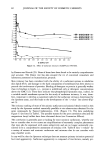
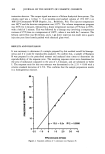
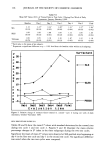
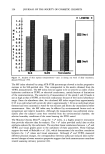
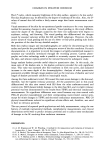
126 JOURNAL OF THE SOCIETY OF COSMETIC CHEMISTS , LEGEND t.4- i3 Mtt i ' • Oayi o.g O.B 0.7 0.6 0.5 0.4 0 .a I•l Day5 0.2 0.! 0 SLS SLES Ta 1 lowate Figure 15. Analysis of skin replicas (areaJperimeter-•cycle 2) during one week of daily treatments, January-February 1990. The MF index obtained by using ATR-FTIR spectroscopy showed a similar progressive increase in the SLS-patched sites. This corresponded to the results obtained from the TEWL measurements. The MF index does not appear to be as sensitive an index of skin hydration condition as TEWL or electrical conductance, mainly because of limitations of the instrumentation. The sensitivity of measurement of the amide I and II bands is not as high as that of TEWL or electrical conductance because of the limited absorbance range. From the absorbance data, the calculated MF index ranges from approximately 0.95 in an individual with severe dry skin to approximately 1.60 in an individual whose forearm had been immersed in water for ten minutes and blown dry immediately before measurement. Also, the MF index may be affected by environmental factors such as temperature and relative humidity. Although the measurement was performed imme- diately after the subject's arms were removed from the environmental chamber, the relative humidity conditions of the room housing the FTIR varied. The Minolta Chroma Meter ©, using the q-a* index, is a highly sensitive instrument that provides objective data for analysis. The + a* index provided useful data on skin erythema induced by the surfactants. The excellent linear correlations between q- a* and TEWL and visual grades point to the usefulness of these parameters. These findings support the work of Bubulak et al. (24), which demonstrated the excellent correlation between the q- a* values and visual assessment. Although a* and TEWL measured different physical changes, the correspondence between surfactant-induced skin erythe- ma and changes of water retention properties suggest that both measurements contribute toward assessing irritancy potential (24).

CHANGES IN STRATUM CORNEUM 127 The L* index, which measures brightness of the skin surface, appears to be less useful. The skin brightness may be affected by the degree of erythema of the skin. Also, the L* values of normal skin fall within a fairly narrow range that limits measurement sensi- tivity. Visual assessment of the skin by an experienced grader continues to be a very important method for assessing changes in skin condition. Visual grading in this study differen- tiated the degree of the changes caused by the three test surfactants with respect to erythema, scaling, and fissuring. The visual grading also differentiated the changes caused by seasonal variation within the SLS and SLES subgroups. However, the sub- jective nature of visual grading and the use of a three- or four-point grading scale limits the precision of the data for any detailed analysis. Both skin replica images and macrophotography are useful for documenting the skin surface and provide the possibility for subsequent review of the skin condition. For such documentation, it is important to record the images in a highly standardized manner to minimize any variability introduced through the recording process. Current photo- graphic and video technology make it possible to accurately capture the appearance of the skin, and silicone replicas preserve the textural features for subsequent study. Image analysis further provides useful objective quantitative data. In this study, the mean ratio of the shadow area to the shadow perimeter provided the only significant value. This value was increased after SLS treatment in both test cycles, and indicated increases in the mean depth of the dermatoglyphics. Analysis of other quantitative parameters available through image analysis (such as the total area of shadow and total length of shadow perimeter) yielded no meaningful results. Among the three surfactants tested, SLS caused the most severe damage to the skin and, therefore, had the highest irritancy potential. All the parameters used in this study differentiated the skin sites treated with SLS from the other surfactant-treated and control sites. SLES showed milder damage to the skin than SLS, and its slight irritancy potential was best demonstrated by the results from TEWL and electrical conductance measurements. No significant differences were noted between any sites treated with PEG-20 glyceryl monotallowate and their corresponding water-treated control sites, except for minor changes in TEWL and electrical conductance measurements. PEG-20 glyceryl monotallowate induced no significant adverse effects and, therefore, was rated to have no irritancy potential. The test protocol of repeated patch applications and daily measurements, using the test battery of multiple instrumental methods, morphometric measurements, and clinical observations served well to predict irritancy potential and to adduce some mechanisms of damage to the SC resulting from surfactant treatment. REFERENCES (1) A.M. Kligman and W. M. Wooding, A method for the measurement and evaluation of irritants on human skin, J. Invest. Dermatol., 49, 78-94 (1967). (2) F. R. Bettley, The irritant effect of detergents, Tram. St. Johm HospitalDem. Soc., 58, 65-74 (1972). (3) K. E. Malten, Thoughts on irritant contact dermatitis, Contact Dermatitis, 7, 238-247 (1981). (4) C. G. T. Mathias and H. I. Maibach, Dermatotoxicology monographs. I. Cutaneous irritation: Fac- tors influencing the response to irritants, Clinical Toxicology, 13, 333-346 (1978).
Purchased for the exclusive use of nofirst nolast (unknown)
From: SCC Media Library & Resource Center (library.scconline.org)