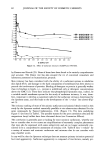
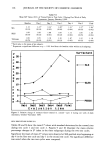
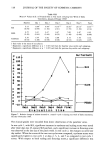
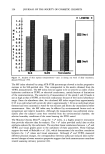
112 JOURNAL OF THE SOCIETY OF COSMETIC CHEMISTS p 700.- Sup f acf. anf. e 650- P 600 c 550 o SLS e 500 n 450 t: 400 g 350 e 300 250 • SLES c 200 h t50 8 t00 n 50 g 0 .• PE6g. O Day ! Day 2 Day3 Day4 Day5 Ftnal Eva].ua•:ton •:tme Figure 2. Relative change of TEWL (treated vs. control-•cycle 2) during one week of daily treatments, January-February 1990. marked effect of SLS. The slight relative increase and decrease observed with SLES and PEG-20 glyceryl monotallowate, respectively, are also shown. In test cycle 2, performed during January and February, significant increases in TEWL values were observed in patched sites treated with SLS starting at day 1, after the second surfactant application, and with SLES at day 2, after four 45-minute patches. On a day-by-day comparison, the mean TEWL values for SLS-treated sites were consistently higher than those recorded in test cycle 1 and were significantly greater on days 3, 4, and 5. No significant TEWL changes were found in sites treated with PEG-20 glyceryl monotallowate throughout the whole test cycle. Also, no statistically significant dif- ferences were observed between the two test cycles in subjects treated with these two surfactants. No significant mean changes in TEWL values were recorded for any of the control water-treated sites. ELECTRICAL CONDUCTANCE MEASUREMENTS Tables III and IV show the mean electrical conductance values and standard deviations of treated sites for test cycles 1 and 2. The unit for electrical conductance is (microSiemans). Figures 3 and 4 illustrate the mean relative percentage changes in electrical conductance for the two test cycles. In test cycle 1, a significant decrease from the initial baseline values was recorded after

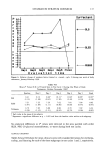
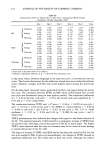
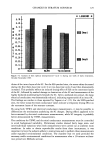
CHANGES IN STRATUM CORNEUM 113 Table III Mean Electrical Conductance (S.D.) of Treated Sites in Test Cycle 1 During One Week of Daily Treatments, October-November 1989' Baseline Day 1 Day 2 Day 3 Day 4 Day 5 Final 41 71 41 21 1811'2 2121 01'2 SLS (12) (3) (4) (2) (91) (94) (1) 48 251 121 101 8 • 6 • 29 SLES (14) (8) (6) (6) (4) (3) (10) 45 231 261 261 231 241 26 Tallowate (8) (8) (4) (9) (10) (6) (12) * Each value is the mean of six subjects measured in microSiemans. 1 Represents a significant difference at p = 0.05 level from the baseline value within each subgroup. 2 Represents a significant difference at p = 0.05 level from the previous day within each subgroup. Table IV Mean Electrical Conductances (S.D.) of Treated Sites in Cycle 2 During One Week of Daily Treatments, January-February 1990' Baseline Day 1 Day 2 Day 3 Day 4 Day 5 Final 35 21 31 851,2 302 •'2 3021 01,2 SLS (10) (2) (4) (50) (138) (143) (0) 30 141 91 71 71 81 20 SLES (9) (6) (7) (5) (4) (3) (7) 32 21 24 18 23 20 31 Tallowate (12) (9) (10) (7) (9) (8) (13) * Each value is the mean of six subjects measured in microSiemans. 1 Represents a significant difference at p = 0.05 level from the baseline value within each subgroup. 2 Represents a significant difference at p = 0.05 level from the previous day within each subgroup. one, two, and three days of SLS treatment. This was followed by a marked increase in electrical conductance on day 4, which continued through day 5. After the weekend rest period, the electrical conductance dropped precipitously to approximately that observed on days 1, 2, and 3. With both SLES and PEG-20 glyceryl monotallowate, significant decreases in electrical conductance were recorded throughout the patch period when compared with the pretest baseline values. However, after the weekend rest period, the values were no longer significantly different from the baseline values. No significant changes from the pretest values were observed in the control sites. Data from test cycle 2 showed changes similar to those observed during the first test cycle for the SLS and SLES subgroups. However, no significant difference was noted in sites treated with PEG-20 glyceryl monotallowate during this test cycle. The only difference noted between the two test cycles was that the marked increase in the SLS-treated subgroup occurred one day earlier. The control sites again showed no significant changes throughout the test cycle, confirming the consistency and repro- ducibility of the test procedure. The relative changes in electrical conductance shown in Figure 4 further emphasize the greater degree of change in the SLS subgroup during this winter test cycle as compared with that in test cycle 1 (Figure 3).
Purchased for the exclusive use of nofirst nolast (unknown)
From: SCC Media Library & Resource Center (library.scconline.org)