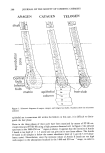
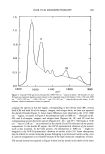
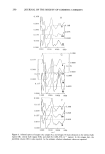
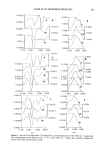
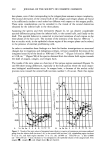
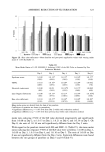
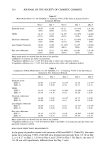
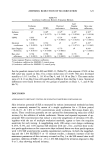
j. Soc. Cosmet. Chem., 43, 285-296 (November/December 1992) A new approach to the study of human hair by means of FT-IR microspectroscopy EMILIA BRAMANTI, FRANCESCA RONCA, LAURA TEODORI, MARIA LUISA TRINCA, FEDERICO PAPINESCHI, EDOARDO BENEDETTI, GIULIANO SPREMOLLA, PIERGIORGIO VERGAMINI, and ENZO BENEDETTI, Dipartimento di Chimica e Chimica Industriale, University of Pisa, Via Risorgimento 35, 56126 Pisa, Italy (Em.B., P.V., En.B.), Istituto di Chimica Biologica, University of Pisa, Via Roma 55, 56100 Pisa, Italy (F.R.), Divisione Tossicologica ed Ambientale-ENEA-Casaccia, Rome, Italy (L. T., M.L.T. ), and I a Clinica Medica, University of Pisa, Via Roma 55, 56100 Pisa, Italy (F.P., Ed.B., G.S. ). Received June 26, 1992. Synopsis Human hair has been examined by means of FT-IR microspectroscopy (FT-IR-M) using a high-pressure diamond cell. Microareas of the order of one hundred microns in diameter were analyzed, proceeding from bulb to shaft, for hairs in anagen, catagen, and telogen phases. The trends of the ratio values of integrated areas of the bands at 1080 and 1540 cm- • and at 1080 and 1238 cm- • in the three different phases showed remarkable differences in the bulb region near the root, probably due to a major DNA content with respect to proteinic components. Less evident spectral differences were observed in the suprabulbar region and in the shaft. The spectra of the shaft did not give rise to any spectral differences in the three hair phases. These findings offer a better insight into the structural changes of hairs submitted to exogenous and endogenous stresses. INTRODUCTION Recent studies have reported the use of hair follicles as biopsy material in order to investigate the effects of exogenous and endogenous agents in human beings. It has been suggested that the hair follicle may provide the basis for a useful human biological dosimeter (1). Hairs have also been studied to detect the carcinogen effect produced by exposure to aromatic hydrocarbons (2,3) and to acquire data on drug abuse (4,5). Furthermore, the determination of trace element levels in human hair has been a subject of continual interest in the biomedical and environmental sciences, as such levels can be taken as valuable indexes when assessing nutritional status, diagnosing diseases, iden- tifying systemic intoxication, and/or monitoring environmental exposure (6). The im- 285

286 JOURNAL OF THE SOCIETY OF COSMETIC CHEMISTS portance of human hair in such applications is due to several important factors: it is very sensitive to the environmental conditions, its epithelial origin might represent the specific target of many carcinogens, and it contains very rapidly (anagen phase) prolif- erating cells. FT-IR spectroscopy has been extensively used in the study of biological systems in order to obtain indications (at the molecular level) on structural and chemical-physical prop- erties (7,8). Several IR approaches to the study of hair are reported in the literature, especially with respect to cosmetology (9). Because of the difficulties in obtaining hair spectra, these investigations were carried out by means of special techniques such as the diffused and the attenuated total reflectance that are known to present serious problems of reproducibility (9). Today high-resolution analytical techniques make it possible to adopt a global approach to the investigation of biological systems. FT-IR microspectroscopy, which couples the visible image to the corresponding infrared spectrum, was initially employed in the analysis of polymeric materials, especially for the study of the separation phase in polymer blends (10) and for the detection of impurities in plastic materials. Successively, the method was extended to the study of normal and leukemic single cells (11-13) and of human solid tumor cells (14). Recently the hair shaft, treated with two kinds of oxidizing agents, has been examined at different distances from the root by means of FT-IR microspectroscopy (15). Analyses of single fibers treated with hydrogen peroxide or metabisulphite solutions showed the formation of cysteic acid and cysteine-S-sulphonate, respectively further- more, this method allowed to be constructed a profile of the oxidative damage from the root to the tip of naturally weathered hair. In this investigation, we have extended the FT-IR microspectroscopy study to the entire length of the hair, examining microregions, proceeding from bulb to shaft for anagen, catagen, and telogen hair, and trying to obtain reliable and reproducible spectral data able to distinguish between hairs in the different phases of the cycle. Using this method, we can obtain information at the molecular level, both with respect to the degree of hair aging and alterations of cell differentiation due to exogenous and endogenous chemical and physical agents. EXPERIMENTAL Human hairs were plucked from the scalps of healthy male and female volunteers aged 20-50 years. Actively growing (anagen), catagen, and telogen hairs with an intact bulb were carefully selected (microscopically x 15). Full-length single hairs of normal sub- jects with the root "club" intact were subjected to no prior chemical treatments and only basic grooming, i.e., brushing, combing, and shampooing. Before analysis, all full- length hairs were washed with an aqueous solution of sodium lauryl sulphate (SDS) (10 g 1- •) for 5 minutes, thoroughly rinsed, and left to air dry. Distilled water was used for all experiments. SDS solution is a suitable means of removing any fat on the fibers, as reported by Joy et al. (15). It is important that the infrared spectra carried out on hairs before and after this treatment did not show any spectral differences even though structure modifications could not be excluded. A Spectra-Tech IR Plan optical microscope was coupled to the spectrophotometer to allow visual observation of a sample, followed by infrared analysis of the observed sites.
Purchased for the exclusive use of nofirst nolast (unknown)
From: SCC Media Library & Resource Center (library.scconline.org)