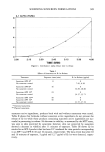
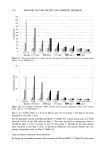
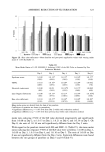
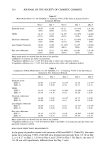
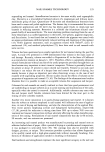
308 JOURNAL OF THE SOCIETY OF COSMETIC CHEMISTS (8) showed an increase in IL-lot production in keratinocytes exposed to UV irradiation, while Punnonen et al. (9) showed an induction of arachidonic acid after UVB irradia- tion. With recent application of cell and tissue culture assays as possible non-animal alternative safety and efficacy tests, we decided to determine if artificially grown human skin could provide a useful model system for screening SPF formulations. MATERIALS AND METHODS A three-dimensional artificial skin model, Skin 2 (Advanced Tissue Sciences, La Jolla, CA), was used to determine the SPF of various sunscreens. The artificial skin is com- posed of mitotically and metabolically active human dermal fibroblasts seeded onto a nylon mesh, while the multilayered epidermis is composed of a basal layer and several layers of differentiated and cornified keratinocytes. In order to assess the in vitro "sun protection factor", Skin 2 was placed into six-well tissue culture trays containing a Millicell TM insert (Millipore, Bedford, MA). The tray was covered by a 3.5" x 5" x ¾8" quartz glass plate to which was applied a 4-cm x 2.5-cm piece of Transpore TM tape (3M Company, St. Paul, MN). Sunscreens with SPF values ranging from 4 to 15 were applied to the tape at a concentration of 2 mg/cm 2. Additionally, sunscreen bases without sunscreen were tested. Skin was exposed to 42 mJ/cm 2 of UVA q- UVB radiation generated by a solar simulator (Solar Light Co., Philadelphia, PA). The port of the solar simulator was positioned 2 mm above the quartz glass to prevent removal of the product. The maximum time unprotected Skin 2 could be exposed to the UV radiation without releasing IL-lot was two minutes, which was defined as the in vitro minimal erythema dose (IVMED). Essentially, this is the in vitro equivalent of the human MED, which is based upon the time required for a fixed energy level of UV irradiation to elicit a visually discernible erythemic response in the skin of human subjects. Our background studies with the method (data not shown) has demonstrated that the Transpore Tape-Skin 2 system lacks the variability of human skin, and we are able to reproducibly observe two minutes as the IVMED. Accordingly, all sunscreen protection factors were multiplied by this factor to predict the exposure time. Once exposure was complete, the skin was incubated overnight at 37øC, 5% CO•. Following incubation, the media was assayed for the presence of IL-lot using an enzyme immunoassay kit (R & D Systems, Minneapolis, MN). Viability of the skin was deter- mined by the conversion of the dye 3[-4,5-dimethylthiazol-2-yl-]2,5,-diphenyltetra- zolium bromide (MTT) (Sigma, St. Louis, MO). RESULTS Figure 1 shows the effect of timed UV exposure vs skin responses (IL-lot release). No IL-lot was detected after two minutes of exposure however, by four minutes almost 8 pg/ml of IL-lot is present in the medium. Table I lists the results obtained from exposing skin to UV radiation with and without the application of sunscreen. In all cases where sunscreen was applied to Transpore tape affixed to the quartz glass, no IL-lot could be detected. In order to determine if IL-lot release was directly related to the

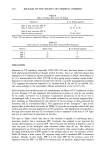
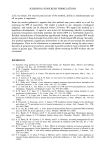
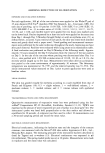
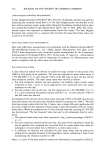
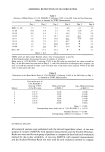
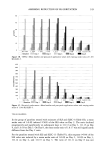
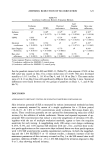
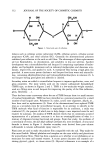
SCREENING SUNSCREEN FORMULATIONS 309 IL-1 ALPHA (PG/ML) 8 _ _ • I I I I 2:15 2:30 2:45 3:15 3:30 TIME IMIN! Figure l. Interleukin-1 alpha release: time vs release. _ 0 2:00 4:00 Table I Effects of Sunscreens on IL-lo• Release Treatment Exposure times (min) IL-ltx Release (pg/ml) Sunscreen (SPF 4)* 8 0 No sunscreen control 7.81, 6.50 Sunscreen (SPF 8)* 16 0 No sunscreen control 34.83, 28.60 Sunscreen (SPF 12)* 24 0 No sunscreen control 34.37, 33.71 Sunscreen (SPF 15)** 30 0 Sunscreen (SPF 15)* 30 0 No sunscreen control 31.57, 37.54 * Chemical sunscreens. ** Physical sunscreens. sunscreen active ingredients, products both with and without sunscreens were tested. Table II shows that formulas without sunscreen active ingredients do not prevent the release of IL-ltx while those products containing sunscreen active ingredients are suc- cessful in preventing its release. No decrease in viability, as measured by the MTT assay, was seen in skin protected by sunscreen however, skin not protected by sunscreen showed a decrease in viability after 11 minutes of exposure. Table III shows IL-ltx results for an SPF 4 product that has been UV irradiated for time periods corresponding to an SPF 5 and SPF 8 (10 and 16 minutes, respectively). The data reveal that after 10 and 16 minutes of exposure, 5 pg/ml and 12.7 pg/ml of IL-ltx were detected, respec- tively.
Purchased for the exclusive use of nofirst nolast (unknown)
From: SCC Media Library & Resource Center (library.scconline.org)