J. Soc. Cosmet. Chem., 47, 297-305 (November/December 1992) Squamometry: The assessment of xerosis by colorimetry of D-Squame adhesive discs G. E. PI•RARD, C. PI•RARD-FRANCHIMONT, D. SAINT LINGER, and A. M. KLIGMAN, Department of Dermatopathology, University of Liege, CHU du Sart Tilman, B-4000 Liege, Belgium (G.E.P., C.P.-F.), Laboratoire de Recherche Appliquge, L'Orgal, F-92117 Clichy, France (D.S.L. ), and Department of Dermatology, University of Pennsylvania, Philadelphia, PA 19104-6142 (A.M.K. ). Received April 28, 1992. Synopsis Clinical grading of the level of scaling in winter xerosis is highly subjective and crude. We have developed noninvasive objective methods to obtain more reliable information. Photographic records of epiluminescence microscopy and of cyanoacrylate skin surface biopsies enable greatly improved visualization of the scaly surface. These evaluations, however, remain semiquantitative. A real quantitative assessment is achieved by collecting corneocytes on adhesive discs (D-Squame ©) under standardized pressures, and by staining them with toluidine blue and basic fuchsin. The specimen is then subjected to colorimetry in the chroma C'mode to estimate the quantity of scales. INTRODUCTION Laymen and experts agree on what constitutes "dry skin." The surface shows scales and is rough to the touch. Dry skin, or xerosis, reflects abnormal desquamation of the horny layer in aggregates of corneocytes large enough to be seen by the naked eye as whitish scales and thin flakes (1,2). There is considerable controversy concerning the nature and origin of xerosis, a common problem in the cold winter months, especially for the elderly. Efforts to understand the etiology of dry skin and to design more effective treatments are hampered by lack of a method for quantifying the degree of scaling. Adhesive-coated slides, pressed briefly to the surface, offer a simple way to collect the clusters of corneocytes that are about to be shed from the outermost stratum corneum. Semiquantitative estimates of the size and density of scales can be made after staining. This ancient method has recently been updated by the development of D-Squame © (Cuderm Corporation, Dallas, TX). These are adhesive-coated discs of a fixed size that 297

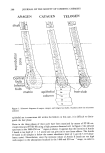
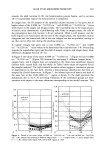
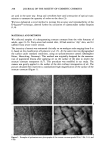
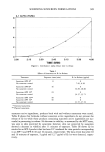
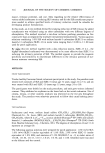
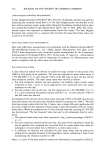
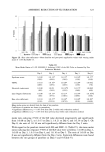
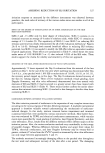
298 JOURNAL OF THE SOCIETY OF COSMETIC CHEMISTS are used in the same way. Serup and coworkers have used attenuation of optical trans- mission to measure the quantity of scales on the discs (3). We have elaborated a novel method to increase the accuracy and reproducibility of the D-Squame © technique, abetted further by utilization of cyanoacrylate surface biopsies (1,4). MATERIALS AND METHODS We collected samples of a desquamating stratum corneum from the volar forearms of adults, ages 23-56. Forty-seven had normal skin, 36 had sensitive "dry" skin, and 61 suffered from severe winter xerosis. The intensity of xerosis was estimated clinically on an analogue scale ranging from 0 to 6, based on the classification of Lukacovic et al. (5). At the same time we photographed the surface under standard conditions, using an epiluminescence camera (Dermaphot Heine, Herrsching, Germany). This method was originally designed for the examina- tion of pigmented lesions after applying oil on the surface of the skin to render the stratum corneum transparent (6,7). This procedure was modified in our study. The camera was gently applied to the surface of the skin without interposition of oil. The picture obtained then represents a standardized high magnification of the surface of the stratum corneum (Figure 1). e '• d Figure 1. Examples of epiluminescence photographs of the stratum corneum graded 0 (a), 1 (b), 3 (c), and 6 (d).
Purchased for the exclusive use of nofirst nolast (unknown)
From: SCC Media Library & Resource Center (library.scconline.org)