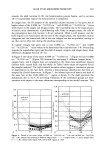
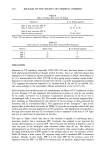
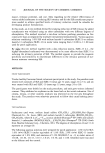
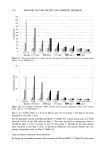
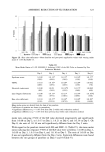
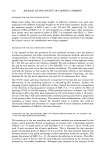
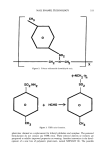
NAIL ENAMEL TECHNOLOGY 333 o ß CH2--N--CH 2 ,, Figure 2. Toluene sulfonamide formaldehyde resin. x •-NCH2 '•n i SO 2 NH 2 SO 2 0 -!'- HCHO • 0 CH 3 CH 3 Figure 3. TSFR resin formation. plasticizer claimed as a replacement for dibutyl phthalate and camphor. The patented formulations do not contain any TSFR resin. These selected diesters or triesters are purported to exhibit improved properties on wearing. Another innovation is the devel- opment of a new line of polymeric plasticizers, named NEPLAST (9). The possible

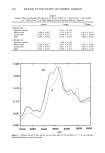
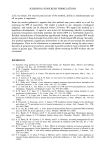
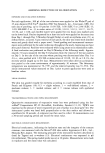
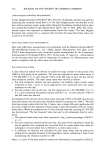
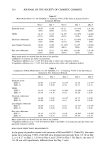
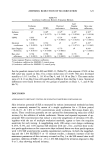
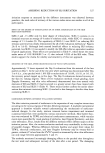
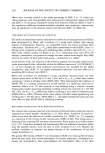
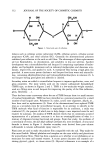
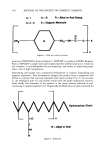
334 JOURNAL OF THE SOCIETY OF COSMETIC CHEMISTS n= 1 A = R R = Alkyl or Aryl Group n= 2 - 5 A = Organic Molecule CH 3 O S02--NH--C Figure 4. Alkyl aryl sulfonyl urethane. - A structure of NEPLAST is shown in Figure 5. NEPLAST is a product ofSNPE, Bergerac, France. NEPLAST is a high-molecular-weight polyether-urethane plasticizer. It has very low volatility, is non-flammable and non-migrating, and retains its plasticizing prop- erties, even at high temperatures. Nonsettling nail enamel was a substantial development in cosmetic formulating and pigment suspension. This development changed the product from a suspension that settled to a system that was well suspended with minor settling (10,11). As we know it, the rheological goal of a nail enamel would yield the proper application viscosity, while ideally the remainder of the product in the bottle remains relatively at rest, continuing to suspend pigments (12). Organically modified clays are used universally for ydrocarbon Chain I o I R = Alkyl or Aryl NH I R Figure 5. NEPLAST.
Purchased for the exclusive use of nofirst nolast (unknown)
From: SCC Media Library & Resource Center (library.scconline.org)