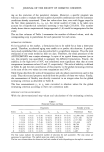
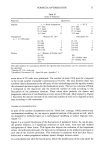
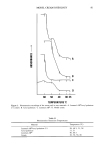
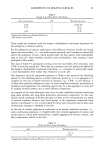
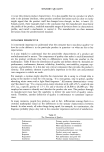
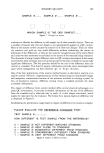
74 JOURNAL OF THE SOCIETY OF COSMETIC CHEMISTS Table III Information About the 20 Best Trials Parameters x 1 x2 x3 x4 x5 Criteria Global x 6 criterion Y • Y2 Y3 Y4 Series 12.50 10.00 47.50 11.50 10.00 47.00 12.00 10.00 46.00 11.50 10.00 47.50 16.50 10.00 43.50 18.50 10.00 44.00 14.00 10.00 46.00 10.50 10.00 48.50 14.50 10.00 46.50 17.00 10.00 45.50 14.50 10.00 44.00 15.00 10.00 45.00 15.00 10.00 46.00 16.50 10.00 42.00 13.50 10.00 45.00 13.50 10.00 44.00 14.00 10.00 47.50 20.00 10.00 40.00 27.50 7.50 32.50 20.00 10.00 42.50 23.50 23.50 23.50 23.50 23.50 23.50 23.50 23.50 23.50 23.50 23.50 23.50 23 50 23 50 23 50 23 50 23 50 23 50 24.00 23.50 4.50 2.00 216 35 65 50 66 5 6.00 2.00 212 35 65 50 62 7 6.50 2.00 212 35 65 50 62 7 5.50 2.00 210 35 65 50 60 7 4.50 2.00 210 35 65 40 70 6 2.00 2.00 209 35 65 40 69 7 4.50 2.00 208 35 65 40 68 7 5.50 2.00 207 35 65 50 57 7 3.50 2.00 207 35 65 40 67 6 2.00 2.00 207 35 65 40 67 7 6.00 2.00 207 35 65 40 67 6 4.00 2.50 206 35 65 40 66 5 3.50 2.00 205 35 65 40 65 7 6.00 2.00 202 35 65 40 62 6 6.00 2.00 202 35 65 40 62 7 7.00 2.00 200 35 65 40 60 7 3.00 2.00 200 35 65 40 60 7 3.50 3.00 198 35 65 32 66 4 4.50 4.00 194 35 65 32 62 5 2.50 1.50 190 35 65 16 74 5 Parameter values, global and partial criteria, for the 20 best trials after seven series. the lower mean value of the transparency could be due to the multiplication of two experimental measurements. Since the final narrow domains are in agreement with practical requirements for further developments (safety tests, manufacturing processes, etc.), it was decided to definitely stop the iterative procedure. CONCLUSION The variety of requirements in the cosmetic formulation (qualitative, high precision of development, etc.) implies the manipulation of many raw materials whose interactions cannot be modeled. So, in most cases, the user cannot control the system globally. One major practical interest of the ANTICOMPLEX method consists in reducing, by an iterative procedure, the initial domain of study. This feature enables us to find, through the lowest number of trials, the optimal formulae corresponding to a selected global criteria. This optimization works with a global exploration of the hyper space of the parameters and does not try to isolate some parameters and deal with them separately. It operates by successive random sampling of trials, which also decreases the risk of false optima. Different strategies are possible in order to explore deeply the results given by the ANTICOMPLEX method. The user could further either try to use a more restrictive

FORMULA OPTIMIZATION 75 optimization method within the optimum area or to perform a sophisticated statistical analysis on all the points actually measured. REFERENCES (1) G. E. P. Box and K. B. Wilson, On the experimental attainment of optimum conditions, J. Royal Statist. Soc., series B, 13, 1-45, (1951). (2) J. A. Nelder and R. Mead, A simplex method for function minimisation, Comput. J., 7, 308-313 (1965). (3) V. Tran, J. L. Morat, and D. Bertrand, A new serial method for searching the optimum operating conditions of a technological process, J. Chemometr., 5, 73-84 (1991). (4) M. J. Box, A new method of constrained optimization and a comparison with other methods, Comput. J., 8, 42-52 (1965). (5) M. J. Box, A comparison of several current optimization methods and the use of transformations in constrained problem, Comput. J., 9, 67-77 (1965). (6) G. E. P. Box, W. G. Hunter, and J. S. Hunter, Statistics For Experimenters (John Wiley & Sons, New York, 1978). (7) G. E. P. Box and N. R. Draper, Empirical Model Building and Response Surfaces (john Wiley & Sons, New York, 1987).
Purchased for the exclusive use of nofirst nolast (unknown)
From: SCC Media Library & Resource Center (library.scconline.org)