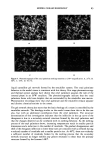
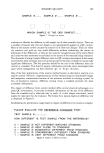
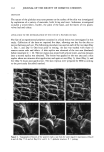
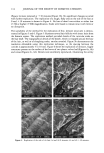
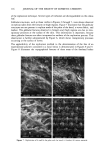
J. Soc. Cosmet. Chem., 45, 77-84 (March/April 1994) Secondary structural rheology of a model cream LORRAINE E. PENA, BARBARA L. LEE, and JAMES F. STEARNS, Drug Delivery R&D--Specialty Products, The Upjohn Company, Kalamazoo, MI 49007. Received November 18, 1993. Presented at the Midwest Regional Meeting of the American Academy of Pharmaceutical Scientists, Chicago, May 1989. Synopsis The rheology of a cream is determined by the structure formed by its ingredients. The primary structural rheology of O/W creams has been characterized by the gel network theory. Cetyl palmitate is frequently used to improve consistency, but its mechanism of action has not previously been determined. This study uses rheometry and thermal optical analysis to examine the structural rheology of a model cream containing cetyl palmitate. Rheograms were obtained over the temperature range 25ø-40øC. In general, the overall rheogram shape, indicative of the primary structure, changes little as a function of temperature. However, an inflection gradually disappears as the temperature increases. Photomicrographs of the melting sequence show the cetyl palmitate embedded in the emulsifier network and illustrate the destruction of the cetyl palmirate secondary network structure. Photomonitor recordings correlate the melting transition of the cetyl palmirate with the disappearance of the rheogram inflection. INTRODUCTION The flow properties of semisolid dosage forms are determined by the structure formed by their ingredients. Creams generally consist of emulsifiers, fatty amphiphiles, waxes, oils, and water. The basic structure of O/W emulsions has been well characterized by the gel network theory (1-3). According to this theory, the oil phase is mechanically entrapped by a liquid crystalline gel network structure formed in the continuous phase by the surfactant and a fatty amphiphile. The surfactant and fatty amphiphile combine in definite ratios specific to the system, and the consistency of the cream is adjusted by varying the concentration of this fixed ratio combination. Commercially available emul- sifying waxes such as the Lexemul © and Promulgen © series are basically precombined surfactant/fatty amphiphile systems. In the absence of an oil, these systems are designated ternary systems and exhibit physical properties similar to those of their corresponding emulsions. In fact, the basic rheology of these ternary systems controls the rheology of the final cream (3). Although the basic structure of creams has been well characterized by the gel network theory, the role of other ingredients, such as cetyl palmitate, that add "body" to commercial creams has not previously been determined. A model cream is used in this study to demonstrate the role of cetyl palmitate in structure development. 77

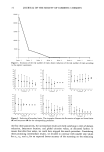
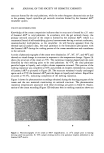
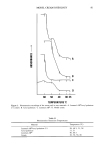
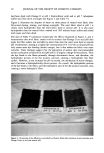
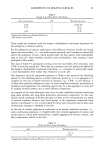
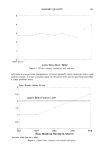
78 JOURNAL OF THE SOCIETY OF COSMETIC CHEMISTS MATERIALS AND METHODS A commercially available cream of known composition was used for the study. Raw materials of its composition were obtained from production inventories and were used as received. ComeIts of the raw materials were prepared in formulation ratios by heating to liquefaction, mixing, and cooling to room temperature. A Ferranti-Shirley cone and plate viscometer was used to determine the rheology of the cream. Unless otherwise specified, samples were tested with the instrument in low gear using the 7-cm truncated cone, a 60-sec sweep time, and the 2 X scale expansion on the recorder. A shear rate range of 0-164 sec- • was achieved with these instrument set- 0 ø tings. Measurements were obtained at 25 ø, 3 , 35 ø, and 40øC with an accuracy of + 0. IøC. Room temperature samples were loaded onto the plate of the viscometer with a 3/4-inch-wide teflon spatula and gently spread evenly. The sample quantity was such that a small ridge of cream appeared at the edge of the cone upon raising the plate. Sample size was verified by preliminary testing of larger and smaller quantities and observing for rheogram irregularities. Prior to beginning testing, samples were allowed to equilibrate until the temperature indicator linked to the thermocouples in the plate returned to the test temperature. Equilibration time increased with increasing test temperature. Measurements were taken from triplicate samples obtained from the sur- face and center of the jar. The rheograms presented in Figure 1 are from surface samples and are representative of the other rheograms with respect to shape and shear stress magnitude. Samples were examined with a Zeiss Universal microscope using polarized light and a 250x magnification. The melting behavior of the cream and its raw materials was observed using a Merrier FP82 hot stage with photomonitor at a heating rate of 5ø/ minute over the range of 25øC to slightly above the melting point. The melting point was defined as the temperature at which a thermal arrest appeared in the photomonitor recording and/or the temperature at which the crystals liquefied and flow began. Sam- ples were monitored both visually and with the photomonitor. Creams were monitored directly from the initial slide preparation. However, in order to obtain a thin film suitable for microscopy, samples of cetyl palmirate (Cutina CP ©, Henkel), Lexemul AR © (Inolex), and their comelt required premelting on the slide prior to monitoring their melting behavior. Photomicrographs of the cream, raw materials, and their comeIt were obtained initially and at various points during the melting transition. The particle sizes of the cream were too small to photograph adequately at 250x, which is the maximum focusable mag- nification with the hot stage. Therefore, a Sensortek TS-4ER thermal microscope stage was used to photograph the cream at 500 x magnification. Using this apparatus, cream samples were equilibrated and maintained at key temperatures identified in the hot stage studies. RESULTS AND DISCUSSION RHEOLOGY 0 ø The rheograms of the cream at 25 ø, 3 , 35 ø, and 40øC are shown in Figure 1. As is apparent, the overall shape of the rheograms remains the same, but the rheograms shift
Purchased for the exclusive use of nofirst nolast (unknown)
From: SCC Media Library & Resource Center (library.scconline.org)