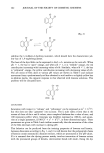
136 JOURNAL OF THE SOCIETY OF COSMETIC CHEMISTS Quats have been found to be efficient at depositing on hair as well as improving its combability. The adsorption has been attributed to an electrostatic attraction between the anionic character of the hair fiber and the positively charged quat molecule (4-6). Hair has been described as being a "strong-acid ion exchanger," and one can expect some desorption of the quat upon rinsing with detergents (6). In addition to electrostatic forces, attraction owing to Van der Waals forces has also been shown to play a part in the adsorption process (7). Increasing the number of alkyl groups, as well as increasing the length of the carbon chains on the quat, has been shown to be beneficial for the conditioning of hair (8,9). If the cationic charge character is responsible for bringing the quat to the hair surface, it is the long-chain alkyl groups that are believed to be responsible for lubricity and combing performance (9). Though quats occupy a prominent position in the list of conditioning additives, other materials have been investigated for a variety of reasons. Out of these, polydimethyl- siloxanes (PDMS, silicones, siloxanes) have been identified as effective hair conditioning aids and are currently being used, frequently in conjunction with quats, in many commercial products. Because of their ease of spreading and thin film formation, along with their lubricity and emollient properties, silicones impart unique "feel" character- istics to personal care products and have gained industry-wide acceptance (10, ! 1). Silicones are also finding favor in conditioning shampoos (12). Silicones are homopolymers consisting of repeating units of dimethylsilicon bonded to oxygen, and their structure can be written as Y-O-{Si(CH3)20}x-Y. Depending on the end group, they are known as dimethicone (Y - Si[CH3]3) or dimethiconol (Y = H). As discussed above, both quats and silicones are known to condition hair. However, the influence of one on the other, as pertaining to conditioning, has not been well docu- mented. In this work, the combing benefits of silicones are assessed as a function of the amount of silicone deposited (as delivered from a solvent) as well as of the molecular weight of the silicone used. In addition, the interaction of a quat with the silicones and the resulting effect on deposition and combing performance is investigated. It should be noted that the results discussed below represent performances obtained from a solution. The deposition levels and other characteristics obtained from aqueous hair conditioning products may differ from these findings. EXPERIMENTAL MATERIALS AND GENERAL PROCEDURES Hair samples. All tresses were prepared with 2 grams of slightly bleached human virgin European hair, purchased from DeMeo Brothers, New York. The tresses were prewashed with a 15 wt% aqueous solution of ammonium lauryl sulfate (Henkel Corporation), rinsed, and dried. The tresses were then dipped individually into chloroform for a period of 40 seconds, and the resulting tresses were considered "untreated tresses." Treatment samples. Tricetylmonium chloride (Varisoft TC-90 ©, named quat for the pur- pose of this paper) was kindly supplied by Sherex Corporation, whereas all the polydi- methylsiloxanes {three dimethicone fluids--molecular weights of 10,000, 40,000, and 64,000, named fluids 1, 2 and 3, respectively two dimethiconol gums--molecular

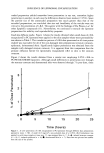
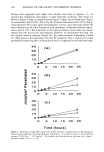
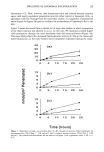
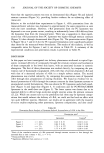
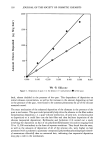
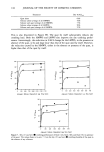
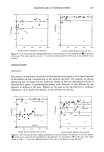
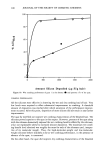
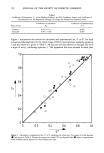
SILICONE-QUAT INTERACTIONS 137 weights of 220,000 and 280,000, called gums 1 and 2, respectively and a dimethiconol gum/dimethicone fluid blend (gum 2/fluid 1) in a ratio of about 40/60, named blend} were obtained from Dow Corning Corporation. All other reagents and solvents were obtained from commercial sources. TRESS TREATMENTS The tresses were dipped into solution baths containing the treatments for a period of 30 seconds. The tresses were squeezed after dipping to remove excess solvent. Rinsing of the tresses was not performed. The tresses were next allowed to air dry before evaluation. The solvent used was chloroform, and the treatments consisted of four levels of the different siloxanes (from 0.03 wt%-0.5 wt%) in the absence and presence of the quat (0.5 wt%). Five tresses were dipped per level used. Three of these tresses were evaluated for combing performance, while the other two were analyzed for amount of silicone deposited. Three tresses were also dipped into a solution of quat (0.5 wt%) in chloro- form in the absence of any siloxane as "control tresses." COMBABILITY MEASUREMENTS The method of Garcia and Diaz (2) was used to measure the effect of the different treatments on the ease of combing of the hair tresses. An Instron Tensile Tester (model 1122) was modified for this purpose, and the data obtained were reported in terms of average combing load (ACL) values. The effect of the treatments was calculated as the % reduction in ACL, which is given by %ACLv•ed = 100 X (ACLuntreate d - ACLtreated) q- ACLuntreate d MEASUREMENT OF THE AMOUNT OF SILICONE DEPOSITED The method of Gooch and Kohl (13) was modified and used to determine the amount of silicone deposited on the hair. The modification included replacing the enzyme digestion step with a solvent extraction protocol. An atomic absorption spectrometer (Perkin Elmer Model 1100 B) was utilized to analyze the extracted solution for silicone content. The amount of silicone deposited was reported in terms of •g silicone/g of hair, from which the amount of polydimethylsiloxane deposited on hair can be calculated (if desired) when one knows the percent of silicone present in the siloxane. RESULTS AND DISCUSSION AMOUNT OF SILICONE DEPOSITED ON HAIR AS A FUNCTION OF DIP BATH CONCENTRATION Silicone deposition on the hair was found to depend on the concentration of the siloxane in the dip bath. Figure 1 shows the linear relationship of the deposition of gum 1 to its increasing dip bath concentration, in the absence of the quat. Presence of the quat in the dip baths did not change this linear correlation. However, surprisingly, it did affect the total amount of deposition. As shown in Figure 1, the amount of silicone deposited on hair, from the same concentration of gum 1 in the dip
Purchased for the exclusive use of nofirst nolast (unknown)
From: SCC Media Library & Resource Center (library.scconline.org)