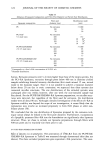
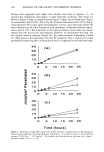
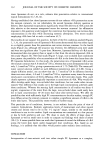
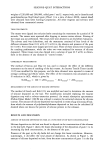
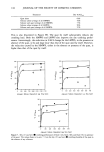
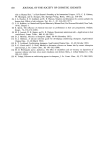
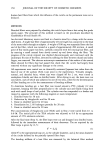
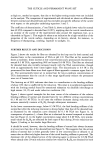
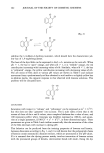
138 JOURNAL OF THE SOCIETY OF COSMETIC CHEMISTS 2000 1500 1000 500 0 I I I I I 0.000 0.100 0.200 0.300 0.400 0.500 0.600 Wt % Silicone Figure 1. Deposition of gum 1 in the absence (0) and presence (i•) of the quar. bath, almost doubled in the presence of the quat. This dependence of deposition on initial siloxane concentration, as well as the increase in the amount depositing on hair in the presence of the quat, were found to be common phenomena for all of the silicone materials tested. The exact mechanism of the enhanced deposition of the siloxanes in the presence of the quat is not known. The quat could potentially help drive the siloxane to the fiber surface (simultaneous deposition i.e. a quat-silicone interaction, of some sort, in solution prior to deposition) or it could first coat the hair fiber and then facilitate deposition of the silicone (sequential deposition). Berthiaume and Jachowicz (14) carried out a study involving the deposition on hair of six polydimethylsiloxanes (viscosities ranging from 50 to 12,500 centistokes) in the form of aqueous emulsions. They found that the rates, as well as the amounts of deposition of all of the silicone oils, were higher on hair pretreated with a polymeric quaternary compound {poly(methacrylamidopropyltrimeth- yl ammonium chloride)} than on untreated hair, indicating that sequential deposition may play a role in the mechanism.

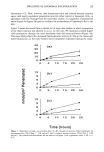
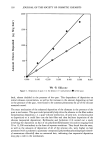
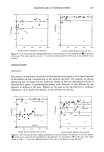
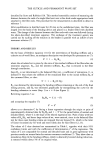
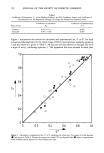
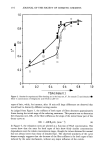
SILICONE-QUAT INTERACTIONS 139 AMOUNT OF SILICONE DEPOSITED ON HAIR AS A FUNCTION OF TYPE OF POLYDIMETHYLSILOXANE Viscosity of the materials tested was not expected to play a role in the deposition parameters because dilute solutions of the silicones were used in the dip baths. It was thought, however, that the different polymer chain lengths in the different materials tested may affect the deposition in some fashion. This was found not to be the case. For any given concentration of the dip bath, almost the same amount of silicone deposited, irrespective of which of the polydimethylsiloxanes was used. The trend of increased deposition in the presence of the quat, as compared in the absence of quat, for all of the materials, is shown in Figure 2. EFFECT OF SILICONE ON COMBING PERFORMANCE IN ABSENCE OF THE QUAT Both wet and dry combing performances were assessed for the different levels of the treatments used. In general, it was found that ease of wet and dry combing improved 2000 1500 lOOO 500 0 I I I I I 0.000 O. 100 0.200 0.300 0.400 0.500 0.600 Wt % Silicone Figure 2. Deposition of all silicones in the absence (O) and presence (O) of the quat.
Purchased for the exclusive use of nofirst nolast (unknown)
From: SCC Media Library & Resource Center (library.scconline.org)