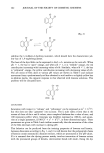
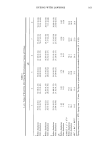
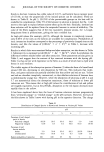
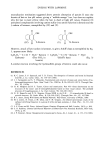
148 JOURNAL OF THE SOCIETY OF COSMETIC CHEMISTS (6) (7) (8) (9) (10) (11) (12) (13) (14) (15) ride on Human Hair," in Hair Research: Proceedings of the International Congress, 1979, C. E. Orfanos, W. Montagna, and G. Stuttgen, Eds. (Springer-Verlag, Berlin, 1981), pp. 638-649. J. A. Faucher, E. D. Goddard, and R. B. Hannan, Sorption and desorption of a cationic polymer by human hair: Effects of salt solutions, Text. Res. J., 47, 616-620 (1977). C. R. Robbins, in Chemical and Physical Behaviour of Human Hair (Van Nostrand Reinhold, New York, 1979), Chapter 5. E. Spiess, The influence of chemical structure on performance in hair care preparations. Parfuem. Kosmet., 72, 370-376 (1991). M. F. Jurczyk, D. R. Berger, and G. R. Damaso, Quaternary ammonium salt--Applications in hair conditioners, Cosmet. Toiletr., 106, 63-68 (1991). D. J. Halloran, Silicones in shampoos, Happi, 60-64 (November 1991). D.J. Halloran, A silicone selection guide for developing conditioning shampoos, Soap/Cosmetics/ Chemical Spec., 22-26 (March 1992). R. Y. Lochhead, Conditioning shampoos, Soap/Cosmetics/Chemical Spec., 42-49 (October 1992). E. G. Gooch and G. S. Kohl, Method to determine silicones on human hair by atomic absorption spectroscopy, J. Soc. Cosmet. Chem., 39, 383-392 (1988). M. D. Berthiaume and J. Jachowicz, The effect of emulsifiers and oil viscosity on deposition of nonionic silicone oils from oil-in-water emulsions onto kertain fibers, J. Colloid Interface Sci., 14!, 299-315 (1991). K. Yahagi, Silicones as conditioning agents in shampoos, J. Soc. Cosmet. Chem., 43, 275-284 (1992).

j. Soc. Cosmet. Chem., 45, 149-158 (May/June 1994) Effects of the cuticle on the permanent wave set of human hair F.-J. WORTMANN, Deutsches Woll)$rschungsinstitut a.d. TH Aachen e. V. , Veltmanplatz 8, D-52062 Aachen, Germany, and N. KURE, Kao Corporation Tokyo Laboratories, 2-1-3 Bunka Sumida-ku, Tokyo 131, Japan. Received January 6, 1994. Synopsis A significant inhibitory effect of the cuticle on the permanent wave set of human hair was confirmed by measuring the set of fiber loops for both alescaled (cuticle-removed) and normal (cuticle-unremoved) hairs. The analysis of fiber set, based on the theory established in a previous investigation (7), showed that the set obtained for both types of hair is in the same way related to the relaxation of fiber bending stiffness during reduction. The consideration of the differences between the bending relaxation rate of normal and alescaled hairs during reduction suggests that the main role of the cuticle in waving is to reduce the setting ability of human hair by effectively operating as a chemical barrier. It lowers the concentration of the reducing agent through reaction prior to its diffusion into the fiber cortex. A further, minor, and mechanical role of the cuticle for permanent set is discussed. INTRODUCTION The morphological components constituting human hair are generally believed to con- tribute in different ways, depending on their chemical and physical properties, to the mechanisms of cosmetic processes, namely to permanent waving, which is the objective of our investigation. In the case of permanent set, the importance of the hair fiber corex has been emphasized on the basis of its dominance of the overall fiber mechanical properties (1--4), which in water mainly reside in the helical fraction of the intermediate filaments. However, little is known about the mechanical properties of the cuticle (5,6) and even less about its role in permanent waving. In a previous study by the authors (7) it was shown that the permanent wave set of human hair in bending, simulating permanent waving, is quantitatively determined by the bending stiffness of the hair fiber and its change with reduction, thus providing a tool to study the physical and chemical mechanisms of permanent wave set in detail. In the present study the approach is further extended to the comparative analysis of the permanent bending set of descaled (cuticle-removed) and normal (cuticle-unremoved) 149
Purchased for the exclusive use of nofirst nolast (unknown)
From: SCC Media Library & Resource Center (library.scconline.org)