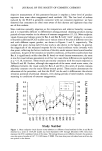
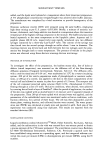
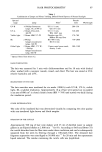
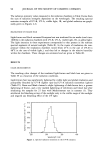
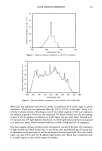
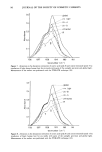
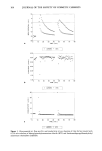
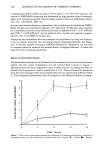
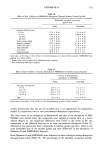
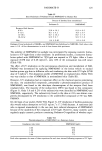
108 JOURNAL OF THE SOCIETY OF COSMETIC CHEMISTS produces a reversal of the surface potential as a result of the precipitation of positively charged oil droplets. The plug conductivity is also gradually reduced to a level below that characteristic for untreated hair. The reason for this is not clear it could be related to a slow spreading of adsorbed emulsion droplets on the surface of hair, leading to a progressive increase of the area modified by a hydrophobic silicone polymer and, thus, a reduction in the surface conductivity of the fibers. Flow rate data do not show any decrease in plug permeability, which implies that a deposited layer is relatively thin. Initial reversal of the surface charge also results from the application of an emulsion, DC 929, which consists of an aminofunctional oil emulsified by a mixture of cationic and nonionic surfactants. The droplets of oil in this emulsion are small, with an average diameter of 0.18 }xm, and possess a high positive charge independent of pH (6). Although a decrease in zeta potential during rinsing might suggest a desorption because of low affinity to keratin, the interaction of this emulsion with hair results in a very significant drop in plug conductivity. The measurements of combing forces of both virgin and damaged hair also suggest that DC 929 is a very efficacious and substantive conditioning agent, with its effect lasting through several shampooings (15). In addition to this, the deposition studies of DC 929 by a turbidimetric method showed a high rate of adsorption, with a gradual uptake of oil droplets similar to that observed for the emulsion Q2-7224 (6). All these data could not be reconciled without the inference that the deposited oil from emulsion DC 929 is able to penetrate hair structure and deposit in its bulk under the surface. Similar conclusions were drawn from the study of inter- actions of silicone microemulsions with hair (11). It was also demonstrated in this work that the ability of microemulsions to permeate the surface layers of hair produces greater substantivity and enhanced barrier properties against the diffusion of dyes and surfac- tants. CONDITIONERS BASED ON CATIONIC SURFACTANTS DEPA traces for two similar conditioners based on stearalkonium chloride in combina- tion with Quaternium-22 (gamma-gluconamidopropyl dimethyl 2-hydroxyethyl am- monium chloride) (Conditioner A) or a combination of stearalkonium chloride and behenyltrimmonium methosulfate (Conditioner B) are presented in Figure 4. The treat- ments were performed at 1% conditioner concentration, which corresponds to 0.01- 0.04% concentration of actives. Zeta potential curves show initial adsorption followed by desorption (or rearrangement) of cationic surfactants, the behavior similar to that observed for single-component cationic surfactant solution illustrated by the data shown in Figure la and ld. In contrast to simple surfactant solutions, however, there is also a distinct reduction of plug permeability, which allows us to calculate the thickness of a deposited conditioning layer. For conditioners A and B (Figure 4b), at the point corresponding to the end of the second measurement cycle, the thickness was calculated to be 0.76 }xm and 0.6 }xm, respectively. It is also noteworthy that while the streaming potentials or zeta potentials vary from high-positive to negative values during the rinsing cycle, the flow rates or plug permeabilities as well as plug conductivities remain relatively constant. This suggests that little adsorbed material is actually desorbed, since otherwise this would produce an increase in conductivity and permeability of the plug. The observed variation in the surface charge is probably confined to the outermost section of the adsorbed layer, and results from either desorption of the small amounts of cationic agents or their rearrangement into the inside of the fiber (10).

DYNAMIC ELECTROKINETIC AND PERMEABILITY ANALYSIS 109 2O 15- o._ -5- • -10- i 45- • -20 0 4,50 4 00- 3.50- co 3,00- o v 2,50 2.00- O• 1,50- 1 O0 0.50- 0,0( 0 10 20 30 40 50 60 70 80 TIME ( rain ) [] CONDITIONER A + CONDITIONER 0.66 pm %. 0,76 pm 10 20 30 40 50 60 70 80 TIME (min) [] CONDITIONER A + CONDITIONER B 30- 25 2O 15- 10- 5- 0 0 10 2b 30 4b 5'0 6'0 7'0 80 TIME (min) [] CONDITIONER A + CONDITIONER B ] Figure 4. Zeta potential (a), flow rate (b), and conductivity (c) as a function of time for hair treated with 1.0% w/w solutions of conditioners A and B.
Purchased for the exclusive use of nofirst nolast (unknown)
From: SCC Media Library & Resource Center (library.scconline.org)