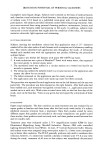
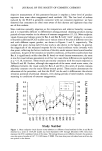
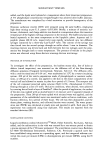
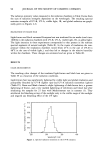
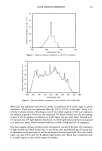
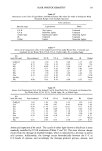
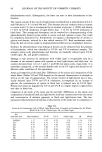
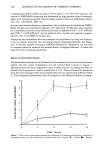
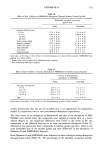
120 JOURNAL OF THE SOCIETY OF COSMETIC CHEMISTS a minimal perceptible redness on skin is 20-50 mJ/cm 2 (11). After UV exposure, the amount of NMPABAO remaining was determined by high-pressure liquid chromatog- raphy with nitrosamine-specific thermal energy analyzer detection (Thermedics Detec- tion, Inc., Chelmsford, MA)(12). In some percutaneous absorption experiments, after application of radiolabeled NMPA- BAO, the skin was immediately exposed to UV light from the Mutzhas solar simulator for 3 min before initiation of the diffusion cell study in darkness (UVA = 0.67 mW/cm 2 and UVB = 0.028 mW/cm2). At this radiation dose, the skin was exposed to approx- imately 25% of the MED for human skin. Absorption and metabolism data were analyzed for significance by using the Student's t test to compare means for two test samples (Instat, Graphpad Software, San Diego, CA). A one-way analysis of variance (ANOVA) followed by a Bonferroni test was used to compare means for multiple test samples (Instat, Graphpad Software). P-values less than 0.05 were considered significant. RESULTS AND DISCUSSION The percutaneous absorption of Padimate-O was measured from a lotion and an ethanol vehicle the time course of absorption into the receptor fluid is shown in Figure 1. Absorption from the lotion appeared to reach a steady state at 6 h absorption from the ethanol vehicle appeared to reach a steady state at 12 h. Values obtained for absorption from the lotion through viable and nonviable skin were not significantly different (Table I). This comparison demonstrates that the integrity of the diffusional barrier to absorp- m 5 m 4 o o 6 TIME (hours) Figure 1. Time course of percutaneous absorption of Padimate-O in hairless guinea pig skin. Padimate-O was applied to skin in 15 Ixl vehicle/cm 2 at a chemical dose of 6.7 Ixg/cm 2. ß = Lotion ß = Ethanol.

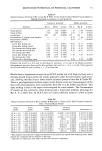
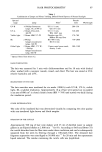
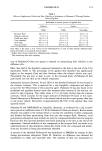
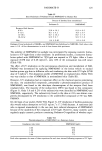
PADIMATE-O 121 Table I Effects of Application Vehicle and Skin Viability on Absorption of Padimate-O Through Hairless Guinea Pig Skin Radiolabel recovered, percent of applied dose Ethanol Lotion Viable Viable Nonviable Receptor fluid 18.2 --- 1.7 4.3 --- 0.4 6.8 --- 1.5 Stratum corneum• 7.4 +-- 1.3 1.3 --- 0.2 1.7 --- 0.3 Viable skin layer 2 16.9 --- 1.9 6.0 --- 1.0 4.3 --- 1.2 Total absorbed 42.5 --- 2.1 11.6 --- 1.1 12.7 +-- 2.5 24-h wash 49.1 +-- 1.8 73.8 --- 3.9 74.1 +-- 3.9 Total recovered 91.6 --- 1.5 85.4 --- 3.9 86.8 --- 5.0 Each value is the mean + S.E. of four or five determinations in each of three animals (ethanol-viable, 1otion-nonviable) or six animals (lotion-viable). • Surface layer of skin removed by cellophane-tape stripping. 2 Skin remaining after tape stripping. tion of Padimate-O does not appear to depend on maintaining skin viability in the diffusion cells. More than half of the absorbed compound remained in the skin at the end of the 24-h experiment (Table I). The percentage of the applied dose absorbed was significantly higher in the receptor fluid and skin fractions when the ethanol vehicle was used. Presumably this was due, at least in part, to the increased levels of Padimate-O that partitioned into the skin as the ethanol evaporated. Substantial amounts (between 10 and 20%) of the absorbed Padimate-O were found in the stratum corneum. This is expected for a very lipophilic compound and helps to account for the effectiveness of this sunscreen agent. Padimate-O was also found in the epidermal and papillary dermal tissue that remained after removal of the stratum cor- neum by tape stripping. This viable tissue is 15 to 20 times thicker than the stratum corneum, which accounts for the larger amounts of Padimate-O found in this layer. Overall absorption of Padimate-O in the ethanol vehicle was four times greater than that in the lotion vehicle. Recoveries of approximately 80-93% of the applied dose were typically found. Padimate-O and NMPABAO are lipophilic chemicals, as evidenced by a log octanol/ water partition coefficient value of 3.86 for Padimate-O (data not shown). Bovine serum albumin was added to the receptor fluid to increase the solubility of these compounds and thereby facilitate partitioning from skin into the receptor fluid. However, total percutaneous absorption must include not only the compound absorbed into the receptor fluid but also that material absorbed and found remaining in the skin at the end of the experiment. Limited solubility of test compounds in the receptor fluid can result in an underestimation of skin absorption unless skin levels of the test compound and metab- olites are included as being percutaneously absorbed. A portion of the absorbed Padimate-O was hydrolyzed to DMABA by esterase in skin during percutaneous absorption (Table II). However, no difference was observed for metabolism in viable and nonviable skin. The viability of skin was maintained to
Purchased for the exclusive use of nofirst nolast (unknown)
From: SCC Media Library & Resource Center (library.scconline.org)