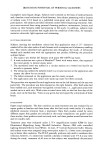
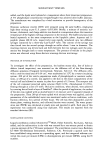
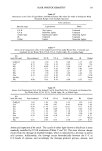
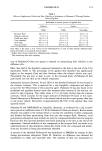
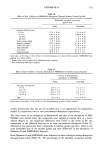
122 JOURNAL OF THE SOCIETY OF COSMETIC CHEMISTS Table II Effects of Application Vehicle and Skin Viability on Esterase Hydrolysis of Padimate-O in Hairless Guinea Pig Skin Percent of absorbed dose hydrolyzed to DMABA Ethanol Lotion Viable Viable Nonviable Receptor fluid fraction 0-6 h 29.9 + 7.1 8.3 + 1.3 10.9 + 1.6 6-12 h 29.8 + 8.3 10.4 + 2.2 9.9 + 1.1 12-18 h 27.6 + 7.4 9.7 --- 2.1 8.9 + 2.9 18-24 h 26.0 --- 7.8 9.6 + 2.6 10.6 + 4.3 Skin 5.4 -+ 2.3 2.3 -+ 0.7 2.7 -+ 0.9 Each value is the mean + S.E. of four or five determinations in each of three animals (ethanol-viable, lotion-nonviable) or six animals (lotion-viable). observe the acetylation of PABA and benzocaine in vitro in diffusion cells (13). However, esterase activity in skin is stable and does not require cofactors. Esterase activity has previously been observed histochemically in nonliving stratum corneum (14). No sig- nificant differences in the percentages metabolized were found for the receptor fluid fractions within each individual group. Therefore, just as the rate of absorption of Padimate-O remained relatively constant throughout the 24-h experiment, so did the percentage metabolized. Only a small amount of DMABA was found in the skin of each group. The metabolism of Padimate-O was 2-3 times greater with the ethanol vehicle, which was previously shown to markedly enhance percutaneous absorption. Whether increased absorption of Padimate-O results directly in increased metabolism of the compound is not clear. Possibly, pathways of absorption (and exposure to metabolic enzymes) differ during metabolism when a compound is applied in different vehicles. The percutaneous absorption of NMPABAO from the lotion vehicle was less than half of the absorption of Padimate-O (Table III). As with Padimate-O, absorption of NM- PABAO was similar through viable and nonviable skin. Approximately 1% of NMPA- BAO penetrated into each receptor fluid fraction of both groups throughout the 24-h experiments. The levels of the nitrosamine in skin at 24 h were substantially lower than the levels of Padimate-O. NMPABAO was metabolized to NMPABA by esterase activity in skin during percu- taneous absorption (Table IV). The differences in metabolism of NMPABAO within the receptor fluid fractions of either viable or nonviable skin were not significant. However, significant differences were found for metabolism in viable and nonviable skin sections approximately four times as much NMPABA was recovered in the viable receptor fluid fractions. The reason for the effect of skin viability on the metabolism of NMPABAO and the absence of an effect on the metabolism of Padimate-O is not clear. Possibly, different isozymes of esterase are involved in the hydrolysis of the two compounds. Also, a reduction in the pH of nonviable skin may have an effect on enzyme activity. Little or no NMPABA remained in the skin of each group at the end of the experiments. These

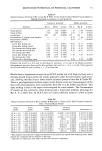
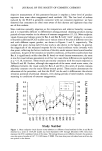
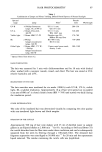
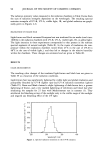
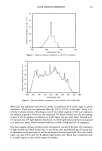
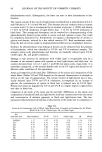
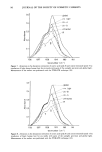
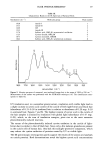
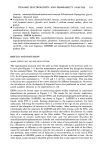
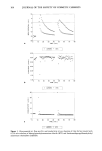
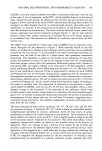
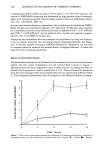
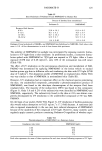
PADIMATE-O 123 Table III Effect of Skin Viability on NMPABAO Absorption Through Hairless Guinea Pig Skin Radiolabel recovered, percent of applied dose Viable Nonviable Receptor fluid fraction 0-6 h 0.73 -+ 0.16 1.32 6-12 h 0.85 +-- 0.15 0.89 12-18 h 1.0 + 0.17 1.2 18-24 h 0.99 -+ 0.29 1.0 Total receptor fluid 3.6 -+ 0.64 4.4 Stratum corneum 1 0.43 -+ 0.06 0.76 Viable skin layer 2 1.2 -+ 0.13 0.78 Total absorbed 5.2 +- 0.62 6.0 24-h wash 51.8 +- 6.2 51.5 Total recovered 56.9 + 6.1 57.2 --- 0.67 --- 0.17 +-- 0.26 -+ 0.16 -+ 0.69 + 0.17 +-- 0.16 --- 0.81 --- 3.2 - 3.6 Each value is the mean +-- S.E. of four or five determinations in each of three animals. applied in a lotion vehicle. 1 Surface layer of skin removed by cellophane-tape stripping. 2 Skin remaining after tape stripping. NMPABAO was Table IV Effect of Skin Viability on Esterase Hydrolysis of NMPABAO in Hairless Guinea Pig Skin Percent of absorbed dose hydrolyzed to NMPABA Viable Nonviable Receptor fluid fraction 0-6 h 22.9 + 3.3 7.2 + 1.7 6-12 h 28.6 + 4.1 7.3 + 1.1 12-18 h 26.2 -+ 5.0 6.6 + 1.5 18-24 h 26.2 +-- 5.4 7.2 + 1.2 Skin 0.0 + 0.0 0.75 + 0.52 Each value is the mean +-- S.E. of four or five determinations in each of three animals. studies demonstrate that the use of nonviable skin is not appropriate for metabolism studies in conjunction with in vitro percutaneous absorption experiments. The time course of the absorption of Padimate-O and that of the absorption of NM- PABAO were similar when the compounds were applied to human skin in a lotion vehicle (Figure 2). No significant differences were found in the levels of the two compounds in the different fractions or in total percutaneous absorption (Table V). Absorption was greater for both compounds in hairless guinea pig skin. Only in the more permeable skin of the hairless guinea pig were differences in the absorption of Padimate-O and NMPABAO observed. Both Padimate-O and NMPABAO were subjected to ester hydrolysis during absorption through human skin (Table VI). The percentages of the absorbed compound metabo-
Purchased for the exclusive use of nofirst nolast (unknown)
From: SCC Media Library & Resource Center (library.scconline.org)