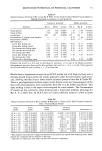
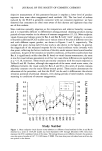
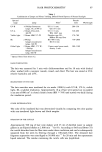
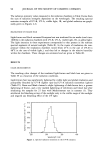
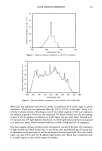
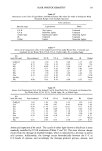
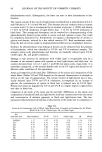
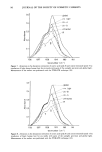
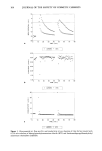
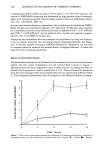
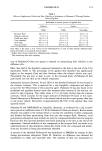
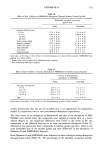
126 JOURNAL OF THE SOCIETY OF COSMETIC CHEMISTS Table Viii Effect of UV Irradiation on NMPABAO Absorption in Hairless Guinea Pig Skin Radiolabel recovered, percent of applied dose Receptor fluid fraction 0-6 h 0.42 -+ 0.07 6-12 h 0.83 + 0.13 12-18 h 1.3 + 0.32 12-24 h 0.94 -+ 0.45 Total receptor fluid 3.5 -+ 0.49 Stratum corneum • 1. ! + 0.24 Viable skin laye? 0.66 + 0. !4 Total absorbed 5.3 -+ 0.6 ! 24-h wash 60.7 + 5.5 Total recovered 66.0 +- 5.5 Each value is the mean -+ S.E. of four determinations in each of two animals. NMPABAO was applied in a lotion vehicle. • Surface layer of skin removed by cellophane-tape stripping. 2 Skin remaining after tape stripping. UNKNOWN • NMPABAO • NMPABA • 1oo • •o so 7o 4O • o 6 12 I st 24 SKIN RECEPTOR FLUID TIME (henrs) & SKIN Figure 3. Photodecomposition of NMPABAO: Compounds in receptor fluid and skin following UV irradation of hairless guinea pig skin. sure to the sun is expected thus the UV instability of NMPABAO may not reliably ensure its safety under such conditions. The use of Padimate-O in sunscreen formulations has decreased in recent years partly because of concern about the possible contamination of sunscreen products by a nitro-

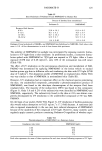
PADIMATE-O 127 samine. In 1989, Padimate-O was reported to be used in 70-80% of sunscreen products sold in the United States (5). A survey of the current FDA Voluntary Cosmetic Re- porting Program files found that only 9.5% of the sunscreen formulations contain Padimate-O. Careful control of the ingredients used and the manufacturing process can lead to Padimate-O-containing products that have significantly lower levels of NM- PABAO and are effective in protecting consumers from the harmful effects of exposure to UV light. Our work at the FDA has shown that most manufacturers are able to formulate products that are free of NMPABAO contamination if they follow good manufacturing practices and take steps to avoid incompatible ingredients (12,15). REFERENCES (1) A.M. Pathak and P. Robins, A response to concerns about sunscreens: A report from the skin cancer foundation, J. Dermatol. Surg. Oncol., 15, 486-487 (1989). (2) P. N. Magee, R. Montesano, and R. Preussmann, "N-Nitroso Compounds and Related Carcino- gens," in Chemical Carcinogens, C. E. Searle, Ed. (American Chemical Society, Washington, DC, 1976), pp. 491-625. (3) P. N. Magee and J. M. Barnes, Carcinogenic nitroso compounds, Adv. Cancer Res., 10, 163-246 (1967). (4) R. N. Loeppky, R. Hastings, J. Sandbothe, D. Heller, Y. Bao, and D. Nagel, "Nitrosation of Tertiary Aromatic Amines Related to Sunscreen Ingredients," in Relevance to Human Cancer of N-Nitroso Compounds, Tobacco Smoke and Mycotoxins, I. K. O'Neill, J. Chen, and H. Bartsch, Eds. (International Organization for Research on Cancer, Publication 105, Lyon, France, 1991), pp. 244-252. (5) V. C. Dunkel, R. H. C. San, J. W. Harbell, H. E. Seifried, and T. P. Cameron, Evaluation of the mutagenicity of an N-nitroso contaminant of the sunscreen Padimate O, Environ. Mol. Mutagen., 20, 188-198 (1992). (6) R. C. Doerr and W. Fiddler, Photolysis of volatile nitrosamines at the picogram level as an aid to confirmation, J. Chromatogr., 140, 284-287 (1977). (7) R. L. Bronaugh and R. F. Stewart, Methods for in vitro percutaneous absorption studies. IV: The flow-through diffusion cell, J. Pharm. Sci., 74, 64-67 (1985). (8) R. L. Bronaugh, R. F. Stewart, and M. Simon, Methods for in vitro percutaneous absorption studies. VII: Use of excised human skin, J. Pharm. Sci., 75, 1094-1097 (1986). (9) S. W. Collier, N.M. Sheikh, A. Sakr, J. L. Lichtin, R. F. Stewart, and R. L. Bronaugh, Mainte- nance of skin viability during in vitro percutaneous absorption/metabolism studies, Toxicol. Appl. Pharmacol., 99, 520-531 (1989). (10) S. W. Collier and R. L. Bronaugh, "Cutaneous Metabolism During Percutaneous Absorption," in Pharmacology of the Skin, H. Mukhtar, Ed. (CFC Press, Boca Raton, FL, 1991), pp. 111-129. (11) Sunscreen drug products for over-the-counter human drugs, Federal Register, 43, 38205 (August 25, 1978). (12) H. J. Chou, R. L. Yates, D.C. Havery, and J. A. Wenninger, Determination of 2-ethylhexyl 4-(N-methyl-N-nitrosamino) benzoate in commercial sunscreen and cosmetic products. J. AOAC Int. (submitted for publication). (13) D. Nathan, A. Sakr, J. L. Lichtin, and R. L. Bronaugh, In vitro skin absorption and metabolism of benzoic acid, p-aminobenzoic acid and benzocaine in the hairless guinea pig, Pharm. Res., 7, 1147- 1151 (1990). W. Meyer and K. Neurand, The distribution of enzymes in the skin of the domestic pig, Lab. Anim., 10, 237-247 (1976). J. L. Ho, H. H. Wisneski, and R. L. Yates, High pressure liquid chromatographic-thermal energy determination of N-nitroso diethanolamine in cosmetic products, J. Assoc. Off. Anal. Chem., 64, 800-804 (1981). (14) (15)
Purchased for the exclusive use of nofirst nolast (unknown)
From: SCC Media Library & Resource Center (library.scconline.org)