jo Soc. Cosmet. Chem., 46, 129-140 (May/June 1995) The relative sensitivity of two arm-wash test methods for evaluating the mildness of personal washing products GREGG A. NICOLL, RICHARD I. MURAHATA, GARY L. GROVE, JOAN BARROWS, and PAUL T. SHARKO, Unilever Research U.S., 45 River Road, Edgewater, NJ 07020 (G.A.N., R.I.M., J.B., P.T.S.), and KGL, Inc., 835437 Sussex Boulevard, Broomall, PA 19008 (G.L.G.). Received August 15, 1995. Synopsis The utility of controlled arm wash tests for evaluating the potential of personal washing products to induce skin irritation and dryness is well documented. This investigation directly compares the ability of two different arm wash protocols to discriminate between the relative mildness of personal washing products. Both methods consist of a total of 18 treatments (four per day for four days, with two treatments on the fifth day). Treatment using arm wash test Method I consists of a continuous gentle washing for two minutes followed by rinsing. Treatment using Method II consists of a ten-second product application and ninety seconds exposure to the lather followed by rinsing. Method I, a more aggressive wash regimen, induced greater absolute levels of erythema and dryness, and also provided greater discrimination between products of similar irritation potential. Method I and Method II appeared to exhibit a similar capability to discriminate between products based on differences in skin drying potential. Non-invasive instrumental measurements of skin condition and function were consistent with clinical observations. The superior sensitivity of Method I will be especially valuable when comparing mild cleansing products. In contrast, Method II exhibited reduced capability to distinguish between cleansing products and therefore has reduced potential to detect differences, especially with regard to irritation potential. INTRODUCTION Various clinical test methods have been developed for evaluating the ability of personal washing products to induce skin irritation and dryness. Published methods include various permutations of soaking, occlusive chambers or patches, and mild-to-moderate exaggerated washing of various anatomical sites (1-13). The relevance of the soap chamber test (1) and other occluded patch tests has been questioned, as they differ substantially from normal in-home use of products. Even the authors of these methods have recently asserted that washing protocols are more relevant to in-home use condi- tions, and are probably more predictive of the skin effects that may develop (2,3). Three general types of exaggerated washing protocols have recently been described for 129

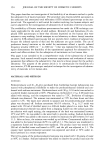
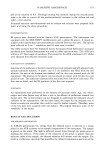
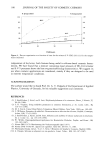
130 JOURNAL OF THE SOCIETY OF COSMETIC CHEMISTS Table I Principle Ingredients of Products Tested Product Product form Ingredients Product A Bar Product B Bar Product C Liquid Product D Liquid Sodium tallowate, sodium cocoate, water, PEG-6 methyl ether, triclocarban, glycerin Sodium tallowate, sodium cocoate, sodium cocoylisethionate, coconut fatty acid, stearic acid, sodium chloride, water, triclosan, sodium isethionate Water, sodium monoalkylphosphate, sorbitol, polyethylene glycol, sodium chloride, glycerin, triclosan Water, sodium cocoylisethionate, cocamidopropylbetaine, disodium cocamido MEA sulfosuccinate, stearic acid, propylene glycol, sodium isethionate use in evaluating the mildness of personal washing products: 1) the flex wash test, which entails washing the flex area (antecubital fossae) of the arm with a sponge (11) 2) the half-face wash, which was first described by A. Kligman at the 43rd Annual Meeting of the American Academy of Dermatology (5), and 3) the arm wash test (9,10). Various immersion and soaking protocols, including hand soaking procedures, for clinically evaluating cleansing products have also been described (14). Two different arm wash tests methods have been reported recently (4,5). Both consist of exposing the volar surface of the forearm to a product 18 times during a five-day test period (four times per day for four days and twice on the fifth day). The primary difference between the two protocols is in the method and duration of product appli- cation. Sharko et al. (Method I) used a gentle washing action for two minutes prior to rinsing (4). In contrast, Doughty et al. (Method II) used a ten-second product appli- cation followed by a 90-second exposure to the lather before rinsing (5). There were two major objectives of this study: first, to directly compare the ability of the two methodologies to induce skin irritation and dryness, and second, to establish the relative sensitivity of the two methods to discriminate between personal washing prod- ucts of relatively similar irritancy and skin drying potential. MATERIALS AND METHODS SUBJECTS These studies were conducted in a double-blind manner using healthy volunteers be- PRODUCT(S) A A vs. B C vs. D I STUDY 1 STUDY 2 STUDY 4 11 STUDY 3 STUDY 5 .... METHOD Figure 1. Experimental study design.
Purchased for the exclusive use of nofirst nolast (unknown)
From: SCC Media Library & Resource Center (library.scconline.org)