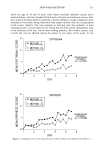
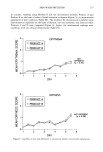
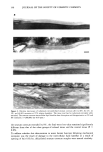
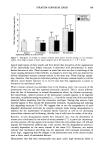
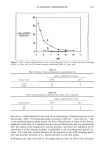
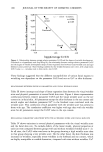
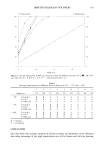
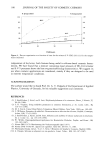
ARM WASH METHODS 131 tween the ages of 18 and 55 years. Each subject provided informed consent and a medical history, and met standard clinical study inclusion and exclusion criteria. Sub- jects with pre-existing medical conditions or known allergies to soaps or fragrances were excluded as were those taking medication that might interfere with the interpretation of the results. Subjects who were pregnant or lactating were also excluded. A mild cleansing product was provided for use during the one-week period immediately prior to the initiation of the test. Use of other washing products, skin creams, lotions, oils, or bath oils was not allowed during the pretest or test phase of the study. At the o co z 1 1 ß METHOD [] METHOD II ERYTHEMA I I I i 1 2 3 4 5 SIGNIFICANTLY DIFFERENT (p = 0.0002) DAY :• - DRYNESS a::: ß METHOD I o co [] METHOD I•. • 1- _ ._ß-.ß•ß"ßx/[] o P'• SIGNIFICANTLY DIFFERENT (p = 0.0008) 1 2 ,3 4 5 6 DAY Figure 2. Comparison of two arm-wash protocols to induce erythema and dryness with Product A.

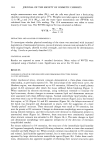
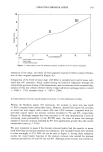
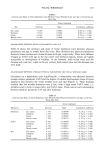
132 JOURNAL OF THE SOCIETY OF COSMETIC CHEMISTS Table II Instrumental Comparison of Two Arm-Wash Protocols (Test Product A) Instrument Study protocol Parameter Method I Method II p Evaporimeter Chroma meter Skicon Dermal Torque Meter Barrier function TEWL (g/m2/hr) 14.9 q- 1.3 10.1 q- 0.9 0.0002 Redness a* 8.8 q- 0.3 7.1 q- 0.3 0.0001 Hydradon conductance (}xmhos) 12.9 q- 1.6 22.8 q- 2.9 0.0003 Extensibility Ue 1.9 q- 0.1 2.3 q- 0.1 0.0016 Ur 0.9 q- 0.1 1.1 q- 0.1 0.04 Uf 5.0 q- 0.2 5.3 q- 0.2 0.9 beginning of the test phase, any subjects with a TEWL value exceeding 8.9 gm/m2/hr, or clinical scores greater than 0.5 for either dryness or erythema, were excluded. TEST PRODUCTS Two personal washing bars and two personal washing liquids were used in these studies (ingredients are shown in Table I). The bars were shaved and repackaged in individually coded white boxes, and the liquids were packaged in individually coded pump contain- ers. The product identities were not known to the subjects or to the clinical investi- gators. The product pairs were chosen for their relatively similar potential for inducing irritation and dryness (4,11 unpublished data). STUDY DESIGN This report summarizes the results of five separate clinical studies. The overall experi- mental design is shown in Figure 1. Study 1 was designed to compare the relative sensitivities of the two methods. Product A was used with the subjects' arms balanced for wash method. The remaining four studies were paired comparisons of product. Study 2 had 31 subjects, and the remainder had 18-25 subjects each. Study 1 compared Method I with Method II using Product A. Studies 2 and 3 compared Product A with Product B using Method I and Method II, respectively. Studies 4 and 5 compared Product C and Product D using Method I and Method II, respectively. Studies were conducted during the winter in the Northeastern U.S. Daytime high temperatures ranged from 21 ø to 67øF, and the dew point from 4 ø to 57øF. ARM WASH METHODS Method I was a modification of that reported by Sharko et al. (4). All washes were conducted by a technician who generated lather in gloved hands and applied the lather to the wet volar surface of the panelist's forearm. The technician gently glided gloved fingertips up and down the forearm for one minute. After one minute, additional lather was generated, and the wash cycle was repeated for another minute. The forearm was rinsed for 30 seconds and patted dry. This two-minute wash was conducted on each arm
Purchased for the exclusive use of nofirst nolast (unknown)
From: SCC Media Library & Resource Center (library.scconline.org)