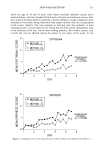
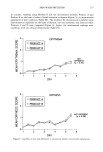
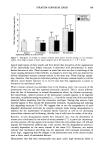
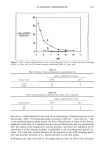
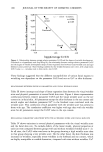
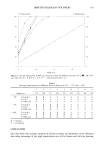
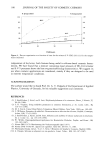
ARM WASH METHODS 137 In contrast, washing using Method II did not discriminate between Product A and Product B on the basis of either clinical irritation or dryness (Figure 5), or instrumental assessment of skin condition (Table III). The tendency for this protocol to exhibit some discrimination capability on the basis of dryness, but not erythema, was detected when Products C and D were compared (Figure 6). Again, the instrumental readings were consistent with the clinical observations (Table IV). U Z 2 • I [] PRODUCT A o PRODUCT B ERYTHEMA ,,, ,,,[3 2 3 4 5 DAY NOT DIFFERENT (p O.lO) 2- Z _ [] PRODUCT A o PRODUCT B DRYNESS NOT DIFFERENT (p = o.o•) • T I | 1 2 3 4 5 6 DAY Figure 5. Capability of arm wash Method II to discriminate between two personal washing bars.

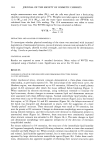
138 JOURNAL OF THE SOCIETY OF COSMETIC CHEMISTS Ld z 0 -4 .......... r---- 1 2 PRODUCT C PRODUCT D ERYTHEMA $ 4 • NOT DIFFERENT (p 0.0 DAY • .P_•_o_ p_u_ _C_T_ _C. l o _P_•_o_ p_u_ _C_T_ _D. i DRYNESS .A ..•. ,' SIGNIFICANTLY ,- - ,' '--A" DIFFERENT "•" .o,'"zx" ,.o (P = 0.0002) •.A. • •O'' 1 2 • 4 5 6 DAY Figure 6. Capability of arm wash Method II to discriminate between two personal washing liquids. DISCUSSION The results of this investigation demonstrate that Method I provided a greater degree of sensitivity for distinguishing between the irritation potential of the personal washing products tested. Furthermore, greater absolute levels of erythema, dryness, and instru- mentally assessed damage were observed compared to those generated using Method II. It is suggested that the superior sensitivity of Method I may be especially valuable when comparing very mild products.
Purchased for the exclusive use of nofirst nolast (unknown)
From: SCC Media Library & Resource Center (library.scconline.org)