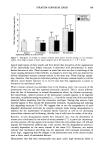
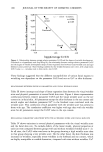
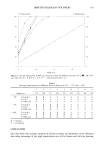
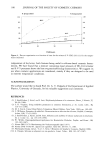
ARM WASH METHODS 139 While Method II may be able to distinguish some products based solely on their potential to cause skin dryness, the protocol is not sufficiently sensitive to distinguish between products based on their irritancy potential. Inclusion of instrumental measurements of skin condition with clinical assessment procedures further enhanced the power of the clinical test by providing insight into the functional changes (e.g., T.E.W.L., skin hydration) in skin condition occurring during the study. Additional benefits obtained by addition of instrumental techniques included objective confirmation of the expert assessment results and increased sensitivity. The value of inclusion of instrumental measures confirms the previous findings of Sharko et al. (4). The arm wash test is useful for evaluating the skin irritation and drying potential of personal washing products. This test procedure enables the short-term (five-day) clinical evaluation of product mildness, while maintaining the necessary sensitivity to discrim- inate between products of similar irritancy and skin drying potential. The arm wash test was developed to simulate many of the in-home use conditions of personal washing products and has been shown to be a good indicator of the product mildness attributes that are experienced under normal in-home use conditions (12, 13). As previously dem- onstrated (4), while the soap chamber test (1) is useful for placing cleansers into broad categories of mildness, Method I provides the necessary sensitivity for distinguishing between products of similar mildness characteristics. The results of this investigation support the usefulness of the arm wash test for evaluating personal washing product mildness and highlight the superior sensitivity of the two-minute wash protocol (Method I) for distinguishing bar and liquid formulations. ACKNOWLEDGMENTS The authors wish to thank Ms. T. Alfano, Ms. D. Borowski, Ms. D. Tallman and Dr. C. Zerweck for their skillful experimental assistance. REFERENCES (1) P. J. Frosch and A.M. Kligman, The soap chamber test--A new method for assessing the irritancy of soaps, J. Am. Acad. Dermatol., 1, 35-41, (1979). (2) P. J. Frosch, "Irritancy of Soaps and Detergent Bars," in Principles of Cosmetics for Dermatologists, P. H. Frost and S. T. Horwith, Eds. (C. V. Mosby Company, St. Louis, 1982), pp. 5-12. (3) O. H. Mills, Jr., L. J. Swinyer, and A.M. Kligman, Assessment of irritancy of cleansers. Scientific exhibit presented at the Annual Meeting of the American Academy of Dermatology, Washington, D.C., 1984. (4) P. T. Sharko, R. I. Murahata, J. J. Leyden, and G. L. Grove, Arm wash evaluation with instru- mental evaluation--A sensitive technique for differentiating the irritation potential of personal wash- ing products,J. Derm. Clin. Eval. Soc., 2, 19-26 (1991). (5) D. Doughty, J. Jaramillo, and E. Spengler, "Methods for Assessing the Mildness of Facial Cleansing Products," in Preprint of the I6th IFSCC International Congress, pp. 468-477 (1990). (6) G. Imokawa, Comparative study on the mechanism of irritation by sulfate and phosphate type of anionic surfactants, J. Soc. Cosmet. Chem., 31, 45-66 (1980). (7) P. J. Dykes, D. L. Williams, L. A. Jenner, and R. Marks, "Use of In Vivo and In Vitro Test Systems as Predictors of the Cutaneous Irritancy of Synthetic Detergents (Syndets)," in Skin Models, R. Marks and G. Plewig, Eds. (Springer-Verlag, New York, 1986), pp. 327-332.

140 JOURNAL OF THE SOCIETY OF COSMETIC CHEMISTS (8) G. Sauermann, A. Doerschner, U. Hoppe, and P. Wittern, Comparative study of skin care efficiency and in-use properties of soap and surfactant bars, J. Soc. Cosmet. Chem., 37, 309-327 (1986). (9) R. M. Dahlgren, M. F. Lukacovic, S. E. Michaels, and M. O. Visscher, "Effects of Bar Soap Con- stituents on Product Mildness," in Proceedings of Second World Conference on Detergents (Am. Oil. Chem. Soc., 1987), pp. 127-134. (10) M. F. Lukacovic, F. Dunlap, S. E. Michaels, M. O. Visscher, and D. Watson, Forearm wash test to evaluate the clinical mildness of cleansing products, J. Soc. Cosmet. Chem., 39, 355-366 (1988). (11) D. Strube, S. W. Koontz, R. I. Murahata, and R. F. Theiler, The flex wash test: A method for evaluating the mildness of personal washing products, J. Soc. Cosmet. Chem., 40, 279-306 (1989). (12) B. N. Keswick, M. O. Visscher, and M. J. Levine, Methods used to assess skin response to personal cleansers. Scientific exhibit presented at the Annual Meeting of the American Academy of Derma- tology, 1991. (13) B. H. Keswick, K. D. Ertel, and M. O. Visscher, Comparison of exaggerated and normal use techniques for assessing the mildness of personal cleansers, J. Soc. Cosmet. Chem., 43, 187-193 (1992). (14) G. Klein, G. Grubauer, and P. Fritsch, The influence of daily dish-washing with synthetic detergent on human skin, Br. J. Dermatol., 127, 131-137 (1992).
Purchased for the exclusive use of nofirst nolast (unknown)
From: SCC Media Library & Resource Center (library.scconline.org)