j. Soc. Cosmet. Chem., 46, 175-180 (May/June 1995) Dimethylsiloxane polymers: Vaporization rate test/freezino temperatures M. A. RUIZ, A. HERNANDEZ, A. PARERA, and V. GALLARDO, Pharmacy and Pharmaceutical Technology Department, Faculty of Pharmacy, University of Granada, E-18071 Granada, Spain. Received April 11, 1995. Synopsis The use of silicones in cosmetic products has increased considerably in recent years, due to the wide field of application they exhibit. A special group are the cyclomethicones, also called volatile PDMS or dimeth- ylcyclosiloxanes, used in multiple pharmaceutical formulations. The aim of this paper is to select a mixture of cyclic cyclomethicones with four and five silicon atoms, in order to obtain a product that exhibits a suitably low solidification temperature (approx. - 10øC) and ready evaporation, combined properties that the individual cyclomethicones do not exhibit separately. Tests were carried out following the standards DIN-53170, UNE 55-902-85, and Farm. Eu. The samples were subjected to different temperatures, ranging from 40øC to 80øC for vaporization rate tests, and from - 10øC to 4øC for freezing rate tests. Results demonstrate that the mixture V-5 and DC-244 in the proportion 5:5 is the most suitable for emulsion-type formulations. INTRODUCTION Silicones are synthetic polymers based on alternating silicon-oxygen, as well as organic groups (methyl, phenyl) that are bonded to each silicon atom (1). There is a huge variety of silicone products with a variety of characteristics. However, just a few of them are used in cosmetics (2), although their use has increased during the last years owing to their wide field of application. Recent developments in silicone technology have resulted in cyclomethicones, with special properties that can improve personal care products. These cyclomethicones, also called volatile polydimethylsiloxanes (volatile PDMS) or dimethylcyclosiloxanes, are used in multiple pharmaceutical formulations (3-5) for the benefits they provide com- pared with the classical silicone oils, as well as for their polymerization rate, presenting the peculiarity of vaporization at body temperature without leaving dry residues. Our goal ,•n this work is to study the evaporation rate and freezing temperature of mixtures of this group of silicones. Their individual characteristics are known: the 175

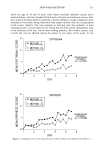
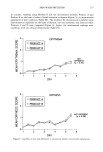
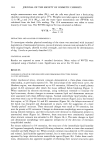
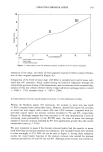
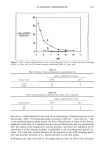
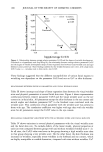
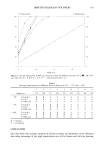
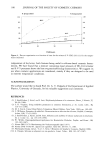
176 JOURNAL OF THE SOCIETY OF COSMETIC CHEMISTS cyclomethicones pentamer shows slow evaporation but freezing temperatures around -40øC on the contrary, the tetramer shows faster evaporation and higher freezing temperatures (= 10øC). This brings about crystallization problems when preparations are kept at low temperatures. Hence, it seems of interest to investigate mixtures of both types of silicones in different proportions in order to achieve ideal characteristics con- cerning both evaporation and solidification: the optimum formulation should evaporate easily after being spread on the skin, and should not leave any dry residues. MATERIALS AND METHODS Four types of silicone tetramers were used: Silbione V-2 (S.V-2, Rh6ne-Poulenc), Dow Corning's 244 and 344 (DC-244 and DC-344, Dow Corning) and Abil K-4 (A. K-4, Th. Goldschmidt). Silbione V-5 (S. V-5, Rh6ne-Poulenc) was used as a pentamer. They were chosen because of their stability and because, unlike classical silicone oils, they can produce cold emulsions in low concentrations (6). The water used in the tests was doubly distilled and tikered through 0.2-•m Nucleo- pore membranes. The method followed for determining vaporization/freezing rates is based on the methodologies described by the DIN-53170 standard (7) for the evaluation of the ease of vaporization of volatile components in oil. We also followed the Spanish standard UNE 55-902-85 (8) for the determination of the content in water and volatile substances, as well as the Pharm. Eur. 2nd ed. V. 4.5.5. (9) for vaporization residues in essential oils. In each case, the values obtained were an average of three determinations carried out under the same conditions. RESULTS AND DISCUSSION EVAPORATION TESTS In order to obtain a product that exhibits the desired features of easy evaporation and slow freezing, different silicone tetramers and pentamers were examined separately. Evaporation rates were determined for all the silicones at 15 ø, 40 ø, and 80øC the results are shown in Figure 1 for the 15 ø temperature. Pure water is included for comparison note how it shows the fastest evaporation (--25% in 60 min). On the contrary, the S.V-5 pentamer evaporates most slowly, only 3% being evaporated after that time. The tetramers all show similar evaporation rates, except DC-244, which evaporates almost at the same rate as water. When the experiments were carried out at 40øC, the results shown in Figure 2 were obtained. Water evaporates again most rapidly, being completely evaporated in 40 minutes, unlike S.V-5, which reached less than 30% in 60 minutes. Once again, the silicone tetramers show an intermediate behavior, although exhibiting significant dif- ferences among themselves thus DC-244 reaches 75% evaporation, as compared to 69% in S.V-2 and 40% in DC-344. A similar behavior was found at 80øC (Figure 3). Water evaporated completely in about
Purchased for the exclusive use of nofirst nolast (unknown)
From: SCC Media Library & Resource Center (library.scconline.org)