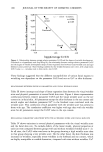
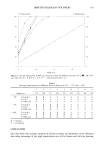
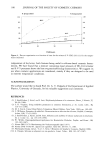
154 JOURNAL OF THE SOCIETY OF COSMETIC CHEMISTS This paper describes our investigation of the feasibility of an alternate method to probe the substantivity of lauroyl sarcosine. The procedure uses deutero-labeled sarcosinate as the surfactant and attenuated total reflectance (ATR) infrared spectroscopy as the ana- lytical tool. The approach is well suited for studies involving live human subjects and can be adapted for the investigations of substantivity of molecules of diverse structures. The availability of Fourier transform spectrometers has made the ATR technique rou- tinely applicable for the study of solid surfaces. Klimisch (4) and Samaritano (5) em- ployed ATR spectroscopy to show that silicones deposited on live human skin were resistant to soap washing. Initial attempts in our laboratory to detect lauroyl sarcosine on skin by ATR-infrared spectroscopy did not provide direct evidence of substantivity because the infrared spectra of skin and the surfactant are quite similar. The use of perdeutero lauroyl sarcosine as the model for sarcosinates offered a specific infrared frequency window (2000 cm- • to 2200 cm-•) that was exploited for the study. This report demonstrates the feasibility of the experimental approach for substantivity re- search and offers evidence for the adsorption of sarcosinates on live human skin. This paper is not intended to be a comprehensive study of the substantivity of lauroyl sarcosine. Such research would require numerous experiments and evaluation of various parameters that influence the substantivity that may be a future project for the author's laboratory. The purpose of the present article is to communicate the feasibility of a non-invasive, FT-IR spectroscopic analytical technique for the investigation of substan- tivity of materials to live human skin. MATERIALS AND METHODS MATERIALS Perdeuterolauric acid (C12D2402) purchased from Cambridge Isotope Laboratories was reacted with phosphorous trichloride to make the perdeuterolauroyl chloride and con- densed with sodium sarcosinate. Perdeuterolauric acid (40 g, 0.18 mole) was melted in a jacketed beaker maintained at 60øC. Phosphorous trichloride (11.5 g, 0.08 mole) was added with mixing, and the temperature was raised to 72øC. Evolution of hydrogen chloride was observed. The mixture was maintained at 72øC for three hours and then cooled to 12øC. The layers were allowed to separate and the perdeuterolauroyl chloride phase was decanted off. Sodium sarcosinate (40.5% solution, 74 g, 0.27 mole) was mixed with 150 ml of distilled water in a 400-ml beaker placed in a water bath. The perdeuterolauroyl chloride was added from a dropping funnel into the sodium sarcosin- ate solution with rapid mixing the temperature of the bath was maintained between 25øC and 30øC. Ice was added to the water bath to provide cooling. Sodium hydroxide solution (50%) was added to the reactor as needed to maintain the pH between 10.5 and 11.5. After an hour, the mixture was worked up as follows: Concentrated sulfuric acid was added to the heated mixture (82øC) to a pH of 2.1. The mixture was transferred to a separatory funnel and the phases were separated. The product layer was treated with 200 ml of distilled water and heated to 82øC, and the pH was adjusted to 2.1. The organic layer (perdeuterolauroyl sarcosine) was separated and dried at 50øC under re- duced pressure in a rotary evaporator. Thirty five grams of the perdeuterolauroyl sarcosine was mixed with 110 grams of water at 50øC in a beaker. Sodium hydroxide was added to dissolve the product and raise the

N-LAUROYL SARCOSINATE 15 5 pH of the solution to 8.5. Thorough mixing was essential during the neutralization stage to be able to convert all the perdeuterolauroyl sarcosine to the sodium salt and make a clear solution. N-lauroyl sarcosine (non-deuterated) and its sodium salt solution were prepared from lauric acid using the above procedure. INSTRUMENTATION IR spectra were obtained with an Analect 6160 spectrometer. The instrument was equipped with the MULTISEPT interferometer and a globar IR source. A liquid ni- trogen-cooled narrow-band mercury/cadmium telluride detector was used. The spectra were collected at 2 cm- • resolution, and 64 scans were co-added. The ATR accessory (fxA-525 Enhanced Access Attenuated Total Reflectance accessory) purchased from Analect Instruments was used to collect spectra of skin. This ATR unit utilizes a 45 ø fixed angle of incidence. The prisms for the ATR attachment (45 ø ZnSe) were obtained from Harrick Scientific Corp. SUBSTANTIVITY EXPERIMENT Solutions of the surfactant at desired concentrations were prepared and pH-adjusted with sodium hydroxide solution. A plastic cup (5.5-cm diameter) was filled with the test solution. An area of the forearm was marked, and the skin was scanned with the IR equipment. The solution in the plastic cup was placed in contact with the skin for a set period of time. The surfactant-contacted skin was rinsed with 100 ml of cold water. The skin was air dried, and the IR spectrum of the skin was acquired. SUBSTRATES All experiments were performed on the forearm of Caucasian males. Age, sex, ethnic origin, and other factors may all have a role in the affinity of surfactants towards live human skin. The current project was not designed to understand the influence of such variables on the substantivity. On the other hand, the target for the program was to devise an analytical procedure that could be used for further research. Therefore, most of the key data were acquired with one subject. This helped eliminate some of the variability in the results. RESULTS AND DISCUSSION ATR INFRARED SPECTROSCOPY In ATR-IR spectroscopy (6), energy from the infrared source is directed to a prism placed in the ATR accessory in the sample compartment of the instrument. The sample is placed on the prism. The light is reflected several times through the prism prior to reaching the detector. If the index of the refraction of the prism is greater than the refractive index of the sample, the infrared radiation will interact with the sample. The result is a reflectance spectrum that resembles the infrared transmission spectrum of the
Purchased for the exclusive use of nofirst nolast (unknown)
From: SCC Media Library & Resource Center (library.scconline.org)