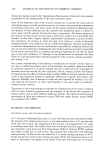
EFFECT OF CIGARETTE SMOKE ON SKIN 237 SKIN WRINKLING: IMAGE ANALYSIS OF SILICONE REPLICAS Two sets of silicone replicas were obtained around the eye area on each side of the face. The replicas were analyzed by placing each replica at the same point beneath a Sony M3A color camera and illuminating with a Nikon fiber optic light source at a fixed angle of 35 o. The camera was interfaced to the image analysis system, and the blue image of each replica was analyzed. Skin wrinkles were measured from the total area of the shadow produced from the ridges. In Part II of the study, other variables such as chronological aging and sun exposure were compared with the effect of cigarette smoke to further investigate the effects of cigarette smoke on skin. RESULTS PART I One hundred panelists were evaluated, and results were averaged from each group for each of the measurement parameters. Epidermal barrier condition. Non-smokers demonstrated a significantly lower degree of TEWL when compared with both active and passive smokers (p 0.001). No significant difference was observed between the degree of TEWL in active and passive smokers (Figure 1). Skin dryness. The amount of stratum corneum removed from the skin surface as deter- mined by image analysis of the sticky tapes was significantly different between both active and passive smokers when compared to non-smokers (p 0.05). The difference between active and passive smokers was not significant (Figure 2). Wrinkling. Significant differences in the amount of skin wrinkling were observed when comparing active and passive smokers and non-smokers (Figure 3). Active smokers appeared to exhibit twice as much wrinkling as non-smokers (p .001). 17 16 •.15 -r- 14 0 12 '•11 • •o uJ 9 i- 8 7 Effect of Cigarette Smoke on Skin Barrier Functions I Active Smokers Passive Smokers Non Smokers Figure 1. Skin barrier functions measured via transepidermal water loss.

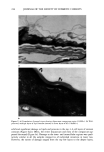
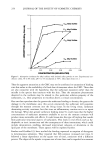
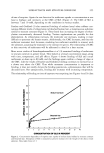
238 JOURNAL OF THE SOCIETY OF COSMETIC CHEMISTS Effect of Cigarette smoke on skin Dryness i i Active Smokers Passive Smokers Non Smokers Figure 2. Skin dryness measured via analysis of corneocytes on D-Squames. Effect of Cigarette Smoke on skin wrinkling 90 8O 7O 60 5O 40 30 20 I Active Passive Smokers Smokers Non Smokers Figure 3. Skin wrinkling via image analysis of silicon replicas of the periorbital area. PART II Efj•ct of chronological age and sun exposure on barrier functions of skin. As observed in Figures 4a and 4b, sub-division of non-smokers by age indicates a reduction in TEWL with increasing age possibly due to dehydration of skin. It is clear from these data that age, unlike smoke exposure, played no significant role in skin damage. The degree of sun exposure appeared to exhibit a good dose response with the increase in TEWL. Active smokers who received severe sun exposure exhibited a significantly worse skin barrier (p = 0.025) than non-exposed non-smokers who received the same UV exposure. Observation of the barrier functions of this population revealed that although some cigarette smoke-exposed individuals avoided the sun, their barrier function was still significantly more impaired than that of non-exposed non-smokers (p = 0.02) exposed to a similar amount of sun exposure. Efj•ct of chronological age and sun exposure on skin dryness. There was some correlation between smoke exposure, age, and skin dryness and also between smoke exposure, sun
Purchased for the exclusive use of nofirst nolast (unknown)
From: SCC Media Library & Resource Center (library.scconline.org)