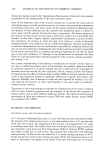
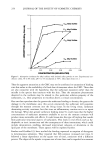
268 JOURNAL OF THE SOCIETY OF COSMETIC CHEMISTS 200 150 100 • 5O -5O Alkyl Sulfate Alkyl Carboxylate Phosphate ' I ' J ' I I ' I 0 ' 0 2 4 6 8 I 12 pH Figure 9. Influence of the surfactant anionic head group on the pH dependency of the swelling of pig epidermis. Percent of swelling is versus water. Surfactants at 2% w/w (40øC, 30-min treatment time). Data taken from ref. 38. pressure inside a gel structure, is higher than that on the outside, if immobile ions bound to the protein structure are present. In the case of surfactants, freely mobile counter ions are replaced by surfactants and the osmotic pressure is reduced. This is the case, for example, at basic pH when a cationic surfactant binds to the matrix, forming a more hydrophobic and less hydrated complex. However, binding of an anionic surfactant at the basic pH is hydrophobic, with exposed anionic surfactant groups attracting counter ions and hence increasing hydration. How does pH of surfactant systems effect irritation? Several authors have explored this aspect. This issue becomes very complex and involves multiple interrelated biochemical and physiological pathways. The relative importance of any event will depend on the structure of the surfactant, ease of penetration into and through the stratum comeurn, dose and time of exposure, interaction with living tissue, and still other parameters. It is reported (39) that soaps of the same alkyl chain length (generated at a high pH) are more irritating than their fatty acid counterparts that would exist at a low (acidic) pH. This is likely due to the effects described above, i.e., anionic vs hydrophobic interaction and perhaps solubility issues. It becomes very difficult to separate structural and physical chemical effects from pH effects. Many other authors have found inconsistencies in the role of pH [see Murahata et al,, (40)]. Using a modified soap chamber test, Hassing et al. (41) indicated that transepi- dermal water loss was greatest for synthetic detergent bars with pH of 5.9 to 3.8 and

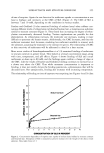
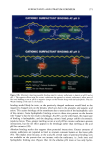
SURFACTANTS AND STRATUM CORNEUM 269 that a pH 10 soap bar caused relatively little damage at low concentrations. These findings also speak to structural variants in surfactants as having the major influence on irritation rather than pH per se. Antoine eta/. (42) reported that exposure of skin to 5% SLS solutions at pH 5, 7, and 9 under occlusion for 48 hours did not produce any differences in irritancy. At these three pHs, SLS is fully ionized. Thus these results support an absence of pH effects on skin reactivity, and surfactant structure is crucial. However, one comment is that the pH of the solutions was adjusted with hydrochloric acid rather than by buffering. Thus the skin could easily buffer the solution to the pH of skin once it is in contact with it. Murahata et M. (40) examined irritancy of 8% soap solutions with pHs varying between 8 and 10, in a modified soap chamber test. The solutions were adjusted with addition of low-molecular-weight free fatty acid. There was no difference in the irritation po- tential. The milder fatty acid would be expected to make the soap solutions milder. Also, the lower pH (less alkaline) might be expected to be milder than the higher unnatural pH. But this was not found to be the case. They concluded that pH was not a factor. One comment is that at such saturating levels of surfactant (8%), the soap would still overwhelm the solution and that the small amount of fatty acid present would have a negligible effect on irritation. Testing a series of soap/detergent bar solution combos of variable pHs from 7 to 9 also did not show any correlation of pH to irritation. Thus it is easy to conclude that it is the structure and physical chemical characteristics of surfactants that dictate irritation potential rather than pH. One might also point out that the buffering capacity of the acidic skin surface can in part help ameliorate the irritation potential of residual soap on skin. However, for cationics this will not be the case due to their charge similarity to stratum corneum at the pH range of skin surface (pH 4.5 to 5.5) and was not found to be the case for other anionic sulfates where charge persists (39). BINDING VERSUS SWELLING DILEMMA The possible types of surfactant interactions with stratum corneum protein that are consistent with the available data have just been discussed in detail. The schematics in Figure 10 display the hypothetical bonds that could occur between detergent and protein at the different pHs. Stratum corneum swelling results support these interactions in the following way. For anionic surfactants in pH 9 solution in contact with stratum corneum (Figure 10a), the major type of bonding is hydrophobic, that is, the hydrophobic tails of the surfactant bind to hydrophobic sites on the protein. This leaves the anionic head groups dangling and creates repulsive forces between the negatively charged surfactant head groups that promote unfolding of the keratin chains and the well-documented swelling of the membrane, especially at alkaline pH. The unfolding or conformational change is revers- ible when the surfactant is removed. Very little ionic bonding occurs at this pH because the ionized groups on the keratin are largely anionic (from glutamic and aspartic amino acid residues) due to the alkalinity and they would repel the anionic surfactant. When the pH is dropped to pH 3 or 4 (Figure 10a), the ionizable groups on the protein are derived from protonation of the side-chain amino functions on amino acids like lysine
Purchased for the exclusive use of nofirst nolast (unknown)
From: SCC Media Library & Resource Center (library.scconline.org)