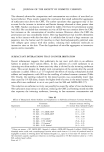
258 JOURNAL OF THE SOCIETY OF COSMETIC CHEMISTS Table I Relationship Between Clinical Irritation Potential of Surfactants and Their Ability to Cause Swelling of Stratum Corneum Stratum corneum swelling s Surfactant Skin irritation in vivo a (% change in length) LAS Severe within 1 day 10.0 SLS Severe within 1 day 11.8 LDAO Severe within 1 day Negligible swelling CTAC Intensely red by day 4 Negligible swelling AEOS-3EO Mild to moderate within 5 days 4.0 AEOS-6EO Mild to moderate within 5 days 1.5 AEOS-12EO None after 5 days 1.5 TWEEN-20 None after 5 days 0.2 • From Blake-Haskins et•/. (19) human subjects, 10% concentration, pH 7, Duhring chambers. b Methodology is given in ref. 17. Results shown are summarized from this work. Concentration was approximately 75 mM. LAS, dodecyl benzene sulfonate SLS, sodium lauryl sulfate AEOS-3EO, laureth-3 sulfate AEOS-6EO, laureth-6 sulfate, AEOS-12EO, laureth-12 sulfate LDAO, lauryl dimethyl amine oxide CTAC, cetyl trimethyl ammonium chloride TWEEN 20, polysorbate-20. Binding of surfactant systems to stratum corneum was studied by Mukherjee et •/. (15) using a different approach. They studied the propensity of surfactants to displace a fluorescent dye that is known to bind proteins. The dye has a low affinity for micelies and a high affinity for protein, and when bound it is fluorescent. It is displaced by anionic molecules that are more hydrophobic than itself, with consequent decrease in its emission intensity. They found that soaps (TEA laurate) displaced the dye more easily than SLS, which was easier than with sodium cocoyl isethionate. Thus soaps were bound to a greater extent than SLS, etc. Bars with mostly soap also displaced more dye than cocoyl isethionate-based bars. This parallels known irritation potential differences. The method has potential utility when studying new cleansing bar formulations for predict- ing mildness. This approach also supports binding interaction with stratum corneum proteins as important in skin reactivity of cleansing systems. MEMBRANE SWELLING Another in vitro response of stratum corneum to surfactants--membrane swelling al- luded to in the last section--has been probed in great depth. Putterman and co-workers (16) and Rhein et •/. (17) have shown that exposure of isolated stratum corneum to anionic surfactants induces continuous swelling of the membrane. The swelling occurs in all dimensions but is substantially greater in the thickness dimension. The extent of swelling induced by various anionic and nonionic surfactants parallels their propensity to elicit clinical erythema (Table I) that is, more irritating surfactants caused more swelling. Associated with the swelling reaction was curling and twisting of isolated stratum corneum, which dramatically decreased the width of the treated strip (18). This curling phenomenon and stratum corneum swelling respond similarly to various sur- factants, and they both directly parallel the clinical irritation potential of various anionic surfactants that is, the greater the twisting, the more the swelling and the greater the irritation potential (18). Other authors used an alternative membrane, cross-linked

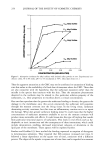
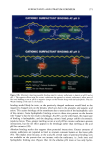
SURFACTANTS AND STRATUM CORNEUM 259 collagen (Helitrex Corporation) to track swelling. This membrane's behavior was sur- prisingly similar to that of stratum corneum (19). Rhein et al. (17) found that surfactant-induced stratum corneum swelling was (a) de- pendent on surfactant concentration, (b) increased with increased incubation time, and (c) reversible under conditions of low concentration (1% or less) and shorter incubation times (1 to 6 h) (see Figure 6). Because swelling is reversible, it probably results from interactions of surfactants with stratum corneum proteins rather than lipids, as once lipids are removed the intercellular structure is lost. Indeed, Putterman et al. (16) showed that pretreatment with lipid solvents potentiates surfactant-induced stratum corneum swelling probably by exposing more binding sites on the protein. The revers- ible twisting and curling of the stratum corneum may also be caused by conformational changes in proteins resulting from their denaturation. Putterman et al. (16) concluded that swelling does not result in true denaturation of keratin in the stratum corneum rather, it is due to a reversible conformation change resulting from cooperative binding of the appropriate detergent. This likely results in an ot • [3 conversion, with uncoiling of the filaments followed by expansion of the membrane. When stratum corneum swelling was measured as a function of anionic surfactant concentration, the swelling induced appeared to saturate at the CMC (see Figure 6 and ref. 17), as was the case with surfactant binding. Again, this suggests that the surfactant 30 CMC I I I I I I 5 10 15 24 Hr 6 Hr 3 Hr I Hr SLS CONCENTRATION (mM) Figure 6. Concentration dependence of the swelling response of human stratum corneum to sodium lauryl sulfate (SLS). Time periods shown are incubation times after which readings were taken for the various doses. Swelling values are percent increases from hydrated lengths. Arrow denotes the critical micelie concentration (CMC) of SLS. Data taken from ref. 17.
Purchased for the exclusive use of nofirst nolast (unknown)
From: SCC Media Library & Resource Center (library.scconline.org)