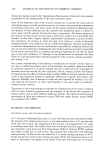
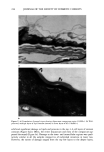
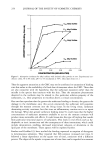
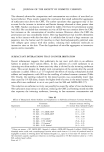
256 JOURNAL OF THE SOCIETY OF COSMETIC CHEMISTS I- 6 I&l •3 3 SLS ES-2 ES-3 I 130 E o o 2 4 6 8 lO 12 HOURS Figure 3. Sorption of sodium lauryl ether sulfates by bleached hair from 10% solutions. Absorption of SLS is measured as percent increase over the weight of the dried, rinsed substrate. ES is ether sulfate. Data taken from ref. 3. not shown). Binding of SLS increased up to six hours but decreased at 24 hours compared to the other time points, mostly at doses beyond 40 mM (4). This suggests changes in stratum corneum integrity at the longer incubation times. It is well known that SLS has a profound denaturing effect on protein secondary structure (1). Indeed, both stratum corneum and synthetic collagen membrane swell and denature in the presence of SLS and other surfactants, and for the former it appears reversible up to 35 mM. At longer time points, 1% soap irreversibly swells the membrane and the membrane begins to fall apart (5). The surfactant may interfere with the intercorneal cohesion (6,7), perhaps at the corneocyte envelope, where it may bind hydrophobically to the covalently bound lipid, thereby causing the lameliar lipid to detach. Indeed, Imokawa has shown in electron micrographs of stratum corneum treated with 5% SLS that the multilamellar structures were no longer visible in the intercellular spaces. One can speculate that SLS has blocked the attachment of the lameliar structure to the corneocyte envelope, causing the mac- rostructure to disintegrate. Direct effects of SLS and other surfactants on actual removal of stratum corneum lipids from the membrane per se, which is another damaging effect that might account for the altered integrity of the stratum corneum, are not well substantiated (5). Most studies show minimal effects of SLS on lipid removal both in vitro (8) and in vivo (9-14), although some methods of exposure (11), e.g., cup shake on the skin surface, may release corneocytes and associated lipid, presumably because SLS disrupts the intercorneal cohesion as described above this results in somewhat more apparent lipid removal along with corneocytes.

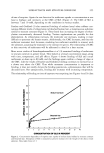
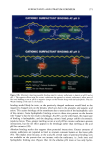
SURFACTANTS AND STRATUM CORNEUM 257 0.8 0.6 0.2 HSC, pH 5.5, I Hr TREATMENT, RT SLS SLI 0 I I I I 0 20 40 60 80 100 mM SURFACTANT Figure 4. Binding of sodium lauryl sulfate (SLS) and sodium cocoyl isethionate (SLI) to human stratum corneum (HSC). RT is room temperature. Data taken from ref. 4. O z o CMC HAIRLESS GUINEA PIG STRATUM CORNEUM pH 5.5, RT 6 hr I hr 24 hr 0 0 20 40 60 80 1 O0 120 SLS (mM) Figure 5. Influence of equilibration time on sodium lauryl sulfate (SLS) binding to guinea pig stratum corneum (GPSC). Data taken from ref. 4.
Purchased for the exclusive use of nofirst nolast (unknown)
From: SCC Media Library & Resource Center (library.scconline.org)