20 MHz B-SCANNING 251 (10) J. Serup, A three-hour test for rapid comparison of effects of moisturizers and active constituents (urea), Acta Derre. Venereo/. (Stockh.), suppl. 177, 29-33 (1992). (11) L. Overgaard Olsen and G. B. E. Jemec, The influence of water, glycerin, paraffin oil and ethanol on skin mechanics, Acta Derre. Venereol. (Stockh.), 73, 404•406 (1993). (12) P. Treffel and B. Gabard, Stratum corneum dynamic function measurements after moisturizer or irritant application, Acta Derre. Venereol. (Stockh.), 287, 474•479 (1995). (13) J. Pinnagoda, R. A. Tupker, T. Agner, and J. Serup, Guidelines for transepidermal water loss (TEWL) measurement, Contact Dermatitis, 22, 164-178 (1990). (14) S. Seidenari, A. Di Nardo, P. Pepe, and A. Giannetti, Ultrasound B scanning with image analysis for assessment of allergic patch test reactions, Contact Dermatitis, 24, 216-222 (1991). (15) R. Ghadially, L. Halkier-Sorensen, and P.M. Elias, Effects of petrolatum on stratum corneum struc- ture and function, J. Am. Acad. Dermatol., 26, 387-396 (1992). (16) G. Marti-Mestres, J. Passer, H. Maillois, V. Van Sam, J.J. Guilhou, J.P. Mestres, and B. Guillot, Evaluation expErimentale de l'hydratation et du pouvoir occlusif in vivo et in vitro d'excipients lipophiles et de leurs Emulsions phase huile continue, Int. J. Cosmet. Sd., 16, 161-170 (1994). (17) S. Seidenari, and A. Di Nardo, B scanning evaluation of allergic reactions with binary transformation and image analysis, Acta Derm. Venereol. (Stockh.), suppl. 175, 3-7 (1992). (18) S. Seidenari, and A. Di Nardo, B scanning evaluation of irritant reactions with binary transformation and image analysis, Acta Derre. Venereol. (Stockh.), Suppl. 175, 9-13 (1992). (19) S. Seidenari, and B. Belletti, Instrumental evaluation of subclinical irritation induced by sodium lauryl sulfate, Contact Dermatitis, 30, 175 (1994). (20) S. Seidenari, Echographic evaluation with image analysis of irritant reactions induced by nonanoic acid and hydrochloric acid, Contact Dermatitis, 31, 146-150 (1994). (21) S. Seidenari, C. Turnaturi, A. Motolese, and P. Pepe, Echographic evaluation of edema induced by patch test chambers, Contact Dermatitis, 27, 331-332 (1992). (22) K.A. Dines, P. W. Sheets, J. A. Brink, C. W. Hanke, K. A. Condra, J. L. Clendenon, S. A. Gross, D. J. Smith, and T. D. Franklin, High frequency ultrasonic imaging of the skin: Experimental results, Ultrasonic Imaging, 6, 408•434 (1984). (23) P. Payne, Medical and industrial applications of high resolution ultrasound, J. Phys. Sci. Instrum., 18, 465-472 (1985). (24) P. Payne, Ultrasound in dermatology--Non-invasive skin measurement by ultrasound, RNM, 13, 24-26 (1985). (25) P. Payne, G. L. Grove, H. Alexander, R. M. QuillJam, and D. L. Miller, Cross sectional ultrasonic scanning of skin using plastic fihn transducers, Bioeng. Skin, 3, 241-246 (1982). (26) P. Airmeyer, H. Hoffmann, M. Stticker, S. Goertz, and S. el-Gammal, "General Phenomena of Ultrasound in Dermatology," in Ultrasound in Dermatology, P. Airmeyer, S. el-Gammal, and H. Hoffmann, Eds. (Springer-Verlag, Berlin, Heidelberg, 1992), pp. 55-79. (27) S. Seidenari, B. Belletti, and G. Pellacani, Time course of skin changes induced by short-term occlusion with water: Evaluation by TEWL, capacitance and B-scanning echography, Skin Res. Technol., 2, 52-53 (1996).

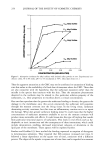
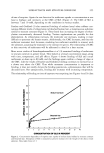
j. Soc. Cosmet. Chem., 48, 253-274 (September/October 1997) Review of properties of surfactants that determine their interactions with stratum corneum LINDA D. RHEIN, SmithKline Beecham, 1500 Littleton Rd., Parsippany, NJ 07054. Accepted for publication November 1 O, 1997. INTRODUCTION Surfactants have unique properties in solution that impact their interaction with sur- faces, with skin being one of those surfaces frequently contacted. Numerous investigators have studied the interaction of surfactants with intact stratum corneum, the horny (keratinaceous) membrane on the outermost part on the skin. Since roughly 70% of the dry weight of stratum corneum is proteinaceous, one therefore might foresee the op- portunity for considerable interaction with sites on the protein. Certain surfactants have been known to denature the secondary structure of proteins (1). Interactions of surfac- tants with insoluble proteins comprising stratum corneum are less well studied. Two parameters are considered in this review in relation to surfactant interactions with stratum corneum: (a) binding to the membrane and (b) membrane swelling. Within these contexts, the impact of surfactant solution properties, the role of pH, and inter- actions in mixed surfactant systems with stratum corneum are discussed with relevance to skin irritation. BINDING Because surfactants produce certain undesirable effects such as irritation in the tradi- tional sense (erythema, edema, and scaling) and perceived effects on the skin such as tightness and dryness, it is plausible that they are in fact binding in some manner to the structure. The binding of alkyl sulfate type of surfactants to human callus was investi- gated by Imokawa and Mishima (2). Figure 1 shows the surfactant sorption isotherms of the homologous series of alkyl sulfates to callus measured in vitro. It is apparent that they follow Langmuir's model, suggesting a limited number of saturable binding sites. However, it was further observed that the apparent saturation of the isotherms occurs at approximately the critical micelie concentration (CMC) for each surfactant. Because the concentration of surfactant monomers becomes constant above the CMC, this would limit the number of monomers (or submicellar species) available to bind to the callus. 253
Purchased for the exclusive use of nofirst nolast (unknown)
From: SCC Media Library & Resource Center (library.scconline.org)