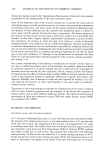
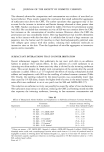
262 JOURNAL OF THE SOCIETY OF COSMETIC CHEMISTS Table II Comparison of Critical Micelie Concentration and Skin Irritancy of Some Commercial Surfactants • Soap CMC chamber Pig skin Surfactant (mMol/1) score swelling b Sodium lauryl sulfate Monethanolamine lauryl sulfate Ammonium lauryl sulfate Triethanolamine lauryl sulfate Sodium C12-18 alkyl sulfate Sodium alkyl benzene sulfonate Sodium laureth-2 sulfate Ammonium laureth-2 sulfate Triethanolamine laureth-2 sulfate Magnesium laureth-2 sulfate Sodium/magnesium laureth-6 sulfate Sodium laureth-3/myristeth-3 sulfate Lauryl amide ether sulfate Sodium sulfosuccinic acid ester Protein fatty acid condensate 7.20 3.15 276 3.4O 2.9O 192 4.OO 3.45 141 3.00 3.00 121 1.90 3.75 152 2.20 1.20 121 1.50 1.00 82 1.40 1.55 52 1.00 0.50 80 0.30 0.50 5 0.08 0.00 3 0.70 0.70 77 0.17 0.05 2 0.21 0.00 76 0.04 0.30 17 From Lang and Spengler (27). Surfactants tested at 15% w/w. lauryl sulfate, Faucher and Goddard (3) and Ananthapadmanabhan (4) showed that uptake of SLS continued to increase substantially upon exposure of stratum corneum to concentrations far greater than the CMC, even though a break occurred in the biphasic curve at the CMC. I, vivo skin reactivity also increases at doses of SLS above the CMC. For example, Wilhelm et M. (28) showed that i, vitro swelling of epidermal membrane increased substantially and also that skin surface water loss (i, vivo) increased substan- tially above the CMC (i.e., between 3 mM and 100 mM). Rhein et M. (29) and others (30,31) have also shown this for SLS in 21-day cumulative patch testing during which erythema increased well above the CMC. These findings appear to contradict the hy- pothesis that the surfactant monomer is the irritative species. Rhein et •l. (29) explored this in more depth. It is known that irritation due to exposure to a specific pharmacologic dose of surfactant increases as a function of time of exposure. This is due to continuous denaturation of cutaneous tissue, opening up skin reaction sites, and continuous diffusion of more surfactant into living tissue. This does not, however, explain why higher doses of surfactant, well above the CMC at constant time of exposure, increase the irritation level if surfactant monomer were the only skin- reactive species. This suggests that either (a) activity of monomer is changing above the CMC or (b) that monomer is not the only interactive species. It seems very unlikely that micelies containing 50-100 molecules of surfactant will penetrate into intact cutaneous tissue, and binding and swelling data presented above support this. Abu-Hamdiyyah and Mysels (32) demonstrated in some creative dialysis experiments that the rate of passage of SLS through a membrane impermeable to micelies continues to increase above the CMC, and they cite this as evidence for increasing activity of monomer in the CMC region. Theoretically, monomer should pass through until the concentration becomes equal on both sides of the dialysis membrane and that should

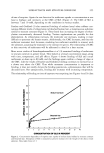
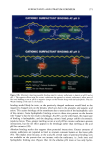
SURFACTANTS AND STRATUM CORNEUM 263 reflect the CMC, but this apparently was not the case. Such experimental results prompted studies to determine types of aggregate surfactant structures (if any) that may exist above the CMC the hypothesis is that aggregates of surfactants smaller than typical micelies may be formed above the CMC and these may be highly interactive with skin. To test this hypothesis, Hill and Rhein (33) utilized a microfiltration system and size-exclusion ultrafiltration membranes with molecular weight cutoffs of 2, 5, and 30 thousand. These molecular weight cutoffs should the reveal presence of molecular ag- gregates of surfactants. After verifying miceliar stability to the ultrafiltration system using a fluorescent probe, the researchers performed the separation of micelies from the bulk solution for SLS with the ultrafiltration system. Concentrations of individual surfactants in the submicellar fraction were analyzed and compared with the original total surfactant concentrations. Figure 8 shows that SLS gave a well-behaved separation ofmicelles from submicellar species for the individual surfactant system the break in the curve at 6.3 mM corresponds to the CMC for the surfactant solution. This is close to the literature value of 7.9 mM, probably low, as is often the case with no temperature controls on the system. A negligible MW difference in the separated species was ap- parent between the 2 K and 5 K cutoff membranes below the CMC. Above the CMC, however, a multiple-species distribution pattern was found. A small-molecular-weight species of less than seven molecules was separated by the 2 K membrane. Larger aggre- gates were separated by both the 5 K and 30 K membranes. , ß 2K Membrane O 5K Membrane , ß 30K Membrane f• - CMC o -5 I I I I I I I I I -5 4. -3 -2 -1 0 LOG TOTAL SURFACTANT CONCENTRATION mM Figure 8. Micropartition separation of SLS at different bulk concentrations evidence of the existence of submicellar aggregates. Data shown are for the 2 K, 5 K, and 30 K molecular size exclusion membranes. The CMC of the surfactant system was determined by surface tensiometry and is indicated by the arrow. Data taken from ref. 33.
Purchased for the exclusive use of nofirst nolast (unknown)
From: SCC Media Library & Resource Center (library.scconline.org)