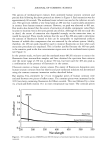
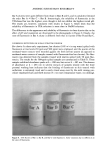
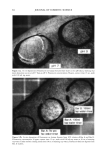
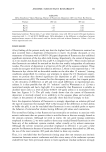
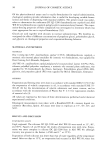
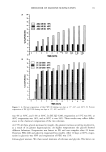
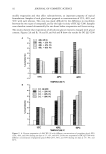
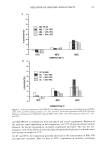
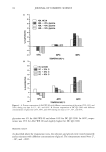
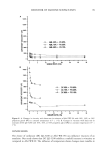
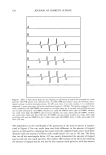
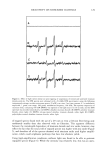
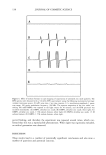
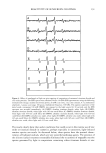
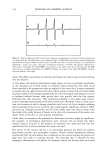
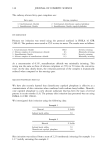
ANIONIC SURFACTANT RINSABILITY 79 Bar A slurries were quite different from those in Bars B and C, and its solubility followed the order Bar A • Bar C Bar B. Interestingly, the solubility of fluorescein in the TEA-based bar was the highest, even though it did not exhibit the highest initial pH. The results are, however, consistent with results in Figure 5, which show that the solubility of fluorescein in TEA solutions is more than in NaOH solutions. The differences in the appearance and solubility offluorescein in these slurries due to the effect of pH and counterion are illustrated by the photographs in Figure 8. Clearly, the state of fluorescein in Bar A slurry is different from that in slurries of Bar B and Bar C. FLUORESCEIN RETENTION ON HUMAN STRATUM CORNEUM Bar slurries. In these early experiments, bar slurries (10% w/v in tap water) spiked with fluorescein at two levels (50 ppm and 500 ppm) were employed, and the spectra of the methanol-water extracts were recorded against the fresh solvent system (as opposed to methanol-water extracts of samples treated with fluorescein-free bar slurries). No fluo- rescein was detected from the samples treated with slurries spiked with 50 pprn fluo- rescein. The results for the 500-ppm spiked samples are summarized in Table II. These samples exhibited absorbance peaks at •, = 280 nm, but not at •, = 485 nm. The absence of absorbance at •, = 485 nm in solvent extracts of samples treated with the three personal washing bars indicates that the binding of fluorescein to skin treated with surfactants is extremely weak and is easily rinsed away even by the mild rinsing pro- cedure employed [back-and-forth motion (5 x) in room temperature water, no rubbing]. lar A lar 13 lar C Figure 8. 10% Slurries of Bar A, Bar B, and Bar C with fluorescein Color variations due to differences in the state of fluorescein.

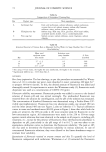
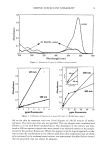
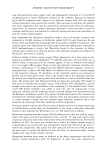
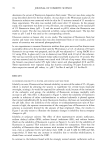
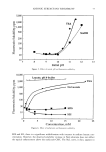
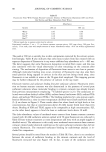
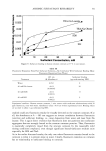
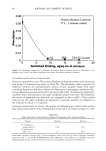
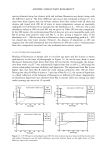
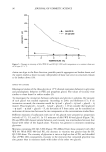
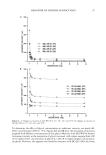
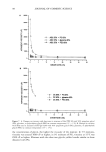
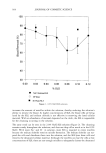
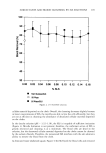
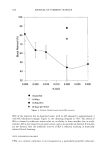
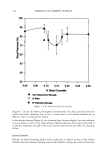
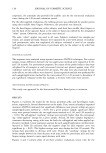
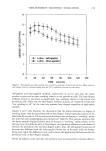
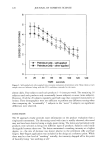
80 JOURNAL OF COSMETIC SCIENCE Table II Fluorescein Tests With Human Stratum Corneum: Absence of Fluorescein Deposition (485 nm) From Bar Slurries and Most Deposition From Water Absorbance System 280 nm 485 nm Water 0.56 0.48 Bar A a 0.20 0.01 Bar B a 0.18 0.01 Bar C a 0.18 0.01 a 280-nm peak due to protein extraction by solvent. Experimental conditions: 2 cm x 1.5 cm human stratum corneum pieces, 10% soap slurry, 500 ppm fluo- rescein, 15-sec soak, rinse with ample amount of water. Absorbance values 0.01 are within experimental error. The peak at 280 nm is entirely due to skin components extracted by the solvent system. Interestingly, Table II also indicates that only extracts taken from skin treated with an aqueous dispersion of fluorescein in tap water exhibited any absorbance at • = 485 nm. The latter suggests that some fluorescein deposition occurred from water, and this was also consistent with the visual observation of color remaining on the corneum after rinsing. The mechanism of deposition of fluorescein from water is not clear at present. Although molecular binding may occur, retention of fluorescein may also arise from small particles being trapped in crevices in the skin and not being rinsed away, since fluorescein is not soluble in water at the 50-ppm level employed. This trapping process may be further enhanced by the presence of calcium in the tap water. Fl•orescein retention and s•rfactant binding from p•re s•rfactant soh•tions. Fluorescein reten- tion on human stratum corneum was also determined in the presence of several pure surfactant solutions whose molecular binding to stratum corneum was already known from previous measurements employing •4C-labeled species (3,21). The surfactants se- lected were sodium dodecyl sulfate (SDS), sodium lauroyl isethionate (SLI), sodium/TEA oleate, and sodium/TEA laurate (TEAL). The binding isotherms for a one-minute equili- bration followed by a rinse in room-temperature distilled water [back-and-forth motion (5x)] are shown in Figure 9. These results show that oleate binds in high levels at low concentrations, but that at concentrations above 20 raM, laurate binds more than even oleate. Binding of SDS and TEAL appear to be comparable at high concentrations. SLI, on the other hand, appears to bind the least at surfactant levels above 20 mM. The delta absorbance values of methanol-water extracts from human stratum corneum treated with 40 mM surfactant solution spiked with 50 ppm fluorescein are collected in Table III (one-minute treatment at room temperature and rinse with an ample supply of distilled water). The references in this study were methanol-water extracts from stratum comeurn treated under identical conditions as the same surfactant solutions that did not contain fluorescein. The measured surfactant binding by radioisotope analysis is in- cluded for comparison. Several points should be noted from the results in Table III. First, there is no correlation between the extent of surfactant binding to the stratum corneum and the level of fluorescein extracted (see also Figure 10). In fact, in none of the surfactant systems
Purchased for the exclusive use of nofirst nolast (unknown)
From: SCC Media Library & Resource Center (library.scconline.org)