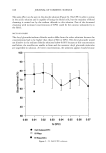
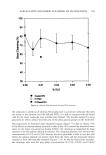
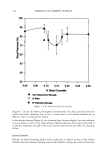
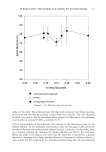
124 JOURNAL OF COSMETIC SCIENCE manufacturers of other products recognize the importance of the tactile sense in product evaluation. For example, moisturizers are incorporated into facial tissue and toilet paper products (8,9). This study demonstrates the potential information that one can obtain from applying TI techniques to the study of lotion/cream products. REFERENCES (1) J. D. Middleton, Development of a skin cream designed to reduce dry and flaky skin, J. Soc. Cosmet. Chem., 25, 519-523 (1974). (2) L. B. Aust, L. P. Oddo, J. E. Wild, O. H. Mills, and J. S. Deupree, Descriptive analysis of skin care products by a trained panel of judges,J. Soc. Cosmet. Chon. 38, 443-449 (1997). (3) R. Naidoo, Sensory characteristics of skin care preparations: It makes sense, Pharm. Cosmet. Rev., 21, 19, 21 (1994). (4) American Society for Testing and Materials, Standardpractice for descriptive skinfee/ analysis of creams and lotions, ASTM Designation E 1490-92 (1992). (5) W. E. Lee III, Single-point versus time-intensity sensory measurements: An informational entropy analysis,J. Sensory Studies, 4, 19-30 (1989). (6) W. E. Lee III, and R. M. Pangborn, Time-intensity: The temporal aspects of sensory perception. Food Technol., 40(11), 71-78, 82 (1986). (7) T. M. Kajs and V. Garstein, Review of instrumental assessment of skin: Effects of cleaning products, J. Soc. Cosmet. Chem., 42, 249-271 (1991). (8) Disposable Paper Products Market (report), Packaged Facts, Inc., New York (1990). (9) Tissue maker's new tactics, New York Times, p. 29 (October 24, 1984).

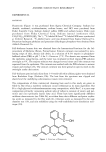
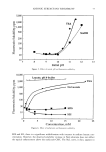
j. Cosmet. Sci., 49, 125-135 (March/April 1998) Effects of coatings on the reactivity of inorganic sunscreen agents to light HAROLD M. SWARTZ, KE JIAN LIU, TADEUSZ WALCZAK, TOMASZ PANZ, MASARU KOBAYASHI, and WILLIAM ZAVADOSKI, Department of Radio/ogy, Dartmouth Medical School, 7785 Vail, Hanover, NH 03755 (H.M.S., K.J.L., T.W., T.P.), and U.S. Cosmetics Corporation, 110 Louisa Viens Drive, Dayville, CT 06241 (M.K., W.Z.). Accepted for publication March 16, 1998. INTRODUCTION The use of physical sunscreening agents such as zinc oxide and titanium dioxide has an inherent appeal in terms of safety as well as effectiveness. Intuitively it seems very probable that these agents, even when subjected to the full spectrum of sunlight, will passively absorb potentially harmful wavelengths but will not undergo any chemical reactions. A closer look at the literature, however, suggests that this is not necessarily the case, because under other conditions these same materials have been used as powerful catalysts for oxidative reactions (1-4). When used as catalysts, their reactivity occurs especially at the surface of the particles of the oxides. One way to deal with potential reactivity of these substances is to coat (i.e., surface treat) them with an inert material that would quench the reactive species before they can interact with the surroundings, including the skin in the case of sunscreen agents. Such surface treatments have been developed and used in various cosmetic formulations, even in the absence of definitive data on the occurrence of potentially deleterious reactions or the effects of the coatings on these reactions. We report here on studies that directly examined the generation of reactive intermedi- ates in zinc oxide and titanium dioxide upon illumination with visible and UV light and the effects of adding coatings on the reactivity. Reactivity was studied by the use of the spin-trapping method (Materials and Methods, below). We found that light generated considerable amounts of reactive intermediates in the presence of either oxide. The presence of a silicone coating strongly inhibited the occurrence of detectable reactive products. MATERIALS AND METHODS METAL OXIDES AND TREATMENTS The zinc oxide was in the form of ultrafine particles (size 0.015-0.035 lam). The silicone 125
Purchased for the exclusive use of nofirst nolast (unknown)
From: SCC Media Library & Resource Center (library.scconline.org)