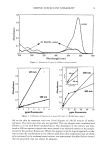
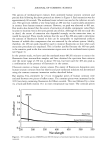
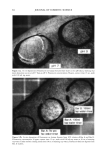
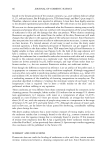
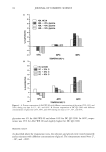
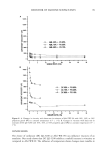
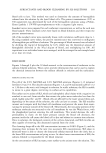
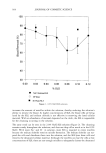
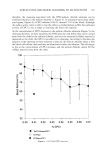
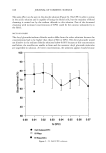
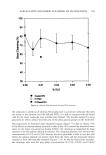
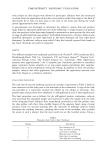
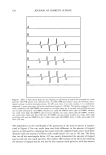
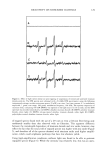
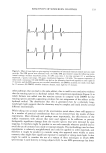
130 JOURNAL OF COSMETIC SCIENCE A B Figure 3. Effect of sodium formate on spin trapping of suspensions of untreated zinc oxide particles. The EPR spectra were obtained with a 9.6-GHz EPR spectrometer using the following instrumental settings: incident microwave power, 20 roW scan time, 2 m time constant, 0.1 s modulation amplitude, 1 gauss scan range, 100 gauss modulation frequency, 100 kHz. The aqueous suspension of the zinc oxide, con- taining 100 mM DMPO, was exposed to the light source for 30 seconds, and the EPR spectrum was recorded immediately. (A) DMPO, ultrafine zinc oxide (B) DMPO, ultrafine zinc oxide, white light (C) DMPO, ultrafine zinc oxide, 1.5 M sodium formate, white light (D) DMPO, ultrafine zinc oxide, 1.5 M sodium formate (E) DMPO, 1.5 M sodium formate, white light. pected finding, and therefore the experiment was repeated several times, which con- firmed that this was a reproducible phenomenon. When light was rigorously excluded, no radical generation was observed. DISCUSSION These results lead to a number of potentially significant conclusions and also raise a number of questions and potential concerns.

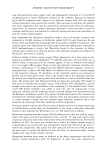
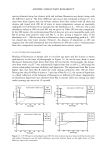
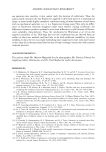
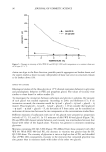
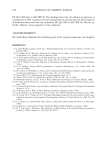
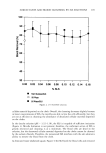
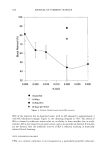
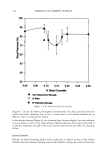
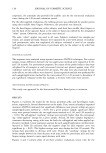
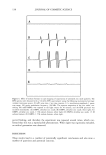
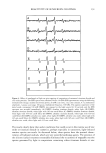
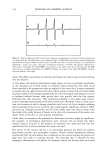
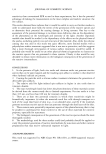
REACTIVITY OF SUNSCREEN COATINGS 131 I-I Figure 4. Effect of wavelength of light on spin trapping of suspensions of untreated titanium dioxide and zinc oxide particles. The EPR spectra were obtained with a 9.6-GHz EPR spectrometer using the following instrumental settings: incident microwave power, 20 roW scan time, 2 m time constant, 0.1 s modulation amplitude, 1 gauss scan range, 100 gauss modulation frequency, 100 kHz. The aqueous suspension of the metal oxide, containing 100 mM DMPO, was exposed to the light source for 30 seconds, and the EPR spectrum was recorded immediately. (A) DMPO, ultrafine titanium dioxide, white light (B) DMPO, ultrafine titanium dioxide, white light with 385-nm cutoff filter (C) DMPO, ultrafine titanium dioxide, white light with 455-nm cutoff filter (D) DMPO, ultrafine titanium dioxide, white light with 620-nm cutoff filter (E) DMPO, ultrafine zinc oxide, white light (F) DMPO, ultrafine zinc oxide, white light with 345-nm cutoff filter (G) DMPO, ultrafine zinc oxide, white light with 385-nm cutoff filter (H) DMPO, ultrafine zinc oxide, white light with 435-nm cutoff filter. The results clearly show that under conditions that could occur in the routine use of zinc oxide or titanium dioxide in cosmetics, perhaps especially in sunscreens, light-induced reactive species can result. As discussed below, these species have the spectral charac- teristics of hydroxyl radicals, which are very powerful oxidizing agents. The presence of the silicone surface treatment essentially eliminated the occurrence of trappable reactive species generated by light in suspensions containing either titanium dioxide or zinc
Purchased for the exclusive use of nofirst nolast (unknown)
From: SCC Media Library & Resource Center (library.scconline.org)