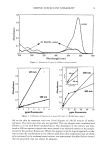
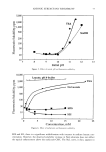
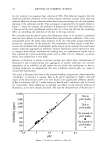
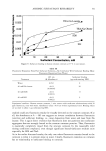
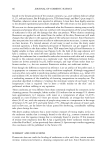
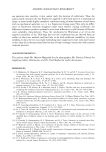
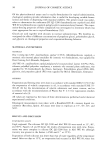
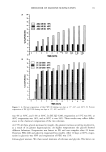
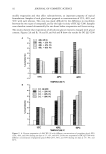
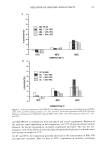
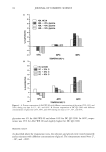
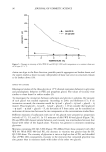
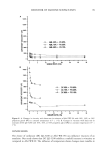
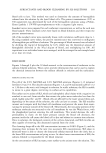
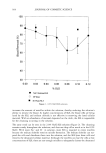
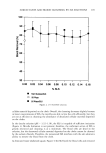
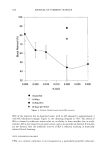
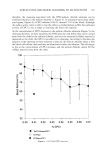
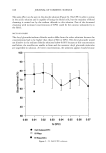
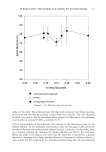
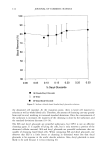
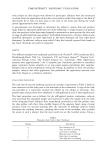
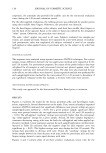
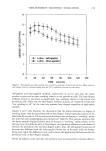
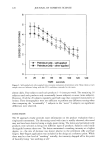
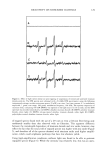
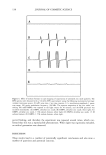
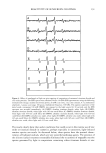
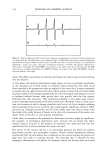
ANIONIC SURFACTANT RINSABILITY 77 5,000 • 2,000 C• 1,000 ß ß .• 500 o • 200 • 100 E 50 20 10 I • I • I • I 8 9 10 11 Initial pH Figure 5. Effect of initial pH on fluorescein solubility. [ i 10,000 I Laurate, pI-I•9 buffer 3,000 13 1,000 300 100 30 10 Na Laurate SDS SLI TEA 0 5 10 15 2O 25 Concentration, mM Figure 6. Effect of surfactants on fluorescein solubility. SDS and SLI, there is a significant solubilization with increase in sodium laurate con- centration. However, the observed solubility increase in NaL solutions does not reflect the typical enhancement above the surfactant CMC. The NaL curve, in fact, appears to

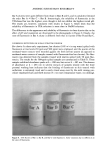
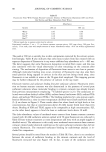
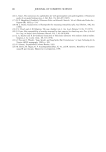
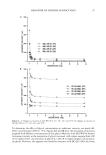
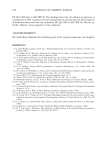
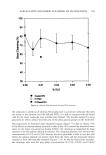
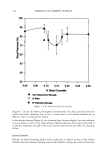
78 JOURNAL OF COSMETIC SCIENCE be very similar to an aqueous basic solution of TEA. This behavior suggests that the enhanced solubility observed in the sodium laurate solutions actually arises from the inherent alkalinity of soap solutions rather than from partitioning into the hydrophobic domains of the surfactant micelie. This conclusion is supported by the results shown in Figure 7, where we compare the solubility of fluorescein in NaL and TEA solutions as a function of the jqna/equilibrium solution pH. It is clear that pH has the overriding effect in controlling the solubility of the dye in the soap solution. We conclude from the above results that fluorescein either in its ionized or unionized form has little affinity for micelies formed from typical anionic surfactants. This is not unreasonable given the rather polar character of the dye with polar groups distributed around the "perimeter" of the molecule. The implication of these results is that fluo- rescein will not behave like a hydrophobic probe such as pyrene and partition into bound anionic surfactant aggregates at interfaces. Instead, fluorescein can be expected at most to compete with anionic surfactants for binding sites in a qualitatively similar way to that reported for a protein-binding probe such as ANS (14-16). However, as shown below, this competition is very weak. Behavior of f/uorescein in slurries of personal washing bars. Apart from considerations of fluorescein's lack of partitioning into aggregates of anionic surfactant, the intrinsic dependence of its solubility on pH makes the use of this dye problematic at best in tracking surfactants in compositions that have a different solution pH, e.g., soaps vs neutral pH formulations. This point is illustrated for three of the personal washing compositions characterized for "rinsability" in reference 2, namely, Bars A, B, and C identified in Table I. The pH values of the three slurries (10% w/v) were found to be significantly different. Slurries of Bar A exhibited a pH of 7, while slurries of Bars B and C exhibited a pH of 9.0 and 10, respectively. These differences in pH had two effects on the solution behavior of fluorescein, as we have already discussed. The spectral characteristics of fluorescein in 10,000 5,000 3,000 2,000 ß 1,000 • 500 ,oo 200 100 6.5 7 7.5 8 8.5 pH TEA in pH 7 buffer o TEA in pH 8 buffer o Na Laurate in pH 7 buffer Na Laurate in pH 8 buffer Figure 7. Fluorescein solubility vs final pH.
Purchased for the exclusive use of nofirst nolast (unknown)
From: SCC Media Library & Resource Center (library.scconline.org)