ANIONIC SURFACTANT RINSABILITY 75 were then patted dry using a paper towel and subsequently immersed in 5 ml of 80:20 methanol:water to extract fluorescein retained on the corneum. Extracts of corneum pieces (80:20 methanol:water) treated in an identical manner with 10% bar slurries without fluorescein were used as the controls. This was done to minimize the interfer- ence from components that may be extracted by methanol-water from the surfactant- treated skin. In a positive control, fluorescein dissolved in water was used to treat the corneum, and the piece was subjected to identical rinsing and extraction procedures, as with the slurry-treated samples. Pure surfactants. For fluorescein deposition studies, pieces of stratum comeurn were immersed in 40-mM solutions of surfactants spiked with 50 ppm fluorescein for one minute. This was followed by a thorough rinse in tap water at ambient temperature. The corneum pieces were then patted dry using a paper towel and subsequently immersed in 80:20 methanol:water to extract the fluorescein bound to the comeurn. As before, comeurn pieces treated in an identical manner with surfactant solutions, but without the fluorescein, were used as controls. Surfactant binding to human stratum corneum. These experiments were done using a com- bination of unlabeled and radiolabeled (•4C labeled) surfactants. The procedure was as follows: Three circular pieces of the corneum (approx. 8 mm in diameter) were placed in 2.5-cm-square teflon screens. These screens were placed in treatment solutions con- taining a combination of •4C-labeled and non-labeled surfactant ranging in total con- centration from 2 mM to 100 mM. Before the addition of the stratum corneum sample to the treatment solution, 50 microliters of the treatment solution was removed to provide initial radioactivity values. After a one-minute soak in the surfactant solutions, the screens were rinsed by moving them back and forth in a dish of distilled water five times. The screens were then blotted and dried in a desiccator overnight. The weight of each piece of comeurn was recorded using a Perkin-Elmer AD4 Autobalance, and the samples were placed into scintillation vials containing 0.5 ml distilled water. Scinti- verse © BD (Fisher Scientific) was added to each vial, and the radioactivity of the treatment solutions and the surfactant-treated corneum samples were determined using the Beckman scintillation counter. The amount of surfactant bound to the comeurn was calculated over the final weight of the corneum. This was particularly important since in certain systems a weight loss was observed upon surfactant treatment due to the extraction of corneocytes and other surfactant-soluble components. Fluorescein retention on porcine skin. The retention of fluorescein from bar slurties and water on full-thickness porcine skin was determined ex vivo using a procedure essentially similar to that described by Wortzman et al. (2). The details are as follows. Fluorescein retention from bar slurries. Full-thickness porcine skin was used for experi- ments. Two glass joints (40 mm diameter) with a circular "O" ring were used to treat a fixed area of porcine skin with the bar slurry with and without fluorescein. Five-tenths milliliter of 10% bar slurry was worked into a lather for fifteen seconds using an L-shaped glass rod, and the skin was subsequently rinsed with 100 ml of tap water to remove the composition. The surface was then contacted with 10 ml of 80:20 metha- nol:water twice to extract the fluorescein from the skin. As mentioned earlier, control samples were soap slurties without the dye. Fluorescein retention from water. In addition to the above experiments with the bar slurties, control experiments with 1% fluorescein in water were also conducted to

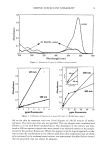
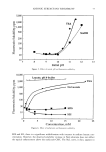
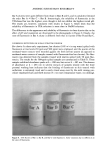
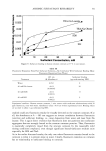
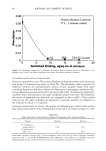
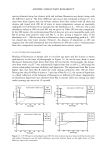
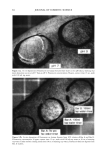
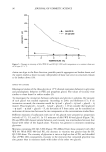
76 JOURNAL OF COSMETIC SCIENCE determine the extent of fluorescein deposition from water. This test was done using the setup described above for the bar slurties. As was done in the Wortzman study (2), the fluorescein solution was contacted with the skin for 15 minutes instead of 15 seconds in these experiments. The skin was washed with water after 15 minutes. In the present study, this experiment was done at two pH values, one corresponding to the natural pH of 1% fluorescein slurry (pH = 5) and the second at pH 8, where the fluorescein was soluble in water. The dye was extracted as before, using methanol-water. The dye-free water at pH 5 and 8 was used as the corresponding controls. Flaaorescein retention on haaman skin: in vivo staadies. The retention of fluorescein from bar slurties and water onto human skin was also determined from in vivo studies, and the extent of retention was estimated photographically. In vivo experiments to measure fluorescein residues from pure water and bar slurries were essentially identical to the procedure used by Wortzman et al. (2). A solution of 50 ppm fluorescein in tap water was prepared, and the pH was adjusted to 7 using NaOH or to 9.2 using TEA. A glass vial (3 cm in diameter) was filled with 30 ml of this solution. The vial was inverted on the forearm (volar surface) and held in place for 15 seconds. The vial was removed and the forearm was rinsed with 100 ml of tap water. After rinsing, the forearm was placed under UV light (short wave) and photographed (f2.8 and f4). These experiments were repeated using bar slumes containing 50 ppm fluorescein at their respective natural pH values, i.e., pH 7 for Bar A and pH 9.2 for Bar B. RESULTS FLUORESCEIN SOLUBILITY IN WATER AND SURFACTANT SOLUTIONS Solaability in water. Fluorescein has limited solubility in water of the order of 25-30 ppm, which is reached by allowing the system to equilibrate for several hours (typically overnight, stirring). As would be expected for carboxylic acids, because of the ionization of the carboxylic acid group, the solubility of fluorescein increases markedly with increase in pH. This effect is illustrated in Figure 5, where the solubility of fluorescein powder in solutions of either triethanolamine or sodium hydroxide is plotted against their initial (unbuffered) pH. As more fluorescein dissolves, the bases are neutralized and the pH falls. Since the solubility of the sodium or triethanolammonium salts of fluo- rescein is high, the aqueous concentration of the conjugate base of fluorescein in dilute solution is essentially limited by the amount of base employed. Thus, the results in Figure 5 are only meant to illustrate the dramatic changes in solubility that accompany changes in pH. Solaability in saarfactant solaations. The effect of three representative anionic surfactants, sodium dodecyl sulfate (SDS), sodium lauroyl isethionate (SLI), and sodium laurate (NaL) on the solubility of fluorescein is given in Figure 6. A curve for the solubility of fluorescein in aqueous TEA solutions is also included for comparison. Note that the solubility of fluorescein does not increase with increase in either SDS or SLI concentra- tion, even at surfactant levels well above their CMC (4 and 8 mM for SDS and SLI, respectively). If there was any increase in solubility due to micellar solubilization, it should have occurred around the CMC. In contrast to the behavior found with the strongly ionized anionic surfactants such as
Purchased for the exclusive use of nofirst nolast (unknown)
From: SCC Media Library & Resource Center (library.scconline.org)