Cosmet. Sci., 49, 89-100 (March/April 1998) Evaporation-freezino and rheolooical behavior of silicone surfactants I. BAQUERIZO, V. GALLARDO, A. PARERA, and M. A. RUIZ, Pharmacy and Pharmaceutical Technology Department, School of Pharmacy, University of Granada, E-18071 Granada, Spain. Accepted for publication March 10, 1998. Synopsis Silicone surfactants can be used to prepare emulsions at 15øC, and yield stable w/o and w/s/o emulsions with excellent appearance and optimum hydrating and protective properties. The high water content of the resulting emulsions (about 75%) also makes them economical to produce. We describe the characteristics and advantages of two silicone surfactants, CD Q2-5200 (a laurylmethicone copolyol) and Abil WE 09 (a cetyldimethicone copolyol-polyglyceryl-4-isostearate-hexyl laurate) for use in emulsions. Volatility and freezing point were determined to judge the suitability of these surfactants. Rheological assays were done to determine the most appropriate and stable formulation and form of dispensing. The influence of different concentrations of glycerine, propylene glycol, and polyethylene glycol 400 on these properties was deter- mined at different temperatures. INTRODUCTION The physical properties and usefulness of silicones have been widely studied as the use of these substances has increased. Modifications in chemically complex silicone polymers have been investigated to enhance their solubility in water and other polar solvents, and to improve their affinity for specific biological substrates such as human skin (1). Current research is aimed at developing emulsifying silicone compounds for use in stable water/oil formulations with optimal hydrating and protective properties and good physi- cal appearance. Because of their high water content (approximately 75%), such formu- lations are also economical (2). Modifications in polydimethylsiloxanes (PDMS) and the insertion of alkyl radicals have produced excellent w/o surfactants, which in turn have made it possible to produce w/o or w/s emulsions of varying viscosity, depending on the percentage composition and type of oil phase (3). The advantage of these new surfactants is that they can be used in emulsions containing any of a wide variety of lipophilic components. Stability is not impaired by the com- position of the oil phase, and excellent base substances can thus be obtained for the formulation of different cosmetic emulsions (4). 89

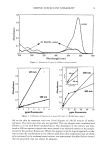
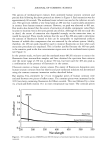
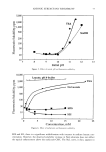
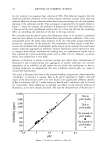
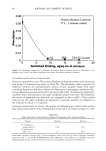
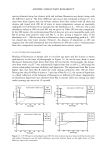
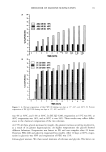
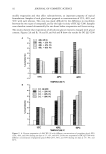
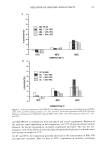
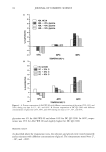
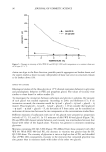
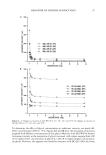
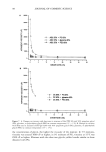
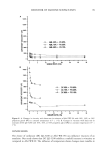
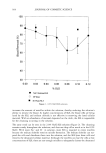
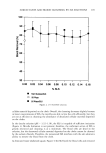
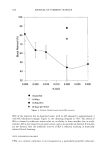
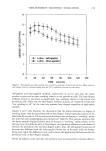
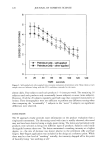
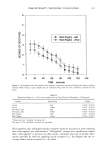
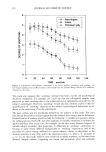
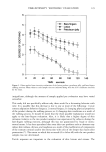
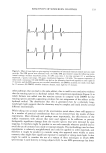
90 JOURNAL OF COSMETIC SCIENCE Of the physicochemical assays used to typify formulations for topical administration, rheological analysis provides information that is useful for developing suitable formu- lations and forms of dispensing with maximal stability. The present study was under- taken to characterize the surfactants DC Q2-5200 (laurylmethicone copolyol) and Abil WE 09 (cetyldimethicone copolyol-polyglyceryl-4-isostearate-hexyl laurate). The evapo- ration-freezing properties of these compounds was investigated to determine which was most appropriate for use in topical formulations (5,6). Glycols are used together with silicones to increase substantiveness. We therefore in- vestigated the effect of different concentrations of propylene glycol, polyethylene glycol, and glycerin on rheological properties and evaporation/freezing behavior. MATERIALS AND METHODS MATERIALS Dow Corning Q2-5200: laurylmethicone copolyol (CTFA). Alkyldimethicone copolyol, a nonionic oily external phase emulsifier for cosmetic w/o formulations, was supplied by Dow Corning Ltd. (Brussels, Belgium). Abil WE 09: cetyldimethicone copolyol-polyglycerol-4-isostearate-hexyl laurate (CTFA). Poly- siloxane polyalkyl polyether copolymer, a nonionic oily external phase surfactant, was supplied by Th Goldschmidt Ag (Essen, Germany). Polyethylene glycol (PEG 400), glycerin, and propylene glycol (PG) were supplied by Merck (Darmstadt, Germany). METHODS Evaporation and freezing tests were done in accordance with standard DIN-53170 (7) for the evaporation of volatile components in oil, in accordance with standard UNE 55- 902-85 (8) for the determination of volatile substances and water content, and in accordance with the recommendations of Pharm Eur V. 4.5.5 for vaporization residues of essential oils (9). All values are expressed as the mean of three determinations performed under identical experimental conditions. Rheological measurements were taken with a Brookfield DV-II+ rotatory digital vis- cosimeter (Barcelona, Spain). All assays were done in triplicate at 15 ø, 30 ø, 40 ø, and 50øC. RESULTS AND DISCUSSION EVAPORATION ASSAYS Single compounds. The silicones DC Q2-5200 and Abil WE 09 were tested at 15 ø, 40 ø, and 60øC. Figures 1A and B shows the results of evaporation tests with time. Evapo- ration was more complete in silicone DC Q2-5200 than in Abil WE 09, although viscosity was greater in the former (4500 mm2s -• at 25øC). Evaporation of both silicones was lower than that of water regardless of the temperature tested. After ten days at 15øC, no evaporation had occurred in Abil WE 09 water loss
Purchased for the exclusive use of nofirst nolast (unknown)
From: SCC Media Library & Resource Center (library.scconline.org)