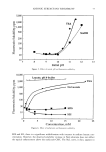
SURFACTANTS AND BLOOD CLEANSING BY SLS SOLUTIONS 113 Surfactants inhibit the cleansing of sodium chloride solutions. Ionic interactions, van der Waals forces, and the ability to lyse blood cells all influence the solutions' ability to cleanse blood from the surface of the cloth. The results indicate that surfactants can inhibit the cleansing of blood by sodium chloride solutions by lysing the cells and allowing the denatured cellular material to deposit onto the surface of the cloth. Once such material is on the surface of the cloth, the sodium chloride solutions cannot remove it. ACKNOWLEDGMENTS We would like to thank C. B. Fleet Co., Inc., for supporting the research, and Dinner Bell Meat Products and Packers for providing bovine blood. REFERENCES (1) A. N. Martin, J. Swarbrick, and A. Cammarata, Physical Pharmacy, 2nd ed., 1969, pp. 251-252. (2) M. M. Rieger, Surfactants and Cosmetics (Marcel Dekker, New York, 1985), pp. 2-3. (3) L. Afro, The use of quaternary ammonium compounds as preservatives in poliovirus vaccine. Prelimi- nary report, State Bacteriol. Lab., Stockholm. Acta Pathol. Microbiol, Scand., 61(1), 106-108 (1964). (4) The Merck Index, 12th ed. (Merck Research Laboratories, Division of Merck & Co., Inc., Whitehouse Station, NJ), pp. 1478-1479, 2068. (5) I. Cohen and A. Libackyj, Coacervating soap-electrolyte solutions. I. Charge properties. II. Generalized treatment of coacervating soap-electrolyte systems. J. Colloid Sci., 19(6), 560-570 (1964). (6) K. Hill, W. yon Rybinski, and G. Stoll, Alkyl Polyglycosides (Weinheim, New York, 1997). (7) M. M. Rieger, Surfactant Encyclopedia, 2nd ed. (Allured Publishing Corp., Carol Stream, IL, 1996). (8) J. Falbe, Surfactants in Consumer Products (Heidelberg, New York, 1987). (9) Th. F/3rster, H. Hensen, R. Hoffman, and B. Salka, Using alkyl polyglycosides in personal-care products, Cosmet. Toilerr., 110 (April 1995). (10) V. L. Snoeyink and D. Jenkins, Water Chemist• (John Wiley & Sons, New York, 1980), pp. 16-17. (11) J. S. Fruton and S. Simmonds, General BiochemiJtry, 2nd ed. (John Wiley & Sons, New York, 1958). (12) Y. Marcus, Ion Solvation (John Wiley & Sons, New York, 1985), pp. 87-92. (13) J. Burgess, Ions in Solution (John Wiley & Sons, New York, 1988), p. 15. (14) D. Myers, Surfaces, Interfaces, and Colloids (VCH Publishers, New York, 1991), pp. 25-37.

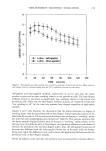
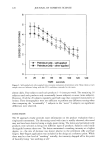
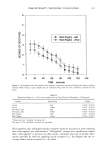
j. Cosmet. Sci., 49, 115-124 (March/April 1998) Evaluation of the "soothing" intensity of a lotion product and petroleum jelly usino time-intensity sensory techniques WILLIAM E. LEE III and M. SUZANNE MITCHELL, Department of Chemical Engineering, University of South Florida, Tampa, FL 33620. Accepted for publication April 1, 1998. Synopsis Time-intensity (TI) sensory techniques were applied to the assessment of the "soothing" intensity of two skin-care products: a commercially available moisturizing lotion and petroleum jelly. Subjects rated the soothing quality of a product every ten seconds for a total of 120 seconds while product samples were either self-applied or applied by another person ("other-applied"), using the middle three fingers in both cases. Bare-fingers rubbing (both self- and other-applied) was also included as a reference condition. The main objectives of this study were: 1) to demonstrate the nature of the information provided by the TI technique (as compared to single-point evaluations) and 2) to determine if "soothing" ratings were higher when the product was self-applied versus other-applied. The results indicated that significant differences were present between the products in terms of both the soothing intensities and the rate of soothing decrease with time, with the latter clearly indicated by the TI "fingerprints." Also, "soothing" ratings were higher when the product was self-applied versus other-applied. This suggests that consumers use tactile information from both the applying surface (fingers) and receiving surface (skin) in the assessment of skin-care products. INTRODUCTION A wide variety of skin-care products are currently available to the consumer. Many of these are provided to address real or perceived skin problems such as dryness, flaking, and chapping. These problems may be due to prolonged environmental exposures such as exposure to sun and dry air or attributable to other processes such as excessive skin cleaner usage or dermatological conditions. Skin-care products may also be employed to avoid the onset of such problems, often seeking to maintain skin moisture and proper biomechanical properties (1). In the evaluation of skin-care products such as creams and lotions, a variety of sensory attributes are employed. These may involve tactile attributes such as greasiness, oiliness, and waxiness, and hedonic descriptions such as "like/dislike" and "soothing" (2,3). Other modalities may also play a role, such as vision (color, luster) and olfactory re- sponses (odor character and intensity). As described in ASTM method E 1490 (4), the evaluation of tactile cream/lotion attributes can be accomplished by using a "rub-out" 115
Purchased for the exclusive use of nofirst nolast (unknown)
From: SCC Media Library & Resource Center (library.scconline.org)