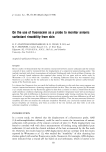
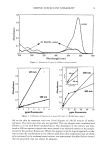
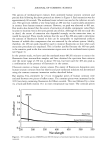
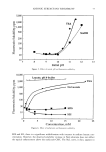
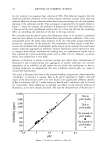
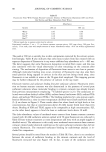
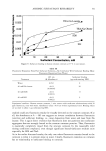
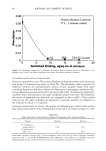
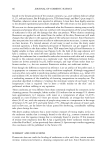
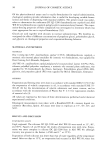
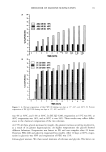
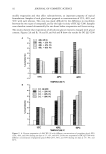
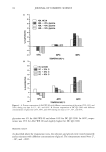
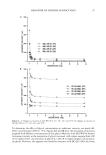
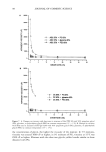
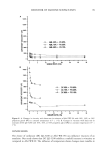
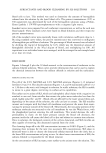
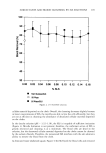
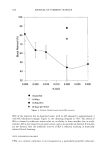
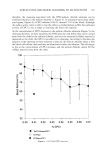
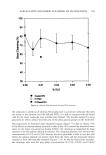
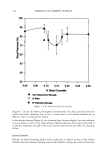
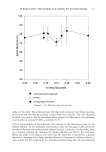
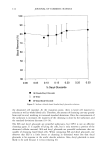
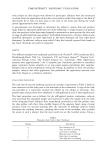
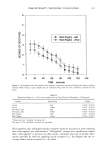
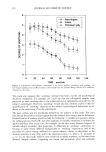
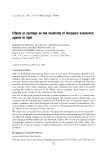
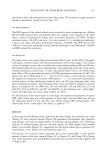
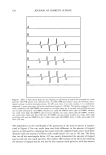
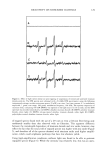
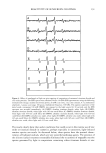
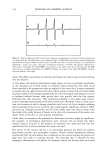
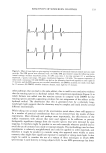
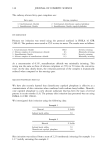
128 JOURNAL OF COSMETIC SCIENCE B I-I Figure 1. Effect of light (xenon lamp) on spin trapping of suspensions of treated and untreated zinc oxide particles. The EPR spectra were obtained with a 9.5-GHz EPR spectrometer using the following instru- mental settings: incident microwave power, 20 mW scan time, 2 m time constant, 0.1 s modulation amplitude, 1 gauss scan range, 100 gauss modulation frequency, 100 kHz. The aqueous suspension of zinc oxide, containing 100 mM DMPO, was exposed to the light source for 30 seconds, and the EPR spectrum was recorded immediately. (A) DMPO, ultrafine zinc oxide (B) DMPO, white light (C) DMPO, ultrafine zinc oxide, white light (D) DMPO, silicone-treated ultrafine zinc oxide, white light (E) DMPO, ultrafine zinc oxide, white light with filter (385 nm) (F) DMPO, silicone-treated ultrafine zinc oxide, white light with filter (385 nm) (G) DMPO, 8202 (2 mM), white light (H) DMPO, 8202 (2 mM), white light with filter (385 nm). The dependency on the wavelength of the generation of the reactive species is summa- rized in Figure 4. For zinc oxide there was little difference in the amount of trapped species, as indicated by comparing the results with the unfiltered light source with those obtained with the presence of filters with cutoffs below 345 nm or 385 nm. The filter that cut off the wavelengths below 435 nm greatly diminished the amount of trapped species with the zinc oxide particles. The relative effectiveness of the filters for reducing the amount of trapped species was less for the titanium oxide particles, with the amount

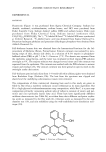
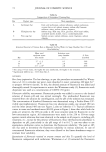
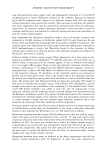
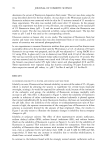
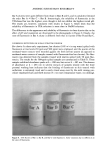
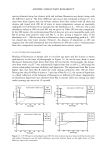
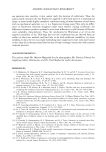
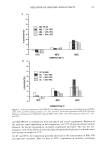
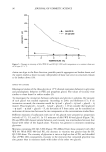
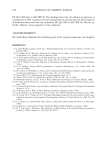
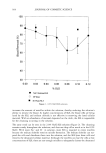
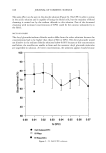
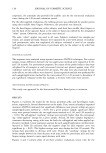
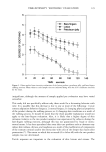
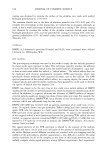
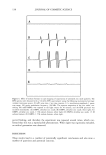
REACTIVITY OF SUNSCREEN COATINGS 129 Figure 2. Effect of light (xenon lamp) on spin trapping of suspensions of treated and untreated titanium dioxide particles. The EPR spectra were obtained with a 9.6-GHz EPR spectrometer using the following instrumental settings: incident microwave power, 20 mW scan time, 2 m time constant, 0.1 s modulation amplitude, 1 gauss scan range, 100 gauss modulation frequency, 100 kHz. The aqueous suspension of titanium oxide, containing 100 mM DMPO, was exposed to the light source for 30 seconds, and the EPR spectrum was recorded immediately. (A) DMPO, ultrafine titanium dioxide (B) DMPO, ultrafine titanium dioxide, white light (C) DMPO, silicone-treated ultrafine titanium dioxide, white light (D) DMPO, polyethylene-treated ultrafine titanium dioxide, white light. of trapped species found with the use of a 455-nm or even a 620-nm filter being only moderately smaller than that observed with no filtration. This apparent difference between the wavelength dependence of titanium dioxide and zinc oxide, however, may reflect the fact that the total yield of trapped species was higher with zinc oxide (Figure 5), and therefore all of the spectra obtained with titanium oxide used higher amplifi- cation, which could emphasize pathways that have low absolute yields. Using high-amplification conditions, ambient light was found to be able to generate trappable species (Figure 6). While the intensity was relatively low, this was an unex-
Purchased for the exclusive use of nofirst nolast (unknown)
From: SCC Media Library & Resource Center (library.scconline.org)