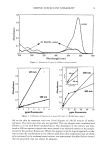
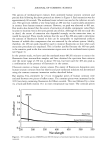
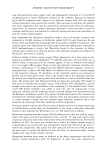
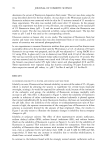
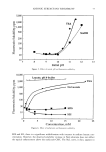
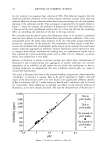
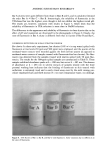
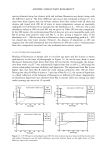
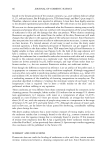
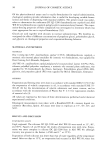
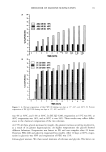
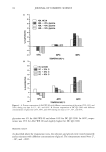
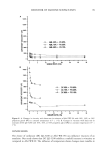
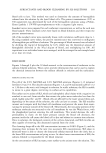
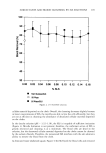
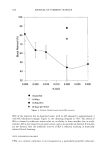
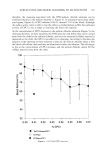
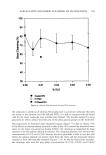
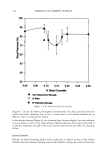
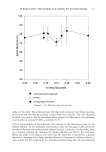
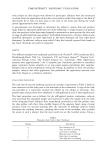
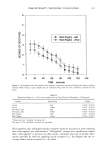
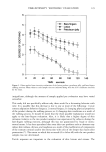
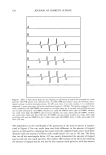
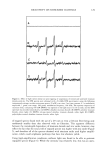
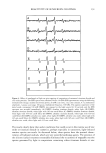
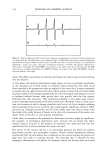
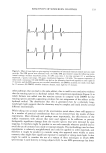
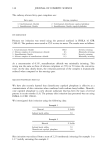
REACTIVITY OF SUNSCREEN COATINGS 131 I-I Figure 4. Effect of wavelength of light on spin trapping of suspensions of untreated titanium dioxide and zinc oxide particles. The EPR spectra were obtained with a 9.6-GHz EPR spectrometer using the following instrumental settings: incident microwave power, 20 roW scan time, 2 m time constant, 0.1 s modulation amplitude, 1 gauss scan range, 100 gauss modulation frequency, 100 kHz. The aqueous suspension of the metal oxide, containing 100 mM DMPO, was exposed to the light source for 30 seconds, and the EPR spectrum was recorded immediately. (A) DMPO, ultrafine titanium dioxide, white light (B) DMPO, ultrafine titanium dioxide, white light with 385-nm cutoff filter (C) DMPO, ultrafine titanium dioxide, white light with 455-nm cutoff filter (D) DMPO, ultrafine titanium dioxide, white light with 620-nm cutoff filter (E) DMPO, ultrafine zinc oxide, white light (F) DMPO, ultrafine zinc oxide, white light with 345-nm cutoff filter (G) DMPO, ultrafine zinc oxide, white light with 385-nm cutoff filter (H) DMPO, ultrafine zinc oxide, white light with 435-nm cutoff filter. The results clearly show that under conditions that could occur in the routine use of zinc oxide or titanium dioxide in cosmetics, perhaps especially in sunscreens, light-induced reactive species can result. As discussed below, these species have the spectral charac- teristics of hydroxyl radicals, which are very powerful oxidizing agents. The presence of the silicone surface treatment essentially eliminated the occurrence of trappable reactive species generated by light in suspensions containing either titanium dioxide or zinc

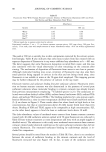
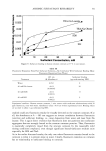
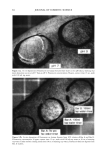
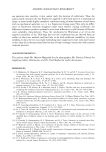
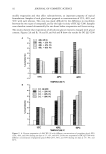
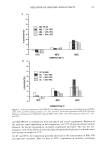
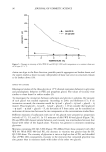
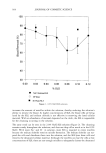
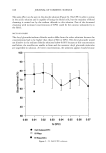
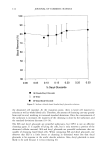
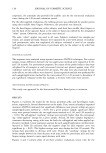
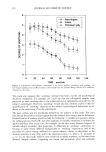
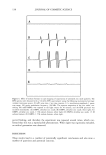
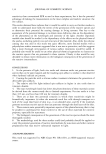
132 JOURNAL OF COSMETIC SCIENCE Figure 5. Relative efficacy of light-induced spin trapping in suspensions of untreated titanium dioxide and zinc oxide particles. The EPR spectra were obtained with a 9.6-GHz EPR spectrometer using the following instrumental settings incident microwave power, 20 mW scan time, 2 m time constant, 0.1 s modulation amplitude, 1 gauss scan range, 100 gauss modulation frequency, 100 kHz. The aqueous suspension of metal oxide, containing 100 mM DMPO, was exposed to the light source for 30 seconds, and the EPR spectrum was recorded immediately. (A) DMPO, ultrafine zinc oxide, white light (B) DMPO, ultrafine titanium dioxide, white light. oxide. This effect presumably occurred by preventing the reactive species from entering into the solution. At first glance the observed phenomena might appear to have no potential significance in the customary use of these oxides in cosmetics and/or sunscreens. The usual use of these materials is for preparations that are applied to the intact skin. It seems reasonable to assume that the upper layers of the skin, which consist of dead cells and extracellular material, would not be damaged significantly by a flux of strongly oxidizing species such as hydroxyl radicals because these species react very quickly with the first organic molecules that they encounter. This assumption probably is true under most circum- stances (although experimental verification would seem desirable). Even so, there are at least two scenarios in which damage plausibly could occur: (a) if the strongly oxidizing species generated less-reactive products that could migrate significant distances before reacting (e.g. hydrogen peroxide) and (b) if the oxides came into direct contact with functional cells, either because of breaks in the skin or by movement of the oxides into deeper layers of the skin or onto mucous membranes. Under these circumstances the potential for deleterious reactions might be significant. For example, in preliminary experiments with cultured cells we found that light- induced toxicity occurred in the presence of untreated zinc oxide and that this was significantly less if silicone-treated zinc oxide was used. The nature of the reactive species is an interesting question for which the present experiments provide only incomplete evidence. Several control experiments indicate conclusively that the spin adduct that is observed in this system requires the presence of light plus zinc oxide or titanium dioxide. The spectrum that is obtained by spin trapping is characteristic of an adduct of a hydroxyl radical, but because there are several
Purchased for the exclusive use of nofirst nolast (unknown)
From: SCC Media Library & Resource Center (library.scconline.org)