52 JOURNAL OF COSMETIC SCIENCE STABILITY ENHANCEMENT OF RETINOL THROUGH ENCAPSULATION IN CATIONIC VESICLES Duncan Aust, Ph.D., Christopher Judd and James Wilmott The Collaborative Group, East Setauket, NY 11733-4072 ABSTRACT Retinol is used in cosmetic formulations to help skin conditioning by increasing skin elasticity, thereby reducing wrinkles on skin surface. However, photo and air degradation of retmol make it difficult to formulate with. It is reported that retinols degrade faster if formulated m phospholipids. In our investigation, we formulated retinol in cationic bilayered vessels and compared its stability with both free retinol and with retmol formulated in lipid emulsions. Stability of retinol formulations (at 2% retmol) was tested at 50øC and under dark or light storing conditions. Samples were analyzed via reversed phase HPLC for retinol content. Our data indicated that formulation of retmol in cationic vesicles significantly improved stability of retinol even when stored under light. Cationic retinol vesicles also showed higher stability than the retinol m soy oil at 50øC. INRODUCTION Human skin is constantly exposed to external environmental insults, including bright sun light, atmospheric pollutants and extreme temperature (high and low) conditions. These environmental factors strongly influence skin condition by reducing skin elasticity and skin cell proliferation. A harsh environment can lead to premature skin aging, including breakdown of collagen that is characterized by wrinkles, sagging, dry skin and loss of "skin tone". Retinol (Vitamin A) is used m the skin care products to improve skin toning by increasing skin elasticity and by decreasing the appearance of wrinkles on the skin surface. Retinol has been proved to absorb into the skin and increase skin elasticity and cell proliferation. However, the concerns with retmol are that retinol is highly photosensitive and that it degrades rapidly in air. Therefore making stable formulation for cosmetic purposes a challenge. Most suppliers of retinol recommend to preserve finished retmol products in aluminum containers under inert gas. Preserving under an inert gas is not practical for common use. Therefore finished products containing retinol have limited shelf life. Young and Gregoriadis [1] have reported that formulating retinol with phosphohpids actually increased the decomposition rate ofretinol 6-fold. Here we report our studies on the stability of retinol formulated via high-pressure high-shear processing into cationic vesicles known as Catezomes TM and compare the stability with of free-retinol itself and with a surfactant- free emulsion formulation. We tested the stability at 25 and 50øC by quantitatively analyzing the retmol content at various time points. Our results indicated that the retmol formulated with Catezomes TM showed the highest stability, which was even better than the retinol raw material itself. MATERIALS AND METHODS To test the stability of Retmol itself and in the f'mished cosmetic products, 2% Retinol (From Retinol 10S, BASF, Mt. Olive, NJ) was formulated in cationic liposomes (proprietary Catezomes TM [2]) and m the surfactant-free emulsions containing small amounts of phospholipids by a proprietary high-pressure high-shear method. We also prepared a finished gel product from Catezomes TM, the surfactant free emulsion, and raw retinol (Retinol 10S) to test the stabilitites at room temperature and at 50øC. 40 ml aliquots of all samples were placed into separate containers and were held at 25øC or 50øC. Samples were assayed for retinol content at different time points (T=0, 7, 14, and 28 days) by diluting in methanol to obtain 40 to 110 /ml. Retinol was analyzed via HPLC (Waters Corp., Milford, MA) using Waters Symmetry C8 column (150 mm X 3.9 mm) by established protocols based on reported methods [3,4]. The mobile phase (0.1% H3POn/methanolJacetonitirle at 32/61/7 v/v) was pumped at 2 mlJmm through the column held at 40øC, and the detector was set at 324 nm. Using a linear gradient between 15.5 min and 21.5 mm elution time points the mobile phase composition was changed to 100% methanol.

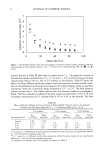
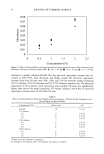
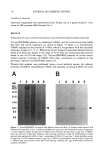
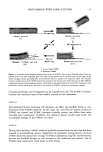
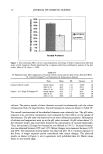
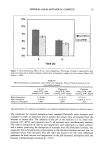
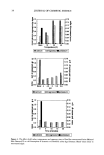
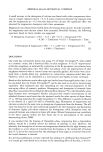
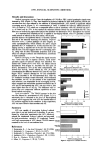
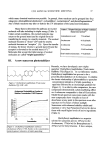
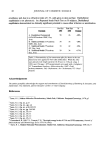
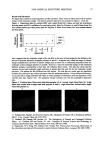
1999 ANNUAL SCIENTIFIC MEETING 53 RESULTS AND DISCUSSION Degradation of retinol was assessed by HPLC after incubating the formulations under desired conditions. The preparations were stored in plastic or glass bottles under room air to simulate realistic household conditions. Fig. 1 shows the stability of retinol when stored under dark or light conditions. Only 56% of the retinol in soy oil was recovered after storing under light for 4 weeks where as 82% of the retinol remained intact in the same time period when formulated in Catezomes TM We also compared the stability of retinol in Catezomes TM with retinol in lipid emulsions (Fig. 2). After 4 weeks of storage at 50øC, in air, retinol in the Catezomes TM showed about 30% degradation (Fig.2, curve 1) whereas under the same conditions, almost all of the retinol in lipid emulsion was degraded in 1 week (Fig.2, curve 3). Our observation that lipid formulation of retinol enhanced its rate of degradation agreed with that reported by Young and Gregoriadis [1]. Our data suggest that formulation of retinol in Catezomes TM improved the stability of retinol significantly even at elevated (50øC) temperatures. At room temperature, data showed a similar trend as in Fig. 2 but with less degradation of retinol (data not shown). Our results also indicated that retinol when formulated in Catezomes TM was more stable than the free retinol in soy oil at 50øC (Fig. 2, curve 2) under the same storage conditions. in dark in dark ß . ight Soy oil Cate•nrnes Figure 1. Comparison of stability of retinol in soy oil or in Catezomes TM after storing for 4 weeks in dark or light conditions. ioo o •lOO 1o o 4oe. 3e •. 2o o. io•. Time (Weeks) Figure 2. Stability of retinol at 50øC when stored under normal room air. Retinol formulated in Catezomes TM (curve 1), retinol in soy oil (curve 2), and retinol formulated in lipid emulsion (curve 3). Molecular mechanism involved in stabilization of retinol when it is formulated in Catezomes TM is under investigation. In conclusion our results suggested that formulation of retinol in Catezomes TM significantly improved its photo- and air stability. REFERENCES 1. Young AM, Gregoriadis G, "Photolysis of retinol in liposomes and its protection with tocopherol and oxybenzone" Photochern Photobiol, 63:3, 344-52, (1996) 2. Watkins, D.C., Vichroski, T.J., and Hayward, J.A. "Lipid vesicles formed with alkylammonium fatty acid salts" U.S. Patent # 5,874,105 3. Talwar D, Ha TK, Cooney J, Brownlee C, O'Reilly DS, "A routine method for the simultaneous measurement of retinol, alpha- tocopherol and five carotenoids in human plasma by reverse phase HPLC" Clin Chem Acta, 270:2, 85-100 (1998) 4. Vidal-Valverde C, Ruiz R, Medrano A, Z "Stability of retinol in milk during frozen and other storage conditions" Labensrn Unters Forsch, 195:6, 562-5 (1992)
Purchased for the exclusive use of nofirst nolast (unknown)
From: SCC Media Library & Resource Center (library.scconline.org)