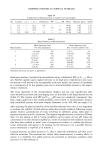
j. Cosmet. sci., 51,209-226 July/August 2000 Formulation and characterization of disperse systems as topical vehicles for odorous molecules. M. GALLARATE, M. E. CARLOTTI, I. CAGLIANI, and D. NEGRI, Dipartimento di Scienza e Tecnologia del Farmaco, v. P. Giuria 9, 10125 Torino, Italy. Accepted for publication July 1 O, 2000. Synopsis Miceliar solutions of linalool and citral were obtained using mixtures of glucose-derived surfactant (decyl polyglucose, dodecyl polyglucose, caprylyl-capryl glucoside, and dodecyl glucoside-cocoamide propylbeta- ine) and soya lecithin microemulsions of linalool and several oils were also produced with the same surfactant mixtures. Both systems were stable over time, and miceIlar solutions offered some protection against autooxidation of the odorous molecules also due to the presence of soya lecithin that might behave as a naturally occurring molecule with antioxidant properties. The addition of several humectants (laureth-2, methyl gluceth-10, PEG-120 methyl glucose dioleate, and PEG-120 methyl glucose dioleate) to a miceliar solution allowed the complete elimination of alcohol and improved the rheological properties of the resulting systems. The challenge test of one of the miceIlar solutions of linalool revealed it to be autoprotected against microbial contamination as a consequence of the presence of the surfactants, hexylene glycol, and also, to some extent, linalool. •4N__T•O_DUCTI ON Perfumes usually consist of mixtures of natural essential oils and synthetic chemicals dissolved in alcoholic solutions (1). Colognes and perfumes generally contain high percentages of fragrance materials, 7-15% and 20-40%, respectively: primary and cumulative irritation or allergies quite frequently may occur as a consequence of appli- cation of fragrances to the skin (2) moreover, the presence of high percentages of ethanol may also promote stratum corneum (SC) barrier penetration. Considerable scientific effort is therefore being spent in developing alcohol-free or low-alcohol fragrances in order to obtain mild, skin-compatible products, employing solubilizers that are, in most cases, non-ionic surfactants with polyoxyethylene chains (3). One of the limitations to the use of aqueous surfactant-based perfumes is the need for fragrances that can readily be solubilized with a minimum requirement of the solubilizer, since the lower the solubilizer level, the less appreciable to the consumer is the emolliency or stickiness. Moreover, it has often been observed (4) that when a perfume is incorporated into an aqueous solution of surfactants, the fragrance character is altered even in the absence of chemical interactions. A further disadvantage is also perfume ageing, as many odorous 209

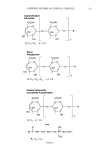
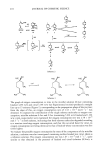
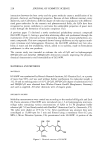
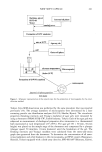
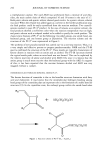
210 JOURNAL OF COSMETIC SCIENCE molecules can undergo a number of degradation reactions (1) such as peroxide formation, acetalization, and stereoisomerization the addition of an antioxidant is required to contrast this. Most antioxidants and preservatives approved for use in cosmetics are synthetic, but consumers' interest in natural products has focused producers' attention on nature-derived antioxidants and preservative-free products. In a previous work (5) we formulated micellar solutions and microemulsions of linalool, citral, and limonene using several surfactants and cosurfactants the oxidative stability over time of citral was higher in miceliar systems containing non-ethoxylated surfactants than in those obtained with the commonly used polyoxyethylene sorbitan monolaurate. The aim of the present study was to solubilize linalool and citral, which are among the most significant flavor compounds found in lemon oil (6), using several mixtures of glucose-derived surfactant and lecithin to formulate low-alcohol miceIlar solutions or microemulsions that could be proposed as bath oils. EXPERIMENTAL MATERIALS (+) Linalool, citral, and R(+) limonene were from Sigma 2-methyl-2,4 pentanediol (hexylene glycol), isopropylpalmitate (IPP), n-dodecanol, glycerol, tx,tx'-azobis isobu- tyronitrile (AIBN), absolute ethanol, and mineral oil were from Fluka Triton © CG 110 (caprylyl/capryl glucoside) (active substance = 60% w/w) and Abil © B 8839 (cyclome- thicone) were from Sinerga S.r.1. Phospholipon © 100G (lecithin) was a kind gift from Rhone Poulenc Oramix © NS 10 (decyl polyglucose) (a.s. = 55% w/w) was a kind gift from Seppic Tego Glucosid © L 55 (dodecyl glucoside-cocoamide propylbetaine) (a.s. -- 55% w/w) was from Tego Goldschmidt Glucamate © DOE 120 (PEG-120 methyl glucose dioleate) and Glucam © E 10 (methyl gluceth-10) were from Amerchol Myritol © 318 (caprylic/capric triglyceride) and Arlypon © F (laureth-2) were from Henkel sodium pirrolidon carboxylate (sodium PCA) was from Variati xylitol was from Melida S.pA. sodium chenodeoxycholate (CDCNa) was prepared from chenodeoxycholic acid Finsolv TN © (C•2_•5 alkyl benzoate [C•2_•5AB]) was from Prodotti Gianni. See Scheme 1 for chemical structures of caprylyl/capryl glucoside, decyl polyglucose, and dodecyl gluco- side-cocamide propylbetaine. MICROORGANISMS The following microorganisms were employed: Staphylococcus aureus ATCC 6538, Micro- coccus lysodeikticus ATCC 4698, Escherichia coli 113/3 ATCC 11105, Pseudomonas aeruginosa ATCC 9027, Enterobacter agglomerans (isolated by cosmetics), Citrobacterfreundii (isolated by cosmetics), Pseudomonas fluorescens (isolated by cosmetics), Candida albicans ATCC 10231, Saccharomyces cerevisiae ATCC 9763, Aspergillus niger (isolated by environment), and Penicillium funiculosum ATCC 9644. APPARATUS The following instruments were employed: laser light-scattering Coulter Model N4MD (Coulter Electronics, Inc., Hialeah, FL) rotational viscometer Digital Viscometer Model DV-I with small adapter chamber SC-21 (Brookfield, Stoughton, USA) centrifuge 5417
Purchased for the exclusive use of nofirst nolast (unknown)
From: SCC Media Library & Resource Center (library.scconline.org)