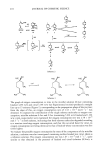
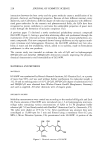
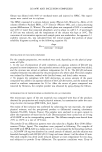
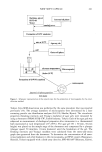
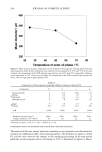
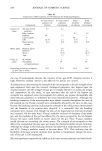
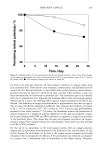
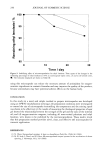
240 JOURNAL OF COSMETIC SCIENCE remove the unreacted glutaraldehyde, which may have an adverse effect on the human body. To improve on the complex procedures for preparing the microcapsules, an easy and useful method employing agar as a gelling agent was investigated. Agar is a polysaccharide extracted from seaweed (for example, Ge/idium, Graci/aria, Pteroc/adia, and Ahnfeltia) and mainly consists of agarose (28) and agaropectin (29). The former can give a high gel-forming property and the latter gives a very weak or no gel-forming property. The ratio ofagarose to agaropectin depends upon the species and the habitation area of the original seaweed or the extracting process. The molecular weight is also controlled by the process conditions described above, and it is generally from 1,000 to 100,000. The precise gel formation mechanism of agar is discussed by Arnott et al. (30). Agar molecules exist as random coils when they are dissolved in hot water (85øC). At low temperature (30øC), they form double helices, which further cross-link each other to make a gel network. This gel-forming process is thermoreversible (31), and the gel shows large hysteresis against the change of temperature. A typical aqueous agar solution (1.5%) forms a gel at approximately 30øC, and it keeps the gel structure until above 80øC. This property was successfully used for preparing a novel microcapsule. EXPERIMENTAL MATERIALS Agar (M-7 ©, Ina Food, Ina, Nagano, Japan) was employed for preparing the microcap- sules. Polyoxyethylene hydrogenated caster oil (HCO-60 ©, 60 mol of ethylene oxide lEO] units per molecule, Nikko Chemicals, Tokyo, Japan) and polyoxyethylene grafted poly(dimethylsiloxane) (SC9450N ©, Shin-Etsu Chemical, Tokyo) were used as hydro- philic and lipophilic surfactants, respectively. Distilled water was used throughout this study. Squalane (FITODERM ©, Hispano Quimica, Barcelona, Spain), liquid paraffin (Matsumura Chemical, Tokyo), and cetyl 2-ethylhexanate (Nikkol CIO ©, Nikko Chemi- cals) were used as internal oil phase. Decamethylcyclopentasiloxane (Shin-Etsu Chemi- cal) and poly(dimethylsiloxane) (KF-96-A6T ©, Shin-Etsu Chemical) were used as outer oil phase. All trans-retinol palmirate (1.7 million IU/g) was a gift from Nihon Roche, Tokyo. Ethyl linoleate was purchased from Nakarai Tesque, Kyoto. All other chemicals were of the highest purity or high-performance liquid chromatography (HPLC) grade. METHODS Procedure of microencapsulation. Microcapsules were prepared by a procedure shown in Figure 1. A primary O/W emulsion was prepared with a hydrophilic nonionic surfactant (HCO-60) using a homogenizer (T. K. Homo Mixer, Tokusyu Kika, Tokyo) (32,33). Agar was dissolved in water at 90øC and mixed with the O/W emulsion at 50øC. Then the dispersion was added to an outer oil phase that contained nonionic surfactant (SC9450N) under agitation and allowed to cool until below 30øC. A mechanical stirrer (Speed Control Motor USC-H8A25SPTS319, Yokogawa Sertec, Tokyo) and the homog- enizer were employed for agitating the mixture of O/W emulsion and agar in the outer oil phase with stirring speeds of 100-400 rpm and 1000-5000 rpm, respectively. The droplet structure of microcapsules was observed by a light microscope (BX-60, Olympus, Tokyo) and a cryo-scanning electron microscope (cryo-SEM, S-4200, Hitachi,

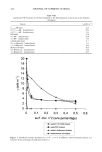
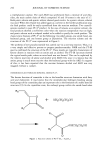
NEW SOFT CAPSULE 241 Butylene glycol HCO-60 Water Formation of O/W emulsion mix at 50 øt2 Agarat} sin add Outer oil phase Internal oil phase emulsi[• at r.t. • • • decrease temperaturev[ Microcapsu -øOwsOoO l___ Formation of O/W/O emulsion • internal '1 h, o• p ase_a• ,ticlei• • micro (0.5-2gm) Figure 1. Schematic representation of the typical steps for the production of microcapsules by the emul- sification method. Tokyo). Cryo-SEM observation was performed by the same procedure that was reported previously (34). The average diameters of microcapsules were determined by a laser scattering particle size distribution analyzer (LA-910, Horiba, Kyoto). The viscoelastic properties (breaking intensity and Young's modulus) of agar gels were measured by using a rheometer (NRM-2010J-CW, Fudoh Industry, Tokyo). Each of the agar gels was subjected to measurement of rheological properties after immersion in a thermostated bath maintained at each temperature (25ø-90øC). The agar gel (50 x 50 mm, 30-mm height) was placed on the sample stage of the rheometer and compressed by a plunger (plunger speed: 50 mm/min, 10-mm diameter) until the breakdown of the gel. The breaking intensity and Young's modulus were calculated from the stress-and-strain graph data generated from the rheometer. To determine the concentration of all trans- retinol palmitate and ethyl linoleate in the microcapsules, an HPLC system (Nanospace, Shiseido, Tokyo) equipped with a diode array detector, SPD-M 10AV (Shimazu, Kyoto),
Purchased for the exclusive use of nofirst nolast (unknown)
From: SCC Media Library & Resource Center (library.scconline.org)