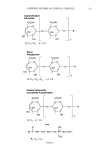
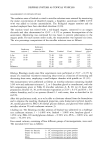
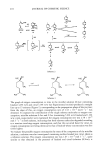
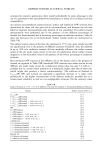
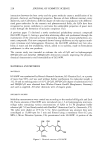
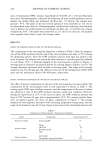
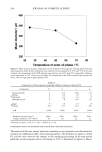
DISPERSE SYSTEMS AS TOPICAL VEHICLES 211 Caprylyl/Capryl Glucoside r CH2Oo•• I R:C•0/C•2 n=1-3 ,CH2OH O OH Decyl Polyglucose -- CH=OH .O
•OH I OH -- R: C10 / C12 / C14 iO ,CH2OH .O OH -- n=1-3 R Dodecyl Glucoside - Cocoamide Propylbetaine i OH L OH R:C•2 n=1-3 and • Cl % + R•--C•H•H•--• •--CH••CH• CH• r•: C,2 / C•. coo Scheme 1

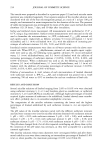
212 JOURNAL OF COSMETIC SCIENCE (Eppendorf, Hamburg) digital tensiometer K10PST (Krtiss, Hamburg) oxygen moni- tor Model YS 153 equipped with polarographic electrodes (Yellow Spring Instruments Co.) and HPLC apparatus consisting of an UV detector SP-2A, a pump unit control LC 6A, and a C-R 3A chromatopac integrator (Shimadzu, Japan). FORMULATION OF MICELLAR SOLUTIONS OF LINALOOL Miceliar solutions of linalool were prepared at room temperature using the following surfactant mixtures: 1) Dodecyl polyglucose-cocoamide propylbetaine 56.5% w/w--lecithin 43.5% w/w. 2) Decyl polyglucose 54.5% w/w--lecithin 45.5% w/w. 3) Decyl polyglucose 40.6% w/w--caprylyl-capryl glucoside 17.7% w/w--lecithin 41.7% w/w. 4) Dodecyl glucoside cocoamide propylbetaine 60.0% w/w--lecithin 40.0% w/w. 5) Decyl polyglucose 60.0% w/w--lecithin 40.0% w/w. 6) Decyl polyglucose 39.9% w/w--caprylyl-capryl glucoside 16.6% w/w--lecithin 43.5% w/w. Hexylene glycol was used as cosurfactant with surfactant mixtures 1, 2, and 3. CDCNa was used as cosurfactant with surfactant mixtures 4, 5, and 6. Increasing amounts of linalool (up to 10.0% w/w) were dispersed in water, and then fixed amounts of cosur- factant and ethanol were added and finally brought to transparency with an appropriate quantity of the chosen surfactant mixture. FORMULATION OF MICELLAR SOLUTIONS OF LINALOOL AND CITRAL Miceliar solutions containing both odorous molecules were prepared by partially replac- ing linalool with citral in those miceliar solutions previously obtained containing 5.0% w/w linalool, employing the surfactant mixtures 1, 2, or 3 (hexylene glycol was used as cosurfactant). FORMULATION OF MICROEMULSIONS OF LINALOOL Microemulsions were prepared with a fluid lipid (IPP, n-dodecanol, C•2_•sAB, mineral oil, cyclomethicone, and caprylic-capric triglyceride), replacing half the amount of linalool (10.0% w/w) used for the miceliar solutions containing surfactant mixtures 1, 2, or 3. Lecithin was dispersed in a water-ethanol solution, hexylene glycol was added, and finally it was titrated to transparency with the chosen surfactant mixture. CHARACTERIZATION OF MICELLAR SOLUTIONS AND MICROEMULSIONS WITH LINALOOL Stability tests. Miceliar solutions and microemulsions were tested for stability by applying repeated centrifuging and freeze-thaw cycles: the systems were centrifuged from 2000 rpm to 13000 rpm for 20 min, then stored at -20øC for three weeks and heated to 40øC for four hours. Each cycle was repeated for three months (7). Mean diameters. The mean diameters of the micelles and of the droplets in the micro- emulsions were determined at 25.0 ø + 0.1øC by means of photocorrelation laser spec- troscopy as described in a previous paper (8).
Purchased for the exclusive use of nofirst nolast (unknown)
From: SCC Media Library & Resource Center (library.scconline.org)