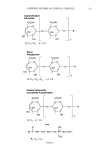
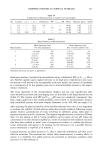
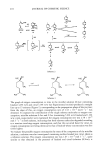
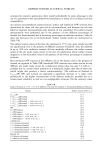
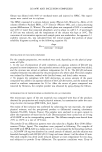
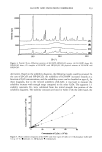
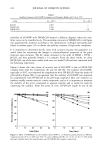
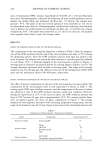
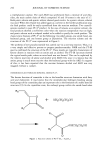
210 JOURNAL OF COSMETIC SCIENCE molecules can undergo a number of degradation reactions (1) such as peroxide formation, acetalization, and stereoisomerization the addition of an antioxidant is required to contrast this. Most antioxidants and preservatives approved for use in cosmetics are synthetic, but consumers' interest in natural products has focused producers' attention on nature-derived antioxidants and preservative-free products. In a previous work (5) we formulated micellar solutions and microemulsions of linalool, citral, and limonene using several surfactants and cosurfactants the oxidative stability over time of citral was higher in miceliar systems containing non-ethoxylated surfactants than in those obtained with the commonly used polyoxyethylene sorbitan monolaurate. The aim of the present study was to solubilize linalool and citral, which are among the most significant flavor compounds found in lemon oil (6), using several mixtures of glucose-derived surfactant and lecithin to formulate low-alcohol miceIlar solutions or microemulsions that could be proposed as bath oils. EXPERIMENTAL MATERIALS (+) Linalool, citral, and R(+) limonene were from Sigma 2-methyl-2,4 pentanediol (hexylene glycol), isopropylpalmitate (IPP), n-dodecanol, glycerol, tx,tx'-azobis isobu- tyronitrile (AIBN), absolute ethanol, and mineral oil were from Fluka Triton © CG 110 (caprylyl/capryl glucoside) (active substance = 60% w/w) and Abil © B 8839 (cyclome- thicone) were from Sinerga S.r.1. Phospholipon © 100G (lecithin) was a kind gift from Rhone Poulenc Oramix © NS 10 (decyl polyglucose) (a.s. = 55% w/w) was a kind gift from Seppic Tego Glucosid © L 55 (dodecyl glucoside-cocoamide propylbetaine) (a.s. -- 55% w/w) was from Tego Goldschmidt Glucamate © DOE 120 (PEG-120 methyl glucose dioleate) and Glucam © E 10 (methyl gluceth-10) were from Amerchol Myritol © 318 (caprylic/capric triglyceride) and Arlypon © F (laureth-2) were from Henkel sodium pirrolidon carboxylate (sodium PCA) was from Variati xylitol was from Melida S.pA. sodium chenodeoxycholate (CDCNa) was prepared from chenodeoxycholic acid Finsolv TN © (C•2_•5 alkyl benzoate [C•2_•5AB]) was from Prodotti Gianni. See Scheme 1 for chemical structures of caprylyl/capryl glucoside, decyl polyglucose, and dodecyl gluco- side-cocamide propylbetaine. MICROORGANISMS The following microorganisms were employed: Staphylococcus aureus ATCC 6538, Micro- coccus lysodeikticus ATCC 4698, Escherichia coli 113/3 ATCC 11105, Pseudomonas aeruginosa ATCC 9027, Enterobacter agglomerans (isolated by cosmetics), Citrobacterfreundii (isolated by cosmetics), Pseudomonas fluorescens (isolated by cosmetics), Candida albicans ATCC 10231, Saccharomyces cerevisiae ATCC 9763, Aspergillus niger (isolated by environment), and Penicillium funiculosum ATCC 9644. APPARATUS The following instruments were employed: laser light-scattering Coulter Model N4MD (Coulter Electronics, Inc., Hialeah, FL) rotational viscometer Digital Viscometer Model DV-I with small adapter chamber SC-21 (Brookfield, Stoughton, USA) centrifuge 5417

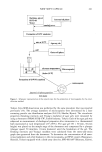
DISPERSE SYSTEMS AS TOPICAL VEHICLES 211 Caprylyl/Capryl Glucoside r CH2Oo•• I R:C•0/C•2 n=1-3 ,CH2OH O OH Decyl Polyglucose -- CH=OH .O
•OH I OH -- R: C10 / C12 / C14 iO ,CH2OH .O OH -- n=1-3 R Dodecyl Glucoside - Cocoamide Propylbetaine i OH L OH R:C•2 n=1-3 and • Cl % + R•--C•H•H•--• •--CH••CH• CH• r•: C,2 / C•. coo Scheme 1
Purchased for the exclusive use of nofirst nolast (unknown)
From: SCC Media Library & Resource Center (library.scconline.org)