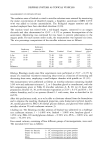
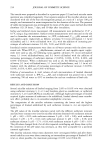
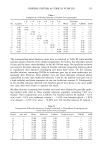
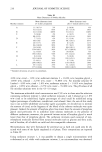
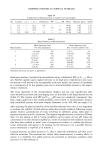
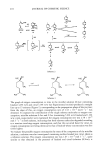
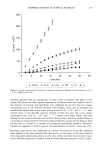
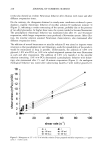
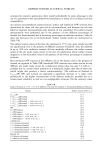
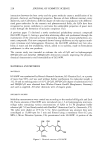
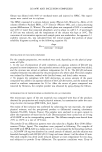
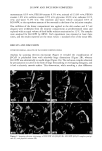
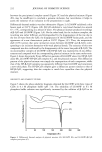
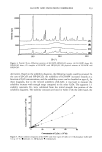
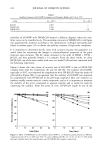
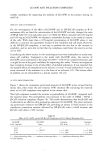
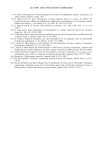
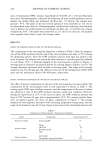
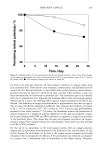
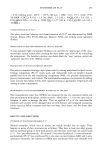
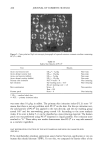
NEW SOFT CAPSULE 249 lOO 80 E o *" 60 E 40 0 5 10 15 20 25 30 Time I day Figure 8. Stabilizing effect of microencapsulation for all trans-retinol palmirate. Time course of the changes in the remaining percentage of all trans-retinol palmirate at 50øC in microcapsule (open circle, O) and in oil (closed circle, 0). The formulae employed are shown in Table Ill. ate. Due to its poly-ene structure, all trans-retinol is sensitive to oxygen, light, heat, acid, and metal ions. These factors cause oxidation, isomerization, and polymerization of retinol (36-39). Retinol palmitate is more stable than retinol however, similar decom- position processes are expected. Unsaturated fatty acid-like ethyl renoleate is also oxi- dized automatically and converted to peroxides (40). The conversion speed is accelerated with rise in temperature (41). Although the shielding effect of the microcapsule against thermal attack is poor, the shielding effect against oxygen permeation would be sig- nificant. The solubility of oxygen in hydrocarbons is approximately ten times as high as that in water (the Bunsen absorption coefficient that indicates the solubility of oxygen is 28.1 x 10 2 in octane and 2.83 x 10 2 in water at 25øC). Since the agar gel membrane prepared in this study contains 77.5% water, the membrane reduces the permeation of oxygen compared to a simple oil solution. Moreover, in the agar microcapsule, oxygen has to pass through both O/W and W/O interfaces to approach a reagent encapsulated in the innermost phase. This means that the agar microcapsule can protect an oxygen- sensitive reagent from oxygen invasion not only through a water layer, but also through an O/W or W/O interface. For the use of an antioxidant in the microcapsule system, both an oxygen-sensitive reagent and an antioxidant were formulated to be localized in the internal phase. In this system, because the antioxidant can be close to the oxygen-sensitive reagent in the small component (the microcapsule), the efficacy of the antioxidant was enhanced as compared to a system that is formulated with an antioxidant in the whole system. Therefore,

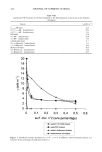
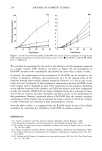
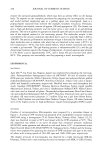
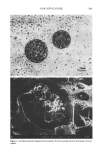
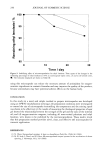
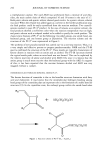
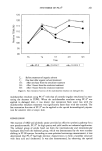
250 JOURNAL OF COSMETIC SCIENCE 1oo 95 9o 85 80 • i 0 10 20 30 Time I day Figure 9. Stabilizing effect of microencapsulation for ethyl linoleate. Time course of the changes in the remaining percentage of ethyl linoleate at 50øC in microcapsule (open circle, O) and in oil (closed circle, 0). The formulae employed are shown in Table III. using this microcapsule can reduce the necessary amount of antioxidant for oxygen- sensitive ingredients in cosmetic formulae and may improve the quality of the product, because antioxidants may have potential adverse effects on the human body. CONCLUSION In this study (a) a novel and simple method to prepare microcapsules was developed using an O/W/O emulsification technique (b) preparation conditions were investigated to control the size of microcapsules (controlling the temperature and the stirring speed was shown to be effective) (c) the results of measuring the rheological properties of agar gel showed the relationship between the strength of the gel and the ratio of the internal oil and (d) oxygen-sensitive reagents, including all trans-retinol palmirate and ethyl linoleate, were shown to be stabilized by the microencapsulation. These results reveal that this preparation method provides novel, clean, and effective soft microcapsules for cosmetic application. REFERENCES (1) N. Olson, Encapsulated enzymes: A boon to cheeseflavor, Daily Rec., 85(8), 86 (1984). (2) M. El. Soda, L. Panel, and N. Olson, Microencapsulated enzyme systems for the acceleration of cheese ripening,J. Microencap., 6(3), 319 (1989).
Purchased for the exclusive use of nofirst nolast (unknown)
From: SCC Media Library & Resource Center (library.scconline.org)