j. Cosmet. Sci., 51,343-349 (November/December 2000) Application of 4% and 8% glycolic acid to human skin in commercial skin creams formulated to CIR guidelines does not thin the stratum corneum or increase sensitivity to UVR A. W. JOHNSON, Unilever HPC-USA, 40 Merritt Boulevard, Trumbull, CT 06611 T. STOUDEMAYER, S.K.I.N., Inc., 151 E. Tenth Avenue, Conshohocken, PA 19428 and A.M. KLIGMAN, Department of Dermatology, University of Pennsylvania, 415 Curie Boulevard, Philadelphia, PA 19104-6142. Accepted for publication September 21, 2000. Poster presented at the Annual Scientific Meeting of the Cosmetics, Toiletries and Fragrance Association, Atlantic City, October 1997. Synopsis Six months daily use of skin creams containing 4% and 8% glycolic acid with an SPF of 4 did not thin the stratum comeurn or impair barrier function. There was no increased sunburn cell formation after UV irradiation, although the creams did contain sunscreen. The creams were applied twice daily for 24 weeks to the left or right volar forearms of ten women of phototypes I and II, using a balanced design. At 6, 12, and 24 weeks the treated forearms were exposed to one MED of simulated solar UVR. Punch biopsies taken 24 hours after irradiation showed no sunburn cells (SBCs). Cryostat sections of shave biopsies at 12 and 24 weeks showed no change in stratum comeurn cell layers. Treated skin sites showed no increase in stratum comeurn permeability as judged by no change in response to tetrahydrofurfuryl nicotinate skin challenge at 12 and 24 weeks. INTRODUCTION Alpha hydroxy acids (AHAs), particularly lactic acid (LA) and glycolic acid (GA), have been used widely in cosmetic products for dry skin (1,2) and photo-aged skin (3,4) for many years (5). In 1996 the Cosmetic Ingredient Review (CIR) expert panel concluded that AHAs are safe for use in cosmetic products at concentrations up to 10% at a final formulation pH not less than 3.5, when formulated to avoid increasing sun sensitivity (6). The caveat relating to sun sensitivity was to allay concern that the stratum comeurn might be impaired by the exfoliating effect of AHA products. The panel noted that any increase in UVR sensitivity was slight and could be eliminated by inclusion of an SPF 2 sunscreen. 343

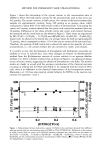
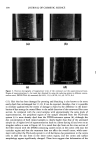
344 JOURNAL OF COSMETIC SCIENCE We undertook to examine two leading glycolic acid creams for their effects on human skin over a 6-month period of twice-daily application. The specific aim was to evaluate possible adverse effects on the barrier properties of the stratum corneum. EXPERIMENTAL TEST PRODUCTS Two commercial AHA creams were examined. Both were creams with the same oil-in- water emulsion base, containing Glycolic acid pH SPF Cream A 8% 3.8 4* Cream B 4% 3.8 4* * From ethylhexyl-p-rnethoxy cinnarnate and oxybenzone. STUDY DESIGN The study was conducted in the Philadelphia area between January and July. Ten healthy women, of phototype I or II, applied product A to one volar forearm and product B to the opposite forearm twice daily for 24 weeks. The women were instructed to apply the products liberally. The approximate dosage was 3 mg/cm 2 per application. To ensure compliance and to detect any adverse effects, each subject was examined monthly by a dermatologist. The minimal erythemal dose (MED) was determined for each subject using solar- simulating radiation from a filtered 150-watt xenon arc lamp (Solar Ultraviolet Simu- lator Model 15S, Solar Light Co., Philadelphia, PA). At baseline, an MED dose was applied to the inner arm, with 3-mm biopsy 24 hours later. At weeks 6, 12, and 24 one MED was given to treated volar forearms. A 3-mm punch biopsy was taken 24 hours later, fixed in formaldehyde, and stained with haemotoxylin and eosin (H&E). The H&E sections were examined for sunburn cells (SBCs) (mean count per five high-power fields). In addition, cryostat-processed six-micron sections from shave biopsies were obtained at baseline and at 12 and 24 weeks. The cryostat sections were treated with 5% lactic acid to cause swelling of the corneocytes, enabling the number of cell layers to be determined. The procedure is essentially the same as described previously, using sodium hydroxide to cause swelling (7). A skin challenge with tetrahydrofurfuryl nicotinate (Trafuril) was conducted at baseline and at 12 and 24 weeks--this challenge provides an indirect measure of stratum cor- neum barrier integrity (8). Trafuril (1% tetrahydrofurfuryl nicotinate) was applied to treated sites for five minutes and then washed off. Laser-Doppler readings were made every two minutes until a peak reading was obtained, usually within a few minutes. A superficial corneocyte sample was obtained at baseline and at 12 and 24 weeks using D-Squame © adhesive tapes (9).
Purchased for the exclusive use of nofirst nolast (unknown)
From: SCC Media Library & Resource Center (library.scconline.org)