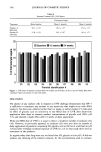
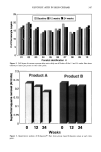
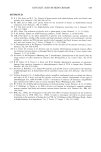
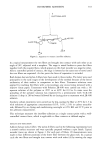
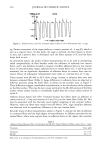
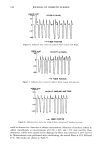
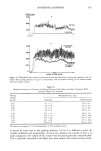
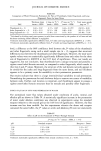
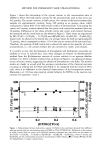
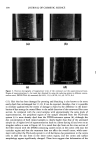
GLYCOLIC ACID IN SKIN CREAMS 347 25 t-'1 Baseline I 12 weeks 1 24 weeks r--1 01 o2 o9 10 03 04 05 06 07 08 Panelist identification # Figure 2. Cell layers of stratum corneum after twice-daily use of Product B for 12 and 24 weeks. Bars show corneocyte layers per person at each time point. 0.3 0.25 0.2 0.15 0.1 0.05 Product A Product B Figure 3. Quantitative analysis of D-Squames ©. Bars show group mean D-Squame values at each time point. 0 12 24 0 12 24 Weeks

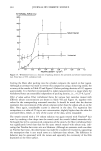
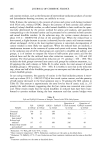
348 JOURNAL OF COSMETIC SCIENCE 250 Product A Product B m 200 .o_ '- 150 o. 100 o m 50 0 12 24 0 12 24 Weeks Figure 4. Stratum corneum barrier integrity after long-term daily use of AHA products. Bars show group mean peak response to Trafuril challenge at each time point. products (less than 10% and pH above 3.5) AHAs appear to remove dry flakes from the surface but do not remove underlying layers. Higher concentrations at lower pH values can, of course, cause deeper exfoliation (13). The D-Squame © results corroborate that the quantity of scales removed is slightly reduced, and this reflects a beneficial effect that leaves the stratum corneum smoother and more moisturized. Trafuril challenge also failed to show impairment of the stratum corneum barrier. This is an indirect measure of barrier integrity (8). This finding is consistent with previous evidence that demonstrates that four weeks of twice-daily application of 5% lactic acid (pH 4.0) to the volar forearm increased stratum corneum resistance to sodium lauryl sulfate (14). CONCLUSION This study demonstrates that long-term use of cosmetic creams containing up to 8% glycolic acid at pH 3.8 and SPF 4 sunscreen does not thin the stratum corneum or impair barrier integrity. SPF 4 sunscreen added to these products gives complete protection to one MED of solar simulating irradiation.
Purchased for the exclusive use of nofirst nolast (unknown)
From: SCC Media Library & Resource Center (library.scconline.org)