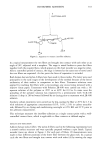
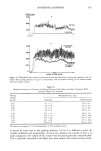
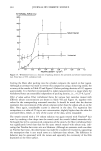
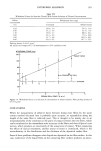
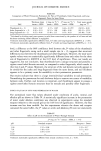
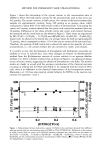
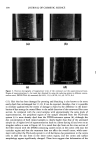
376 JOURNAL OF COSMETIC SCIENCE 0.0100 Energy of activation Ea = 28.4 kJ/mole 0.0010 I I I I 0.0029 0.0030 0.0031 0.0032 0.0033 1/Temperature (K -1) Figure 3. Semilogarithmic plot of normalized permeability coefficient (P*) as a function of reciprocal temperature (mean + SEM, n = 3-6). Table V Normalized Water Flux, J*, Before and After Various pH and Heat Treatments: Test for Barrier Integrity of Toenails J* (mg cm •h •) (mean + $EM, n = 3) Treatment Untreated nail After treatment and washout Change in J* (%) pH 1.96 1.35 -+ 0.10 1.44 + 0.07 6.67 pH 11.27 1.79 + 0.18 2.00 _+ 0.25 11.73 47øC 1.10 _+ 0.25 1.09 + 0.34 -0.91 57øC 1.42 + 0.64 1.50 + 0.74 5.63 cause significant changes in the nail structure. Thus, after such treatments and washout, the initial structure of the nails persisted and normalized flux values returned to their original levels. CONCLUSIONS Our studies on water permeation through nails have provided new insights into nail structure. A reproducible technique to measure nail permeation in vitro was developed using tritiated water as a marker molecule. While permeation parameters did not vary much Within toenails pairs, interindividual variability was extremely high. These dif- ferences were reduced by normalizing the data for nail thickness.

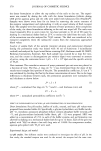
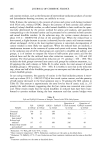
NAIL PERMEATION 377 The cross-linked keratin network comprising the thumbnails seemed to have a tighter structure than that present in toenails, causing thumbnails to be effective permeation barriers despite their reduced thickness. Thus, location of the nails is an important factor in determining the basic nature of the nail permeability barrier. It is unclear whether thumbnails differ in structure from other fingernails however, our results suggest that structural differences may exist. While pH did not affect the intrinsic permeability properties of the human nail sig- nificantly, increasing temperature statistically enhanced water permeation. The effects of both pH and temperature change were reversible. REFERENCES (10) (11) (1) G. V. Gupchup and J. L. Zatz, Structural characteristics and permeability properties of the human nail: A review, J. Cosmet. Sci., 50(6), 363-385 (1999). (2) H. P. Baden and J. C. Kvedar, "Biology of Nails," in Dermatology in General Medicine, T. B. Fitzpatrick, A.Z. Eisen, K. Wolff, and K. F. Austin, Eds. (McGraw-Hill, Inc., New York, 1993), Vol. 1, pp. 294-297. (3) U. Runne and C. E. Orfanos, The human nail: Structure, growth and pathological changes, Curt. Probl. DermatoL, 9, 102-149 (1981). (4) K. A. Walters, G. L. Flynn, and J. R. Marvel, Physicochemical characterization of the human nail: I. Pressure sealed apparatus for measuring nail plate permeabilities. J. Invest. Dermatol., 76(2), 76-79 (1981). (5) M.H. Soong, Transport properties of drugs and model compounds across the human nail, Ph.D. dissertation, University of Minnesota (1991). (6) K.A. Walters, G. L. Flynn, and J. R. Marvel, Penetration of the human nail plate: The effects of vehicle pH on the permeation of miconazole, J. Pharm. Pharmacol., 37, 498499 (1985). (7) D. Mertin and B. C. Lippold, In-vitro permeability of the human nail and of a keratin membrane from bovine hooves: Influence of the partition coefficient octanol/water and the water solubility of drugs on their permeability and maximum flux, J. Pharm. Pharmacol., 49, 30-34 (1997). (8) K. Diem and C. Lenmer, Scientific Tables (Documenta Geigy), 7th ed. (Geigy Pharmaceuticals, New York, 1970), pp. 278-283. (9) E. Tolgyesi and F. Fang, "Action of Nucleophilic Reagents on Hair Keratin," in Hair Research: Status and Future Aspects, C. E. Orfanos, W. Montagna, and G. Stuttgen, Eds. (Springer-Verlag, New York, 1981), pp. 116-122. A. Martin, Physical Pharmacy, Physical Chemical Principles in the Pharmaceutical Sciences, 4th ed. (Waverly Co., Baltimore, 1993), pp. 324-361. G. L. Flynn, E. E. Linn, T. Kurihara-Bergstrom, S. K. Govil, and S. Y. Y. Hou, "Parameters of Skin Condition and Function," in Transdermal Delivery of Drugs, A. F. Kydonieus and B. Berner, Eds. (CRC Press, Boca Raton, 1987), Vol. II, pp. 3-17. (12) R.J. Scheuplein, Mechanism of percutaneous absorption. I. Routes of penetration and the influence of solubility, J. Invest. Dermatol., 45,334 (1965).
Purchased for the exclusive use of nofirst nolast (unknown)
From: SCC Media Library & Resource Center (library.scconline.org)